
Pakistan’s Trade Standoff with Afghanistan Incurred Losses Exceeding $4.5 Billion

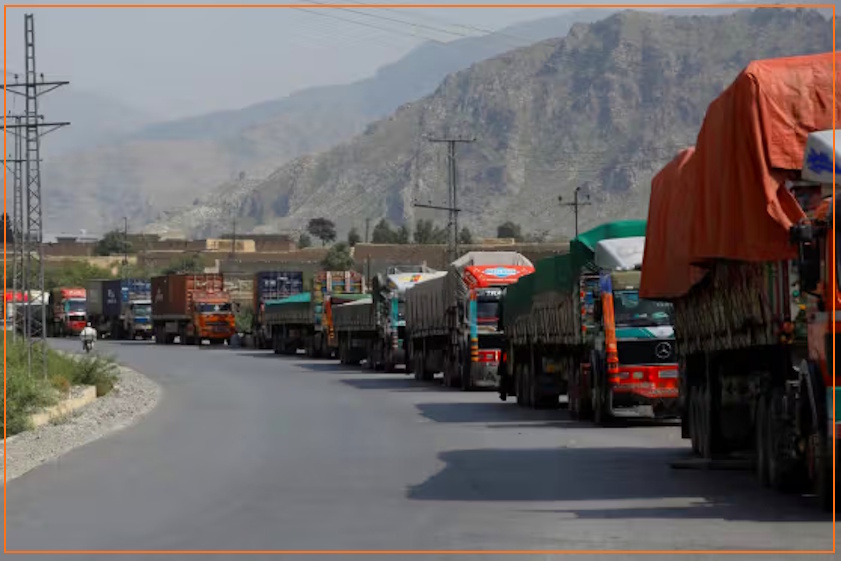
Islamabad – A prolonged and costly trade impasse between Pakistan and Afghanistan has resulted in significant economic damage, with Pakistan alone facing losses surpassing $4.5 billion, according to a leading bilateral business body.
The Afghanistan-Pakistan Joint Chamber of Commerce and Industries (PAJCCI) reported on Wednesday that the complete closure of major trade routes, now entering its third month, has paralysed a vital economic corridor that once facilitated billions of dollars in annual commerce.
Roots of the Crisis
The trade halt was triggered approximately two months ago following a series of escalating border incidents. Pakistan closed all crossing points after alleged violations of its territory by militants from Afghanistan and subsequent airstrikes near the contentious Durand Line. This prompted retaliatory strikes from Afghan forces.
In response, the Islamic Emirate of Afghanistan (IEA) government suspended trade with Pakistan, officially urging its traders and industrialists to pivot toward alternative routes through Iran and Central Asia. Afghan officials cited the repeated politicization of trade and transit issues by Pakistan as the primary reason for their decisive move, stating it left them with “no other choice.”
A High-Stakes Economic Relationship
Prior to the shutdown, official bilateral trade hovered between $2 billion and $3 billion annually, though informal trade likely pushed the total much higher. The relationship was highly complementary: Pakistan exported high-value manufactured goods, cement, sugar, pharmaceuticals, and fresh produce, while Afghanistan supplied agricultural perishables and coal.
The crossings at Torkham (Khyber Pakhtunkhwa) and Chaman (Balochistan) served as critical arteries. During peak agricultural and construction seasons, daily trade volume could reach $50–60 million.
Sectoral Devastation and Human Toll
The PAJCCI assessment highlights severe sectoral impacts:
-
Cement Industry: Afghanistan was a primary market for Pakistani cement exports. The closure has idled significant production capacity within Pakistan.
-
Energy & Industry: The stoppage of coal imports from Afghanistan has forced industries in Pakistan’s northwestern region to seek more expensive alternatives, raising production costs.
-
Agriculture: Pakistan’s seasonal exports, such as kinnows (citrus) and potatoes, face a narrow window from December to March. The chamber warns of an additional $200 million in losses if the routes remain closed through this period.
-
Logistics & Labour: The human cost is stark. Over 8,000 loaded trucks are stranded at border crossings, leaving thousands of drivers, labourers, clearing agents, and porters without income.
Broader Implications and a Strained Corridor
The standoff jeopardizes the strategic role of Pakistan as a land bridge for Afghan trade to international ports. Afghanistan’s accelerated pursuit of alternative routes undermines this long-standing transit economy. Furthermore, the suspension disrupts regional supply chains and fuels inflation on both sides of the border, particularly for essential commodities in Afghanistan.
While political and security disputes dominate the discourse, the PAJCCI warns that the escalating economic losses – now nearing $5 billion for Pakistan alone – create a pressing imperative for dialogue. The chamber emphasizes that decoupling trade from political tensions is essential to prevent long-term damage to an economically interdependent region where livelihoods on both sides hang in the balance.
Our Pashto-Dari Website


Support Dawat Media Center
If there were ever a time to join us, it is now. Every contribution, however big or small, powers our journalism and sustains our future. Support the Dawat Media Center from as little as $/€10 – it only takes a minute. If you can, please consider supporting us with a regular amount each month. Thank you
DNB Bank AC # 0530 2294668
Account for international payments: NO15 0530 2294 668
Vipps: #557320

Comments are closed.