

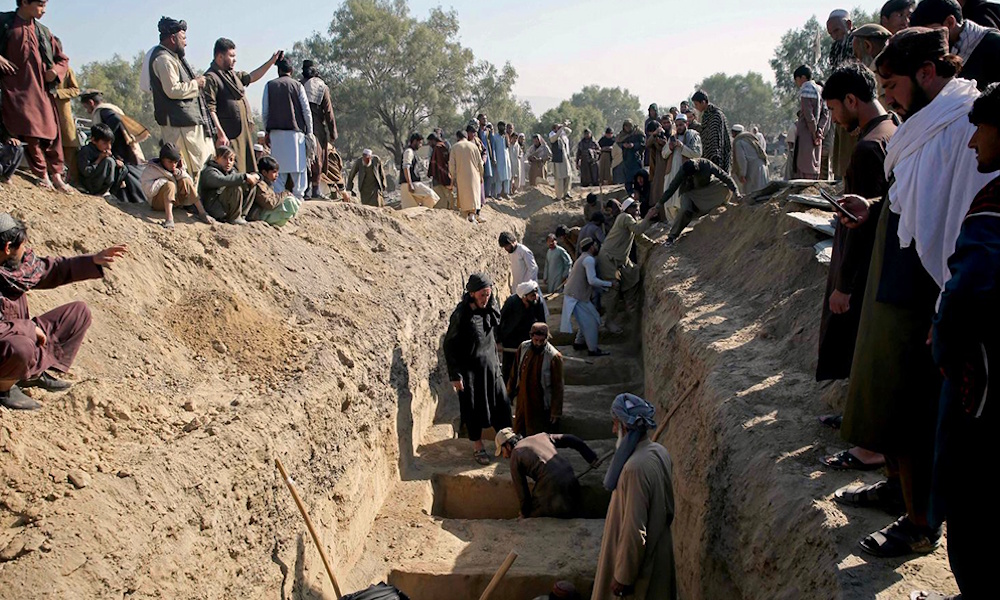
In a grave accusation, the deputy spokesperson of the Islamic Emirate of Afghanistan (IEA), Hamdullah Fitrat, has condemned Pakistan’s military actions, alleging that cross-border strikes have resulted in significant civilian casualties and widespread destruction across several Afghan provinces. The allegations cover a period between February 22 and April 4, 2026, during which Pakistani military strikes are said to have targeted various regions of eastern and southern Afghanistan.
According to Fitrat, the attacks primarily impacted the provinces of Paktika, Paktia, Kandahar, Nangarhar, Kunar, Kabul, Khost, Nuristan, and Laghman. The toll on civilians has been devastating: 761 people were killed, 626 others injured, and a staggering 27,407 families displaced from their homes. These figures, if verified, would represent one of the highest civilian casualty rates in recent cross-border confrontations.
The attacks also left a trail of widespread physical destruction. Over 1,100 homes were completely destroyed, along with 256 shops. Critical community and religious infrastructure was also reduced to rubble, including 34 mosques, 13 schools, 13 madrasas, three health facilities, and 42 vehicles. The destruction has had a severe economic impact on rural livelihoods, with 661 head of livestock also reported killed.
The scale of the bombardment has been particularly alarming. Fitrat stated that a total of 14,973 missiles, mortars, and artillery shells were fired during the 42-day period in question—an average of more than 350 projectiles per day. Such intensive shelling, he argued, has inflicted immense physical and psychological damage on civilian populations, many of whom live in remote, border-adjacent communities with little access to shelter or emergency services.
Calling the actions “war crimes” against Afghan civilians, Fitrat emphasized not only the tragic loss of life but also the deepening humanitarian crisis resulting from the attacks. He urged the international community, including the United Nations and human rights organizations, to intervene and hold Pakistan accountable for what he described as “indiscriminate and disproportionate” use of force. The IEA has also called for independent investigators to be allowed access to the affected provinces to document the damage and identify victims.
As of now, Pakistan has not publicly responded to the accusations. However, these developments are likely to escalate tensions between the two neighboring countries, which have a long history of mutual suspicion, border disputes, and accusations of harboring militant groups. Both sides continue to grapple with a volatile and complex geopolitical situation, with analysts warning that unverified claims and retaliatory rhetoric could further destabilize the region.
Our Pashto-Dari Website

Support Dawat Media Center
If there were ever a time to join us, it is now. Every contribution, however big or small, powers our journalism and sustains our future. Support the Dawat Media Center from as little as $/€10 – it only takes a minute. If you can, please consider supporting us with a regular amount each month. Thank you
DNB Bank AC # 0530 2294668
Account for international payments: NO15 0530 2294 668
Vipps: #557320

Comments are closed.