
Iran Formulates Official Response to Ceasefire Proposals, Rejects ‘Ultimatums and Threats’

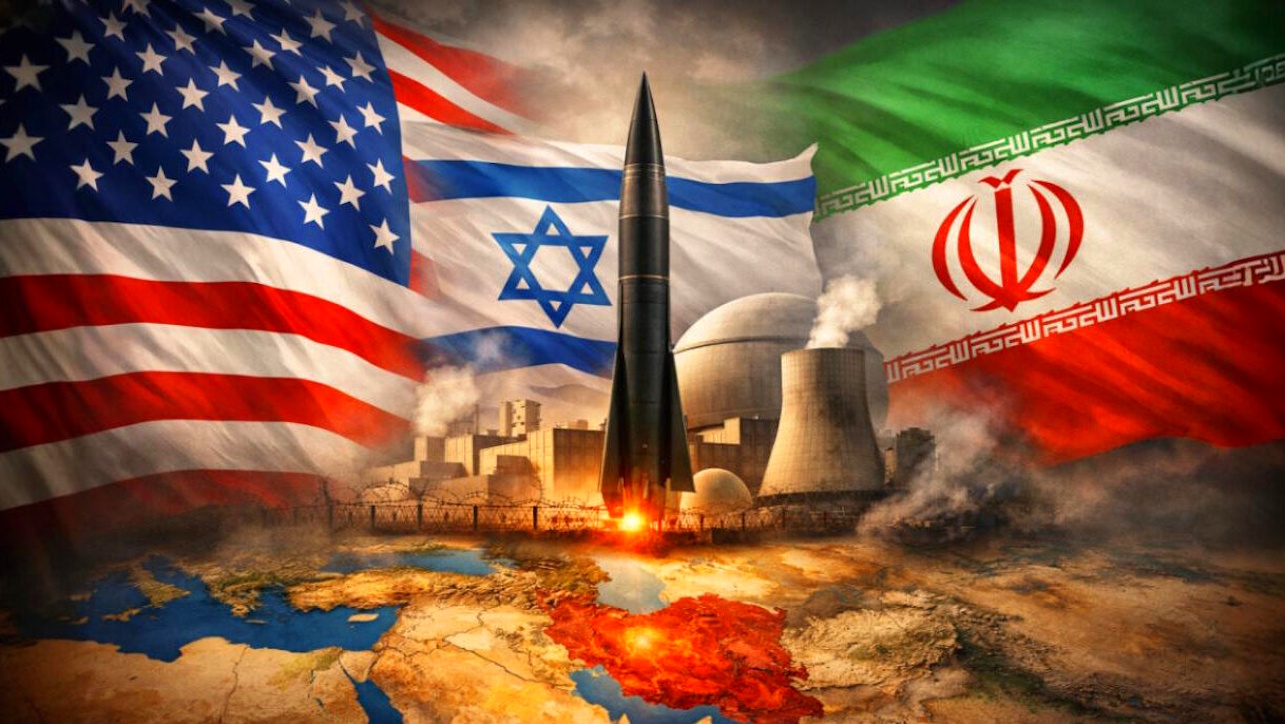
Iran has formally articulated its position and demands in response to recent ceasefire proposals conveyed through regional intermediaries, a foreign ministry spokesperson said on Monday, emphasizing that meaningful negotiations cannot proceed under the shadow of “ultimatums and threats to commit war crimes.”
Speaking at a weekly press conference in Tehran, Foreign Ministry Spokesperson Esmaeil Baghaei confirmed that the Islamic Republic has consolidated a set of requirements grounded in its national interests, which have already been transmitted via intermediary channels. Baghaei specifically rejected earlier U.S. proposals, including a previously reported 15-point plan, characterizing them as “excessive” and non-negotiable in their current form.
“Iran does not hesitate to clearly express what it considers its legitimate demands,” Baghaei told reporters. “Doing so should not be interpreted as a sign of compromise or weakness, but rather as a reflection of our confidence in defending our positions and national sovereignty.”
When asked by an Iranian journalist about ongoing diplomatic efforts to broker a ceasefire between Iran and the United States, Baghaei added: “We have formulated our own responses,” and said details would be announced “in due time.” He did not provide a specific timeline.
Competing Proposals on the Table
The spokesperson’s remarks come amid a flurry of diplomatic activity. A source familiar with the negotiations told Reuters on Monday that Iran and the United States have both received a plan to end hostilities that could potentially take effect immediately and reopen the Strait of Hormuz—a critical chokepoint for global oil shipments.
According to the source, the framework was put together by Pakistan and exchanged with Tehran and Washington overnight. The plan outlines a two-tier approach: an immediate ceasefire, followed by a comprehensive agreement to address broader strategic issues.
“All elements need to be agreed today,” the source said, adding that the initial understanding would be structured as a memorandum of understanding (MoU), finalized electronically through Pakistan—currently the sole communication channel in the talks.
Axios first reported on Sunday that the United States, Iran, and regional mediators were discussing a potential 45-day ceasefire as part of a two-phase deal that could eventually lead to a permanent end to hostilities, citing U.S., Israeli, and regional sources.
High-Level Engagement
The source told Reuters that Pakistan’s army chief, Field Marshal Asim Munir, has been in contact “all night long” with U.S. Vice President JD Vance, U.S. special envoy Steve Witkoff, and Iranian Foreign Minister Abbas Araghchi.
Under the proposed terms, a ceasefire would take effect immediately, alongside the reopening of the Strait of Hormuz. Negotiators would then have 15 to 20 days to finalize a broader settlement. The deal, tentatively dubbed the “Islamabad Accord,” would include a regional framework for the strait’s security and navigation, with final in-person talks scheduled for Islamabad.
There was no immediate response from U.S. officials. Pakistan’s foreign office spokesperson, Tahir Andrabi, declined to comment.
Iranian Reservations: No ‘Temporary Ceasefire’
Despite the momentum, a senior Iranian official told Reuters on Monday that Tehran will not reopen the Strait of Hormuz in exchange for a “temporary ceasefire.” The official, speaking on condition of anonymity, added that Iran views Washington as lacking the readiness or credibility for a permanent ceasefire.
The official confirmed that Iran had received Pakistan’s proposal for an immediate ceasefire and was reviewing it, but stressed that Tehran “does not accept being pressured to accept deadlines and make a decision.”
Iranian officials have previously told Reuters that Tehran is seeking a permanent ceasefire backed by enforceable guarantees that Iran will not be attacked again by the United States or Israel. They have also acknowledged receiving mediation messages from several countries, including Pakistan, Turkey, and Egypt.
Potential Final Agreement
The source familiar with the proposals said the final agreement is expected to include Iranian commitments not to pursue nuclear weapons, in exchange for sanctions relief and the release of frozen assets. However, two Pakistani sources said Iran has yet to commit, despite intensified civilian and military outreach.
“Iran has not responded yet,” one Pakistani source said, adding that proposals backed by Pakistan, China, and the United States for a temporary ceasefire have so far drawn no firm commitment from Tehran. There was no immediate response from Chinese officials to requests for comment.
Escalating Hostilities and Global Stakes
The latest diplomatic push unfolds against a backdrop of escalating hostilities that have raised global concerns over potential disruption to shipping through the Strait of Hormuz, through which approximately 20% of the world’s oil passes.
U.S. President Donald Trump has in recent days publicly pressed for a rapid end to the conflict, warning of unspecified consequences if a ceasefire is not reached within a short timeframe. The conflict has already heightened volatility in energy markets, with traders closely monitoring any developments that could affect flows through the strait.
Analysts note that while both sides face pressure to de-escalate, the gap between a temporary pause and a permanent, guaranteed resolution remains the primary obstacle. For now, Tehran appears to be holding out for stronger assurances—leaving the fate of the “Islamabad Accord” uncertain.
Our Pashto-Dari Website

Support Dawat Media Center
If there were ever a time to join us, it is now. Every contribution, however big or small, powers our journalism and sustains our future. Support the Dawat Media Center from as little as $/€10 – it only takes a minute. If you can, please consider supporting us with a regular amount each month. Thank you
DNB Bank AC # 0530 2294668
Account for international payments: NO15 0530 2294 668
Vipps: #557320

Comments are closed.