

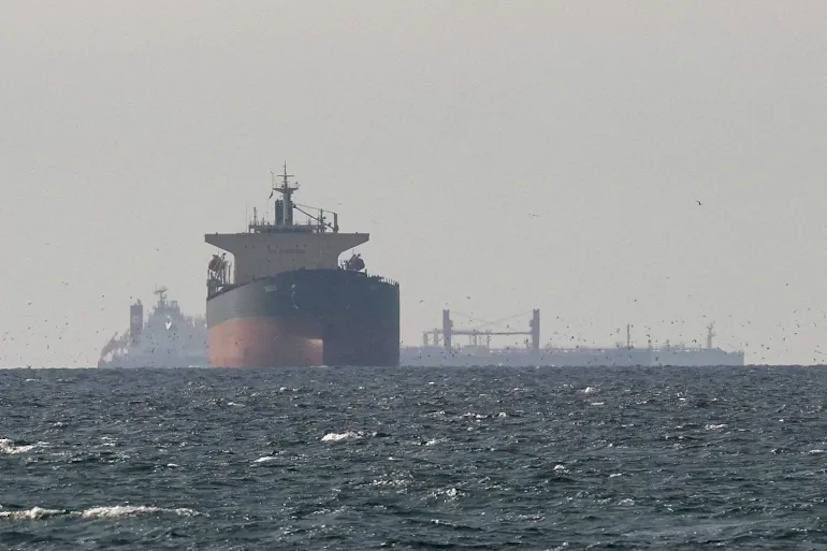
Brussels, Belgium – European leaders have firmly rejected demands by United States President Donald Trump to participate in military operations to secure the Strait of Hormuz, as foreign ministers convened in Brussels for emergency talks to address the fallout from the ongoing US-Israeli war on Iran. The conflict, now in its third week, has effectively closed the strategic waterway, sending global energy prices soaring and sparking a transatlantic rift.
The pushback comes after President Trump on Sunday called on NATO allies to form a naval coalition to deploy warships to the strait, through which roughly one-fifth of the world’s oil supply normally passes. However, with the waterway effectively shuttered by the conflict that began with US and Israeli strikes on Iran on February 28, European capitals are distancing themselves from what they see as a conflict of Washington and Jerusalem’s making.
Germany Leads Charge: “This Is Not Our War”
German Foreign Minister Johann Wadephul on Monday delivered the bluntest assessment, stating that Berlin has “no intention” of being drawn into the hostilities.
“We expect from the US and Israel to inform us, to include us into what they’re doing there and to tell us if these goals are achieved,” Wadephul told reporters ahead of the EU Foreign Affairs Council meeting. “Once we have a clear picture of that, we believe we need to move into the next phase, namely, defining a security architecture for this entire region, together with the neighbouring states.”
His remarks were echoed with even greater force by German Defence Minister Boris Pistorius in Berlin. Questioning the logic of the US request, Pistorius asked: “What does… Trump expect a handful or two handfuls of European frigates to do in the Strait of Hormuz that the powerful US Navy cannot do?” He added, in a clear sign of Europe’s determination to stay out of the fighting, “This is not our war. We have not started it.”
A Chorus of Refusal in Brussels
The German position was met with broad support from other key EU member states as ministers gathered for the crisis talks.
-
Greece: Government spokesman Pavlos Marinakis stated unequivocally that Greece would not engage in any military operations in the Strait of Hormuz.
-
Italy: Foreign Minister Antonio Tajani confirmed that Italy was not involved in any naval missions that could be extended to the area, distancing Rome from the US-led call to action.
-
France: While not issuing a direct refusal, Paris suggested a potential European-only solution: expanding the existing EU Aspides mission. The small naval operation, established in 2024 to protect shipping from Houthi attacks in the Red Sea, currently has Italian and Greek vessels under its command. However, the idea of simply rebranding or expanding this mission to address the much larger crisis in the Gulf was met with skepticism, particularly from Berlin.
A Divided Europe and Trump’s Wrath
Despite the unified front against direct military participation, the meeting revealed a degree of division on how to handle the crisis.
Danish Foreign Minister Lars Lokke Rasmussen urged his colleagues to be pragmatic. “We must face the world as it is, not as we want it to be,” he said, adding that Europe must find a plan “with a view towards de-escalation.” While not endorsing military action, he suggested Europe should keep an “open mind” on how to help ensure freedom of navigation in the future.
The United Kingdom, navigating its post-Brexit foreign policy, said it was working on a “collective plan” to reopen the strait but acknowledged the immense difficulty of doing so amid an active war zone.
The reluctance in Europe has infuriated the White House. In an interview with the Financial Times on Sunday, Trump issued a stark warning, stating that NATO faced a “very bad” future if his proposal was ignored. The comment has sent shivers through European chancelleries, though Defence Minister Pistorius downplayed the threat, saying he did not anticipate the alliance falling apart over the issue.
The Strategic Fallout: Oil Prices and Russia’s Gain
The immediate trigger for the emergency meeting is the economic shockwave caused by the strait’s closure. With oil prices surging past $100 a barrel, EU foreign policy chief Kaja Kala outlined the bloc’s core dilemma.
“We first need to discuss what the member states are willing to do in the Strait of Hormuz,” Kallas told reporters. “Of course, the needs to open the Strait of Hormuz are there right now.”
Kallas pointed to a troubling geopolitical side effect: the price spike is indirectly fuelling Russia’s war on Ukraine, as Moscow benefits from the inflated energy revenues.
Reporting from Brussels, Al Jazeera’s Step Vaessen noted the palpable tension. “What is clear is that European leaders are increasingly feeling the pressure from Trump to help him,” Vaessen said. “But there is very little appetite for joining the war, especially because they feel left out of the loop. They will be discussing a way to reopen the Strait of Hormuz, but that doesn’t necessarily mean sending warships.”
As the war enters its third week with no end in sight, the EU finds itself caught between a belligerent ally demanding support and a firm resolve to avoid being dragged into a conflict it had no part in starting. The bloc’s next steps will be crucial in determining not only the future of global energy supplies but also the cohesion of the Western alliance itself.
Our Pashto-Dari Website

Support Dawat Media Center
If there were ever a time to join us, it is now. Every contribution, however big or small, powers our journalism and sustains our future. Support the Dawat Media Center from as little as $/€10 – it only takes a minute. If you can, please consider supporting us with a regular amount each month. Thank you
DNB Bank AC # 0530 2294668
Account for international payments: NO15 0530 2294 668
Vipps: #557320

Comments are closed.