

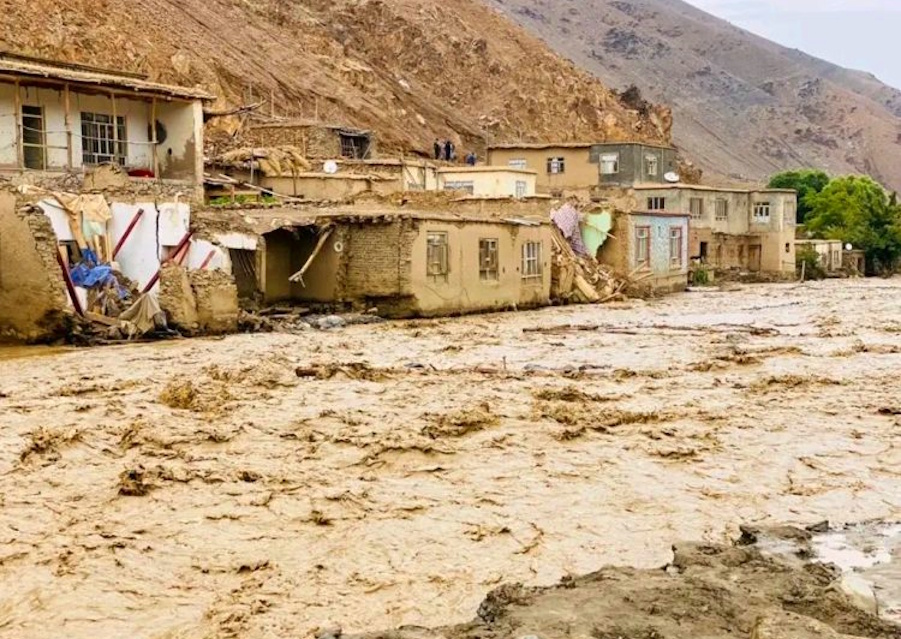
KABUL — Catastrophic flooding across multiple Afghan provinces has killed at least 77 people and injured 137 others, disaster management officials reported on Saturday. The floods, which swept through the country between March 26 and April 4, have caused widespread devastation, compounding the hardships faced by a nation already grappling with economic collapse and fragile infrastructure.
The National Disaster Preparedness and Disaster Management Authority confirmed that hundreds of homes have been either fully or partially destroyed. In addition, thousands of jeribs of agricultural land have been submerged or washed away, threatening already precarious food security for many rural families. According to the authority, four people remain missing, and more than 3,400 houses have been damaged across different parts of the country a stark indicator of the flooding’s extensive reach.
Officials further noted that the torrential rains have blocked major roads and disrupted transport links in several provinces. These obstructions have severely complicated rescue efforts, limiting the ability of aid workers to reach remote and hard-hit communities. In some areas, entire villages have been cut off for days, with residents relying on limited local resources while waiting for assistance.
Taliban spokesman Zabihullah Mujahid had earlier stated that the severe weather also destroyed over 3,000 jeribs of farmland and killed more than 1,000 livestock. For many families who depend on subsistence farming and animal husbandry, these losses represent not just property damage but the obliteration of their primary sources of income and food.
Afghanistan remains exceptionally vulnerable to flash floods and other extreme weather events. Weak infrastructure, widespread poverty, and inadequate drainage systems consistently worsen the impact of seasonal rains. Aid agencies have repeatedly warned that climate shocks such as intense rainfall followed by sudden flooding are becoming more frequent and destructive across the country.
The latest disaster follows a grim pattern observed in recent years. In the spring of 2024, similar floods killed hundreds of people and devastated homes, farmland, and basic services across several northern and western provinces, including Baghlan, Badakhshan, and Ghor. Those floods also destroyed schools, health clinics, and bridges, leaving survivors without access to education or medical care for months.
The newly updated death toll underscores Afghanistan’s persistent vulnerability to natural disasters. As communities already struggling with economic hardship, displacement, and limited international aid attempt to recover from repeated climate-related shocks, officials fear that the true scale of the crisis may only become fully known once floodwaters recede and rescue teams reach isolated valleys. The United Nations and other humanitarian organizations have called for urgent funding to support emergency shelter, clean water, and medical supplies for the affected populations.
Our Pashto-Dari Website

Support Dawat Media Center
If there were ever a time to join us, it is now. Every contribution, however big or small, powers our journalism and sustains our future. Support the Dawat Media Center from as little as $/€10 – it only takes a minute. If you can, please consider supporting us with a regular amount each month. Thank you
DNB Bank AC # 0530 2294668
Account for international payments: NO15 0530 2294 668
Vipps: #557320

Comments are closed.