
Antarctica’s Warming Climate Is Shifting Penguin Breeding Seasons at Record Speeds

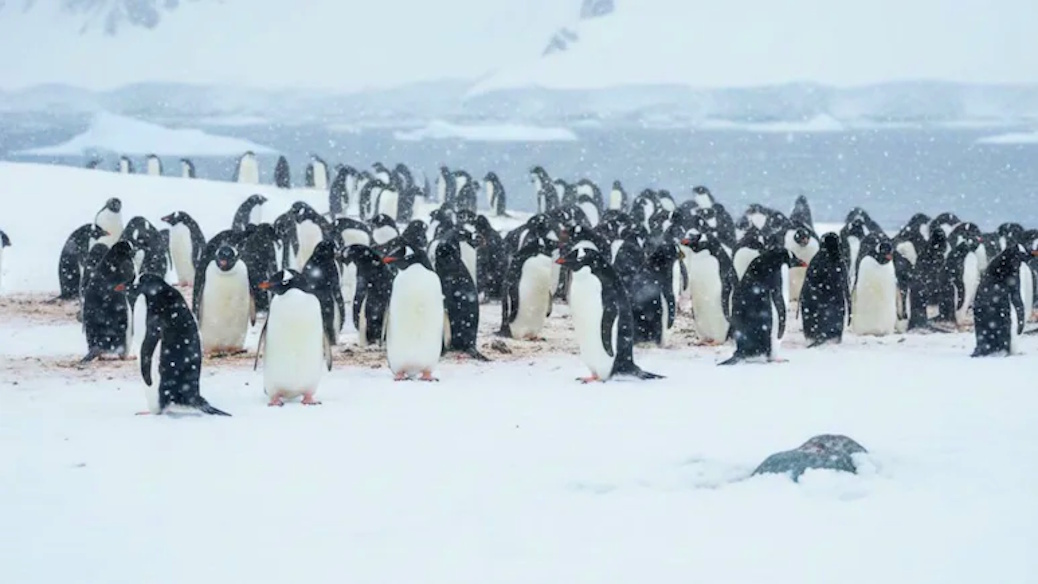
France — Penguin colonies across Antarctica are beginning their breeding seasons significantly earlier than ever before a direct response to the continent’s rapid warming, according to new research published Tuesday. Scientists warn this dramatic shift in behavior reflects profound changes taking place in one of Earth’s most fragile ecosystems.
“The scale is so great that penguins in most areas are now breeding earlier than in any historical records,” said lead researcher Ignacio Juarez Martinez of the University of Oxford and Oxford Brookes University. What started as a subtle change has accelerated into what researchers describe as an unprecedented shift over the past decade, “highly correlated” with rising Antarctic temperatures.
A Record-Setting Pace of Change
Between 2012 and 2022, a global team of scientists monitored Gentoo, Chinstrap, and Adelie penguin colonies using time-lapse cameras spread across Antarctica. They discovered that Gentoo penguins have advanced their breeding season by an average of 13 days with some colonies starting a staggering 24 days earlier. This represents the fastest change in breeding timing ever documented in any bird, and possibly any vertebrate species.
Adelie and Chinstrap penguins also shifted their seasons forward by about 10 days on average. “We expected some advancement, but we were very surprised both by the scale and the speed of the advance,” Martinez told AFP.
The Connection: Ice, Food, and Timing
Penguin breeding cycles are tightly linked to food availability. Less sea ice means easier access to hunting grounds and more snow-free nesting sites for longer periods. As Antarctica warms now one of the fastest-warming regions globally, with record temperatures reported just last year these conditions are arriving earlier in the season.
However, the change isn’t benefitting all penguins equally. The three species once staggered their breeding times, reducing competition. Now, with seasons overlapping, rivalry for prime nesting space and food especially krill, the tiny shrimp-like crustaceans many depend on is intensifying.
Winners and Losers in a Warming World
Gentoos, adaptable foragers suited to milder conditions, are thriving. They’re already expanding into new territories and have been observed taking over nesting sites previously used by Adelies and Chinstraps.
For Adelie and Chinstrap penguins, however, the outlook is more uncertain. Both species rely heavily on specific ice conditions and krill populations, which are under pressure from climate change and commercial fishing. Their numbers are declining in parts of Antarctica, and earlier breeding may not be enough to offset broader environmental challenges.
A Bellwether for Global Change
“As penguins are considered ‘a bellwether of climate change,’ the results of this study have implications for species across the planet,” noted co-author Fiona Jones of Oxford University.
Whether this shift is a successful adaptation remains an open question. “It’s too early to tell if this is beneficial or if penguins are being forced into drastic changes that could affect their long-term survival,” Martinez explained. The team is now focused on studying chick-rearing success. “If they maintain high numbers of chicks, that will be a sign they are adapting. If not, we may be witnessing a climate-driven struggle in real time.”
The findings were published in the Journal of Animal Ecology, adding urgency to the call for greater protection of Antarctic ecosystems as they face an increasingly unstable future.
Our Pashto-Dari Website


Support Dawat Media Center
If there were ever a time to join us, it is now. Every contribution, however big or small, powers our journalism and sustains our future. Support the Dawat Media Center from as little as $/€10 – it only takes a minute. If you can, please consider supporting us with a regular amount each month. Thank you
DNB Bank AC # 0530 2294668
Account for international payments: NO15 0530 2294 668
Vipps: #557320

Comments are closed.