
Petro and Trump Escalate Rhetoric: Sovereignty, War, and the Fracturing of a Historic Alliance

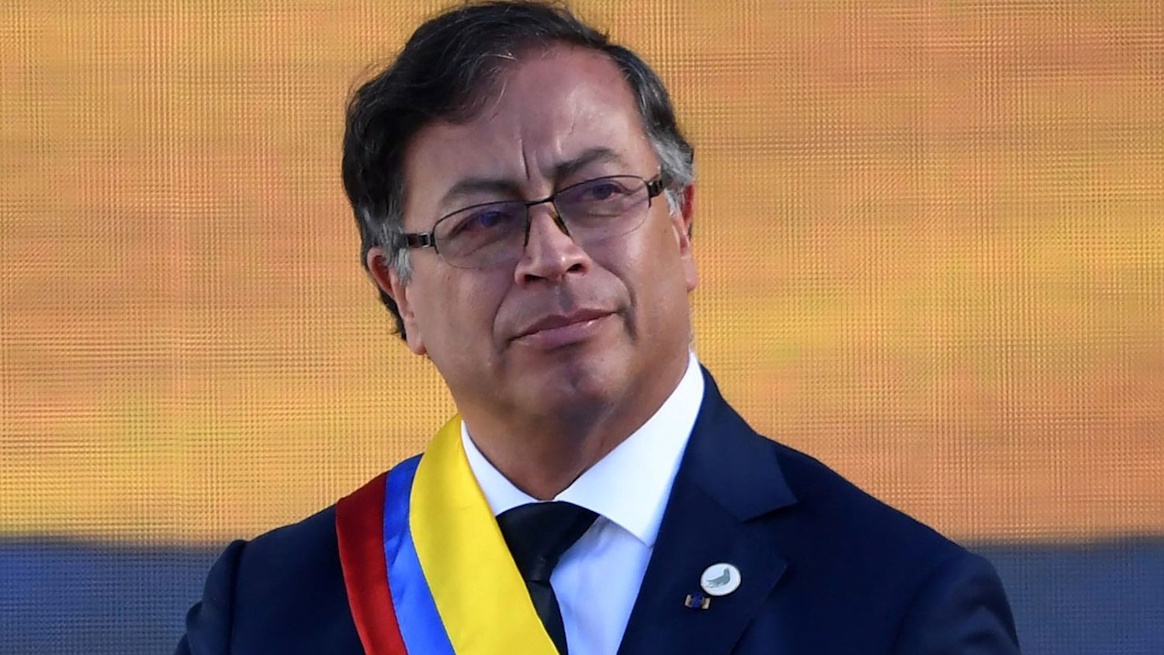
The diplomatic relationship between Colombia and the United States, a cornerstone of hemispheric policy for decades, has plunged into unprecedented hostility following a direct and belligerent exchange between their leaders. The confrontation, escalating from trade and migration disputes to overt military threats, now teeters on a dangerous brink, fueled by the combustible rhetoric of leftist Colombian President Gustavo Petro and the aggressive, America-first stance of U.S. President Donald Trump.
The latest crisis erupted on Tuesday afternoon when President Gustavo Petro posted a stark warning on X: “Do not threaten our sovereignty, because you will awaken the jaguar.” This was his immediate response to statements made minutes earlier by President Donald Trump, who, in a press conference following his final Cabinet meeting of 2025, explicitly named Colombia as a potential target for military action. “I hear Colombia, the country of Colombia, is making cocaine. They have cocaine manufacturing plants, OK, and then they sell us their cocaine… Anybody that’s doing that and selling it into our country is subject to attack,” declared the Republican leader.
Petro’s retort was unequivocal: “Attacking our sovereignty is declaring war; do not damage two centuries of diplomatic relations.” He simultaneously invited Trump to witness firsthand the daily destruction of cocaine laboratories in Colombia’s remote jungles—a challenge highlighting the core dispute: Petro’s contention that the drug trade is a shared social and economic burden, versus Trump’s framing of it as a national security threat requiring unilateral force.
This explosive exchange marks a new zenith of tension in a bilateral relationship that has been deteriorating rapidly. The friction is no longer confined to words. Trump’s “Operation Southern Spear,” a naval offensive in the Caribbean and Pacific targeting vessels suspected of drug trafficking, has already resulted in over 80 deaths. While the administration has temporarily ceased maritime attacks, claiming success, Trump signaled a terrifying escalation: “If we have to, we’ll attack on land. We’re taking those sons of a bitches out.”
This threat of land incursions into Colombian territory represents a stark departure from the historic U.S. posture of security partnership and a shocking level of interventionism, particularly aimed at a democratic nation that was Washington’s closest ally in South America for generations. For Petro, who proudly identifies as Colombia’s first elected left-wing president, this is a profound affront. It transcends the typical tensions between a superpower and a regional partner, striking at the heart of national dignity and self-determination.
A Relationship Unraveling: From Migration to ‘Narco-President’
The current crisis is the culmination of a series of escalating clashes. The initial rupture occurred over Petro’s refusal to accept a U.S. plane carrying shackled, deported migrants, which provoked a Trump declaration of trade war—averted only by swift Colombian concessions. A period of uneasy calm followed, but the fundamental conflict over drug policy reignited in September. In a historic blow, the U.S. government denied Colombia its anti-drug certification for the first time in three decades, explicitly blaming Petro’s leadership. The White House memo stated the failure “rests solely with its political leadership.”
Petro fired back, accusing U.S. power of falling “into the hands of friends of politicians allied with paramilitaries,” a rhetorically potent but practically ineffective counterstroke. The confrontation soon turned more personal and tangible. During a visit to New York for the UN General Assembly, Petro addressed a pro-Palestine rally and urged American soldiers to disobey any order from Trump to attack Palestinians. The U.S. response was swift and symbolic: the revocation of Petro’s visa. Trump then labeled him a “narcotics president” in October, and his administration suspended all aid and payments to Colombia, threatening new tariffs.
Undeterred, Petro doubled down. “I will not concede, I will demand. Colombia has already conceded everything; it doesn’t have to concede any more,” he asserted in an interview. “We have words, crowds, and a people ready to fight.” The psychological warfare intensified with a leaked White House meeting photo showing an image of Petro in a prison uniform, and with Petro condemning Trump’s declaration of Venezuelan airspace as “closed.”
A Dangerous Game of Asymmetric Brinkmanship
Despite the war-like rhetoric, a full-scale military conflict remains highly improbable. The armed forces and police of both nations are deeply intertwined through decades of training and counter-narcotics collaboration. The U.S. still benefits from Colombian intelligence and ground operations, and Colombia relies on the U.S. as its primary trading partner and source of investment.
However, the leaders appear to be playing a dangerous game of asymmetric brinkmanship, each deriving domestic political benefits from the feud. For Trump, targeting Colombia amplifies his “law and order” stance on drugs and projects a image of uncompromising strength to his base, while distracting from other foreign policy challenges. For Petro, standing up to the hemispheric Goliath galvanizes his leftist coalition and allows him to position himself as the defiant protector of national sovereignty against a bullying former patron. He is also engaging a figure well-known and widely disliked in Colombia, a potent foil during a heated electoral season.
The grave risk, however, lies in miscalculation. Petro may be betting on Trump’s bluster, but he is confronting a leader with a demonstrated willingness to follow through on drastic measures, regardless of diplomatic fallout. The infrastructure of the long-standing alliance—military, economic, and institutional—is being systematically dismantled by rhetoric, with concrete consequences already visible: canceled aid, revoked visas, and naval operations resulting in deaths.
The question now is whether the “jaguar” Petro claims to represent, and the “sons of bitches” Trump vows to eliminate, are mere metaphors in a war of words, or whether the escalating cycle of threat and response will eventually trigger an irreversible action that transforms a fraught diplomatic break into a genuine humanitarian and geopolitical disaster. The brink has been reached; the stability of the entire Andean region may depend on which leader, if either, chooses to step back.
Our Pashto-Dari Website


Support Dawat Media Center
If there were ever a time to join us, it is now. Every contribution, however big or small, powers our journalism and sustains our future. Support the Dawat Media Center from as little as $/€10 – it only takes a minute. If you can, please consider supporting us with a regular amount each month. Thank you
DNB Bank AC # 0530 2294668
Account for international payments: NO15 0530 2294 668
Vipps: #557320

Comments are closed.