

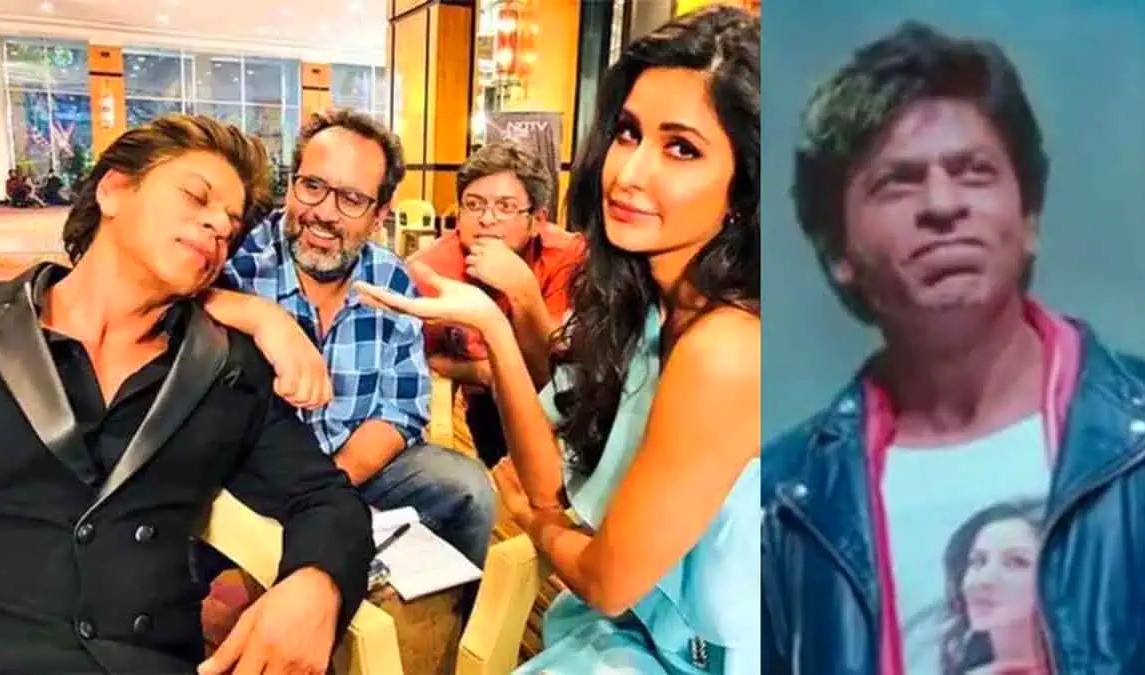
Despite the film’s commercial failure, Rai describes the collaboration as a deeply rewarding creative journey.
Hyderabad: Nearly seven years after the release of Zero in 2018—a film that stumbled at the box office despite its grand vision—director Aanand L. Rai has candidly addressed the factors behind its underperformance. The Shah Rukh Khan-led project, also starring Anushka Sharma and Katrina Kaif, was one of the most anticipated films of its year but ultimately failed to resonate with audiences.
“I Failed to Harness Shah Rukh Khan’s Stardom”
In a reflective conversation with Galatta Plus, Rai shouldered the blame for the film’s disappointing outcome. He acknowledged that while he approached Shah Rukh Khan purely as an actor, he overlooked the weight of the superstar’s iconic persona—a crucial element that audiences eagerly anticipate.
“The issue with Zero was that a superstar came to me with immense trust and affection, and I, in my creative bubble, treated him solely as an actor,” Rai explained. “I failed to recognize that this wasn’t just an actor-director collaboration—it was a project involving Shah Rukh Khan, the phenomenon. His image carries certain expectations, and I should have woven that into the narrative. I realized much later that I needed to honor that star power, not just the artist.”
A Rewarding Experience, Despite the Outcome
Despite the film’s poor reception, Rai cherished the experience of working with Khan. He described the process as joyful and enriching, though he lamented that neither he nor Khan paused to consider the broader expectations attached to a Shah Rukh Khan superstar vehicle.
“We both enjoyed the creative journey immensely,” Rai shared. “But in hindsight, perhaps one of us should have stepped back and acknowledged that we were dealing with a cultural icon—not just an actor. That awareness might have helped balance the artistic vision with the audience’s desires.”
Zero: A Bold Gamble That Didn’t Pay Off
The film followed Bauua Singh (Khan), a man with dwarfism from Meerut, navigating complex relationships with a scientist with cerebral palsy (Anushka Sharma) and a troubled film star (Katrina Kaif). Made on an estimated budget of ₹200 crore, Zero managed to earn only around ₹178 crore worldwide, falling short of commercial viability. The film’s performance led to significant industry debate and marked the beginning of a prolonged acting hiatus for Shah Rukh Khan, who returned to the screen four years later with the blockbuster Pathaan.
Rai’s Evolution as a Filmmaker
The experience with Zero appears to have influenced Rai’s directorial approach, emphasizing a deeper balance between creative ambition and audience connection. Recently, he directed Tere Ishk Mein, starring Dhanush and Kriti Sanon—a film that returns to the emotional, character-driven storytelling Rai is known for, while seemingly applying lessons learned from past challenges.
Industry Takeaways
Rai’s introspection highlights a recurring tension in Hindi cinema: the balance between an actor’s versatility and a star’s predefined image. For a figure like Shah Rukh Khan—whose persona is embedded in the public imagination—diverging too far from audience expectations can be a risky gamble. Zero remains a case study in ambitious storytelling that, despite its technical achievements and heartfelt performances, could not bridge the gap between innovation and mass appeal.
As Rai moves forward, his honest appraisal of Zero offers valuable insights for filmmakers navigating the complex dynamics of star power, creative freedom, and box office realities.
Our Pashto-Dari Website


Support Dawat Media Center
If there were ever a time to join us, it is now. Every contribution, however big or small, powers our journalism and sustains our future. Support the Dawat Media Center from as little as $/€10 – it only takes a minute. If you can, please consider supporting us with a regular amount each month. Thank you
DNB Bank AC # 0530 2294668
Account for international payments: NO15 0530 2294 668
Vipps: #557320

Comments are closed.