
Afghanistan’s Labor Market Remains Critically Weak, WFP Warns, as Job Access Drops Sharply

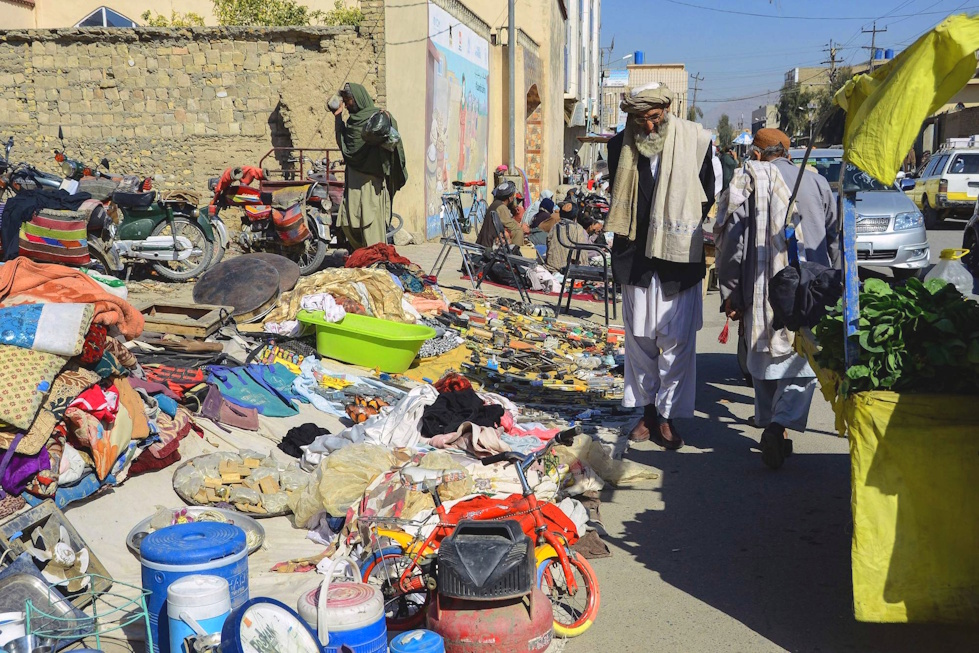
KABUL – Despite recent signs of market stability and easing food prices, employment opportunities across Afghanistan continued to deteriorate through late May, according to a new report from the World Food Program (WFP). The findings underscore the persistent pressure on household incomes, with casual laborers now finding work less than two days per week on average.
The report, which tracks real-time economic indicators, reveals that casual workers secured employment for only 1.9 days per week during the fourth week of May. This figure represents a 20 percent decline compared to the same period last year and is 16 percent below the three-year average. The WFP attributes this downturn to persistent labor market weakness and intensifying competition for jobs, driven in part by a large influx of returnees arriving from neighboring countries, particularly Iran and Pakistan.
Stable Markets, But Shrinking Purchasing Power
While food markets have largely stabilized in recent months, the report cautions that many Afghan households continue to struggle with reduced purchasing power. Even as prices for some commodities have cooled, the lack of consistent income leaves families unable to afford basic necessities.
“Persistently limited employment opportunities, driven by increased demand from returnees, combined with rising food prices, continue to constrain the purchasing power of labour-dependent households,” the WFP said in the report.
On a positive note, market conditions remained broadly stable during the week. The Afghan afghani held steady at 63.8 to the U.S. dollar, remaining stronger than both its year-ago level and the three-year average. This strength has helped limit imported inflation. Additionally, domestic harvests and continued imports via regional trade routes have helped maintain supplies across major markets.
Staple Food Prices Still Significantly Higher Year-on-Year
Despite these stabilizing factors, many staple foods remain considerably more expensive than they were a year ago. Compared with May 2025:
-
Wheat grain prices rose 14 percent.
-
Wheat flour prices increased between 9 and 12 percent.
-
Sugar prices jumped 25 percent.
-
Cooking oil prices edged up 4 percent.
Rice recorded some of the steepest increases, with high-quality rice costing 38 percent more than a year earlier and lower-quality rice up 28 percent. The WFP linked these sharp rises primarily to trade disruptions between October 2025 and March 2026, when border closures with Pakistan forced traders to reroute imports through Iran and Central Asia, significantly increasing transportation costs and disrupting supply chains. Since March, improved trade flows have contributed to gradual price declines.
Seasonal Declines in Vegetables, Rising Costs for Farmers
In line with seasonal trends, vegetable prices declined as domestic production increased. Tomato prices fell by 18.5 percent during the week, while potato prices dropped 2.3 percent. Onion prices rose modestly but remained well below year-earlier levels.
However, farmers are facing their own cost pressures. Diesel prices remained 14 percent higher than a year ago, and fertilizer costs continue to strain agricultural production. Urea prices soared 45 percent higher than last year, while DAP fertilizer prices rose 16 percent.
Meanwhile, livestock prices climbed ahead of the Eid al-Adha holiday. The price of a one-year-old female sheep increased by 6 percent during the week, driven by strengthening seasonal demand.
Outlook: Persistent Risks to Food Security
Despite recent improvements in market stability, the WFP warned that significant risks remain. Transportation costs, uncertainty in regional trade relations, and Afghanistan’s heavy dependence on imports continue to pose serious threats to price stability and food security in the months ahead. The agency cautioned that without sustained employment recovery and continued humanitarian assistance, millions of Afghans could face worsening food insecurity going into late 2026.
Our Pashto-Dari Website

Support Dawat Media Center
If there were ever a time to join us, it is now. Every contribution, however big or small, powers our journalism and sustains our future. Support the Dawat Media Center from as little as $/€10 – it only takes a minute. If you can, please consider supporting us with a regular amount each month. Thank you
DNB Bank AC # 0530 2294668
Account for international payments: NO15 0530 2294 668
Vipps: #557320

Comments are closed.