
UNICEF Sounds Alarm as 3.7 Million Afghan Children Face Malnutrition Crisis Ahead of Peak Wasting Season

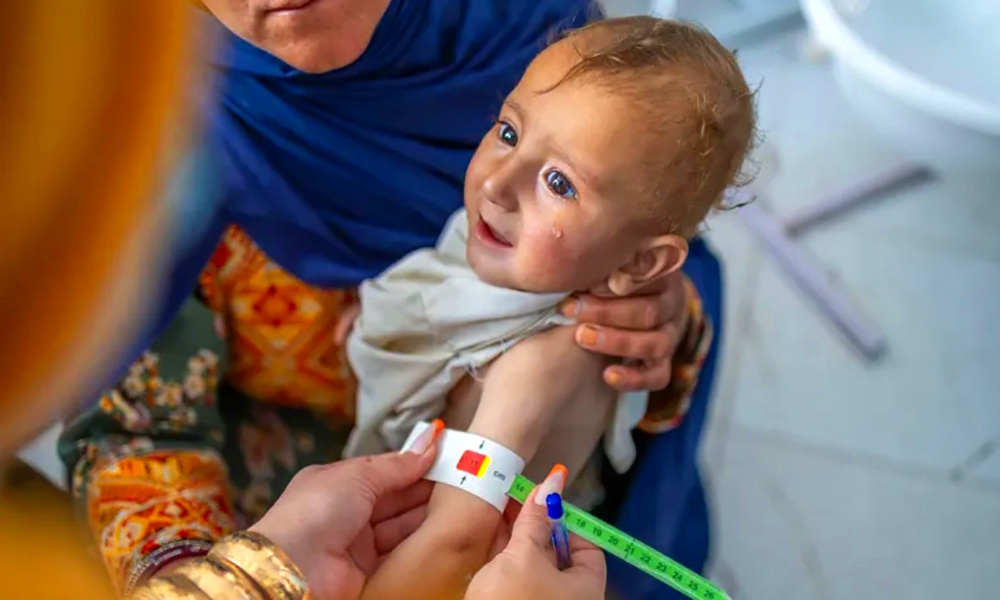
KABUL, July 2026 – UNICEF has issued a stark warning that 3.7 million children under the age of five in Afghanistan are at heightened risk of malnutrition, as worsening food and nutrition insecurity threatens to push the country’s already fragile child health crisis to catastrophic levels just weeks before the annual peak wasting season begins.
In a new report released on Sunday, Too Little, Too Late: The Diet Crisis Facing Young Children in Afghanistan, the UN children’s agency reveals that child food and nutrition insecurity has become one of the primary drivers of acute undernutrition nationwide. The report urges immediate, coordinated action to protect children’s diets before conditions deteriorate further warning that delays could cost thousands of young lives.
Groundbreaking Nationwide Assessment Exposes Early Warning Signs
For the first time, UNICEF has simultaneously measured child malnutrition and the lived experience of food and nutrition insecurity among the same cohort of children across all 34 provinces of Afghanistan. This dual-pronged assessment has uncovered alarming early-warning indicators that were previously undetectable at scale, including:
-
Reduced dietary diversity – with many children consuming only one or two food groups daily
-
Skipped meals – as families stretch limited resources
-
Children eating less than they need with portions drastically cut
-
Going hungry – with entire days without adequate food intake
These signs, UNICEF stresses, are not merely statistics they are precursors to severe wasting, a condition that can become life-threatening within weeks if unaddressed.
Peak Season Arrives Early and with Greater Intensity
The report arrives as Afghanistan enters its annual peak wasting season, which typically runs from July to September. However, according to the latest Nutrition Cluster data, wasting rates have already worsened in 26 of the country’s 34 provinces compared to the same period in 2025 an ominous signal that this year’s crisis is both earlier and more severe than anticipated.
Children under the age of two are bearing the heaviest burden, accounting for a staggering 83 percent of severe acute malnutrition (SAM) cases and 77 percent of moderate acute malnutrition (MAM) cases. These youngest children are also the most vulnerable to long-term developmental damage, stunting, and mortality.
“A Warning That a Child May Soon Become Dangerously Wasted”
“Young children in Afghanistan are being pushed closer to malnutrition before the peak season has even begun,” said Dr. Tajudeen Oyewale, UNICEF Representative in Afghanistan. “This new evidence gives us a rare and critical opportunity to act before children reach the point of severe malnutrition.”
He added: “When families begin reducing meals or cutting back on nutritious foods, it is not only a sign of hardship. It is a warning—a clear signal that a child may soon become dangerously wasted. Treatment saves lives, but we must also invest in prevention, starting with the diets of the youngest children and pregnant women. Waiting until children are visibly malnourished is waiting too long.”
Multiple Crises Converge to Fuel Malnutrition Surge
UNICEF attributes the worsening malnutrition landscape to a convergence of interconnected factors, including:
-
Poor dietary practices and chronic lack of diverse, nutrient-rich foods
-
Increasing household food insecurity driven by economic collapse, drought, and displacement
-
Disease outbreaks such as acute watery diarrhoea and measles, which deplete children’s nutrient reserves
-
Low immunisation coverage, leaving children more susceptible to preventable infections
-
Inadequate water, sanitation, and hygiene (WASH) services, exacerbating disease transmission
-
Growing funding and supply shortages, which have strained health and nutrition supply chains
The agency further warned that children living in severely food-insecure households are up to six times more likely to suffer from wasting during peak malnutrition periods, underscoring the direct link between household poverty and child survival.
Understanding Wasting: A Life-Threatening Emergency
Wasting technically defined as low weight-for-height is a severe and potentially fatal form of malnutrition. It occurs when a child becomes dangerously thin due to inadequate food intake, recurrent illness, or both. Unlike stunting, which reflects chronic undernutrition, wasting is an acute condition that can rapidly lead to death if not treated promptly. Children with severe wasting are 11 times more likely to die than well-nourished children, making early detection and intervention absolutely critical.
UNICEF Calls for Urgent Investment in Prevention and Treatment
In response to the escalating crisis, UNICEF is calling for immediate and sustained investment to expand preventive nutrition programmes, with a particular focus on its First Foods Initiative a targeted intervention designed to improve complementary feeding practices for children aged 6 to 23 months, a critical window for growth and cognitive development.
The agency is also urging the Afghan authorities and international donors to strengthen integrated health, nutrition, water, sanitation, education, and social protection services, emphasising that treatment alone cannot keep pace with the scale of need.
A Narrowing Window for Action
With the peak wasting season now just weeks away, UNICEF warns that the window to prevent more children from becoming severely malnourished is rapidly closing. The agency has made an urgent appeal for flexible, timely funding to reach vulnerable families especially in hard-to-reach and conflict-affected areas before food insecurity escalates into a full-blown, life-threatening emergency.
“We have the tools, the knowledge, and the evidence,” Dr. Oyewale concluded. “What we lack is time. Every day we delay, more children slip into severe malnutrition and for too many, it will be too late. This is not a crisis we can afford to watch unfold from the sidelines.”
Our Pashto-Dari Website

Support Dawat Media Center
If there were ever a time to join us, it is now. Every contribution, however big or small, powers our journalism and sustains our future. Support the Dawat Media Center from as little as $/€10 – it only takes a minute. If you can, please consider supporting us with a regular amount each month. Thank you
DNB Bank AC # 0530 2294668
Account for international payments: NO15 0530 2294 668
Vipps: #557320

Comments are closed.