

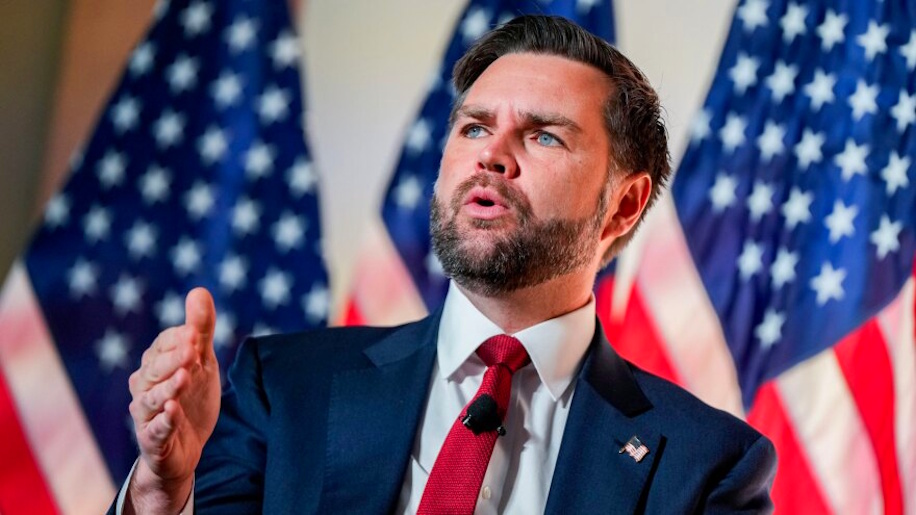
In a wide-ranging podcast interview released Wednesday, U.S. Vice President JD Vance alleged that certain members of the Israeli government have actively sought to manipulate American public opinion in order to derail a U.S.-brokered agreement aimed at ending the war with Iran. The remarks, made during an episode of The Joe Rogan Experience, mark the latest escalation in an increasingly public diplomatic rift between Washington and Jerusalem.
Vance, who is widely viewed as a potential frontrunner for the presidency in future elections, did not mince words. He defended the controversial deal struck last month, which has drawn sharp criticism from both U.S. and Israeli officials. Detractors argue the agreement fails to adequately curb Iran’s advancing missile capabilities, lacks enforceable mechanisms for dismantling its nuclear infrastructure, and unduly restricts Israel’s military options against Hezbollah militants in Lebanon.
“I know beyond a shadow of a doubt that there have been people within the Israeli government who are trying to, like, actually shift us away from that policy because they want to continue the military campaign,” Vance told Rogan. He acknowledged having “good relationships” with some Israeli officials but insisted that “there are some people within their system that we know beyond a shadow of a doubt are manipulating and trying to change American public opinion to keep the war going on indefinitely.”
The vice president framed such influence efforts as par for the course in global politics, noting that both allies and adversaries routinely attempt to shape U.S. policy. “It doesn’t bother me that Israel tries to do this it frankly doesn’t even bother me that Russia or some of these other countries do it,” he said. “That’s just the nature of being a political leader in 2026.” However, he drew a firm line at effectiveness: “What does bother me is when those operations, those influence campaigns, actually affect American political judgment.”
Vance’s comments echo earlier, sharper rebukes he made in June, when he lashed out at Israeli critics of the Iran deal, reminding them that President Donald Trump remains Israel’s most steadfast ally a pointed reference to the billions of dollars in annual U.S. defense aid that underpins Israel’s military superiority in the region.
Behind closed doors, Israeli senior officials speaking on condition of anonymity have pushed back forcefully, characterizing the deal’s terms as detrimental to Israel’s security. They argue that the agreement fails to confront the core threats posed by Iran’s nuclear and ballistic missile programs, a concern they say is shared across the spectrum of Israel’s political and military leadership.
When Rogan pressed Vance on whether the U.S. would have entered the most recent conflict with Iran without Israeli influence, the vice president responded unequivocally: “Yes, yes I do.” He added, “I think the president, separate from any influence from Israel, believes very strongly and again I agree with this that Iran should not have a nuclear weapon.”
The Israeli Prime Minister’s Office had not issued a formal response to Vance’s allegations as of publication time. The widening public disagreement underscores the fragile state of U.S.-Israel relations, even as both nations continue to coordinate on broader Middle East security issues. Analysts suggest that Vance’s unusually candid remarks may signal a growing willingness within the Trump administration to challenge Israeli policy openly a departure from decades of largely unquestioned bipartisan support.
As the Iran deal faces ongoing scrutiny in Congress and among international allies, the Vance interview has reignited debate over the limits of allied influence and the sovereignty of American decision-making in times of war. Whether his claims will prompt formal investigations or diplomatic recalibrations remains to be seen, but they have already deepened the sense of unease among pro-Israel advocacy groups in the U.S., who fear the administration may be cooling its traditional posture of unwavering support.
Our Pashto-Dari Website

Support Dawat Media Center
If there were ever a time to join us, it is now. Every contribution, however big or small, powers our journalism and sustains our future. Support the Dawat Media Center from as little as $/€10 – it only takes a minute. If you can, please consider supporting us with a regular amount each month. Thank you
DNB Bank AC # 0530 2294668
Account for international payments: NO15 0530 2294 668
Vipps: #557320

Comments are closed.