
UNICEF: Professional Skills Unlock Critical Pathways for Asia-Pacific Youth Amidst Crisis

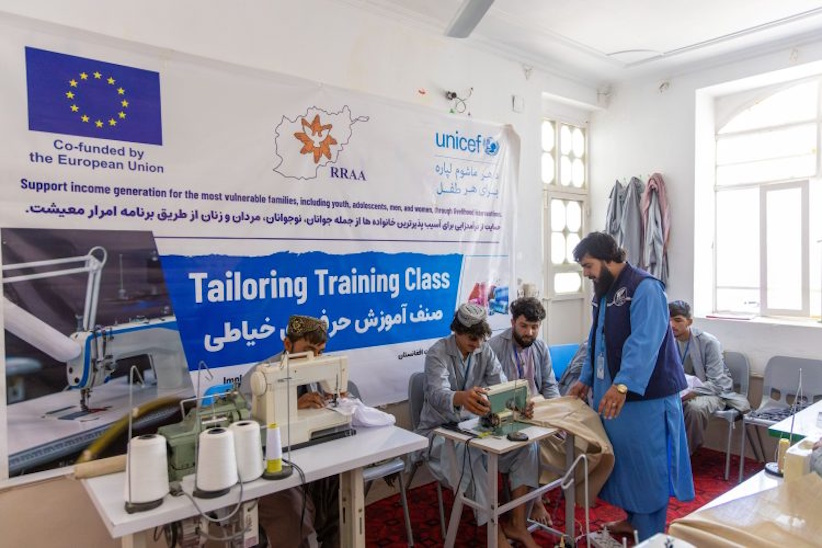
As the world marked World Youth Skills Day, the United Nations Children’s Fund (UNICEF) issued a powerful reminder that technical and vocational education is not merely a pathway to a paycheck—it is a lifeline for millions of young people trapped between ambition and circumstance. Across the Asia-Pacific region, and particularly in Afghanistan, acquiring professional skills is creating tangible opportunities where traditional economic and educational routes have been severed.
A Regional Talent Trap
Sanjay Wijesekera, UNICEF Regional Director for East Asia and the Pacific, took to X on Thursday, July 16, to underscore a paradox plaguing the region: “We do not face a shortage of talent we face a shortage of pathways.” His statement cuts to the heart of a systemic issue. While young people in Asia and the Pacific possess immense potential, they are often met with a stark lack of resources, formal employment structures, and institutional support. This mismatch, Wijesekera noted, has created a generation at risk of being left behind, not because of incapacity, but because the bridges from education to employment are crumbling.
From the Frontlines in Afghanistan
In a particularly poignant reflection, Wijesekera shared his observations from a visit to Kandahar, where he met young Afghans—many of whom have been systematically excluded from formal schooling actively learning professional trades to forge a better future. These encounters highlight a grim reality: after decades of conflict and the Taliban’s severe restrictions which have effectively banned girls from secondary and higher education and barred women from most public-sector work vocational training has become one of the few remaining avenues for dignity, survival, and hope.
Vocational Training as a Humanitarian Shield
UNICEF, in collaboration with partners like the European Union Delegation to Afghanistan, is doubling down on this approach. In a post commemorating World Youth Skills Day, the agency shared images from a tailoring workshop funded by the EU, emphasizing that marketable, practical skills are essential tools for resilience. “Skills can help young people build better futures,” UNICEF stated, framing vocational education not as a secondary option, but as a primary strategy for strengthening self-reliance in a nation where the formal economy is in ruins.
Afghanistan’s economic landscape is dire: high unemployment, widespread poverty, and a fragile economy that has been further destabilized by a sharp decline in international aid. Humanitarian agencies have consistently warned that the lack of youth employment is not just an economic issue it is a social powder keg. For women and girls, the barriers are even higher; the Taliban’s edicts have transformed what was already a challenging environment into a near-total blockade on learning and livelihood. Yet, by teaching tailoring, carpentry, IT, and other trades, UNICEF and its partners are offering a counter-narrative: one where young people can still exercise agency and contribute to household income, even under oppressive constraints.
The Demographic Imperative
The stakes are monumental. According to the UN, Afghanistan is home to one of the world’s youngest populations, with over 60% of citizens under the age of 25. This demographic bulge represents either a massive opportunity for growth or a catastrophic risk of instability depending entirely on whether these young people can find meaningful work and purpose. International organizations argue that without sustained investment in skills development, the country will struggle to break the cycle of poverty and conflict.
A Call for Sustained Commitment
Despite severe operational and funding hurdles, UNICEF remains committed to expanding vocational training programs across Afghanistan’s most vulnerable communities. However, agency officials stress that these efforts require consistent international support. Skills training, they argue, is more than a humanitarian intervention; it is an investment in long-term stability, economic recovery, and the very fabric of a future civil society. For the youth of Afghanistan and the wider Asia-Pacific region, acquiring a professional skill is not just about finding a job it is about reclaiming a future that geopolitics and conflict have tried to deny them.
Our Pashto-Dari Website

Support Dawat Media Center
If there were ever a time to join us, it is now. Every contribution, however big or small, powers our journalism and sustains our future. Support the Dawat Media Center from as little as $/€10 – it only takes a minute. If you can, please consider supporting us with a regular amount each month. Thank you
DNB Bank AC # 0530 2294668
Account for international payments: NO15 0530 2294 668
Vipps: #557320

Comments are closed.