

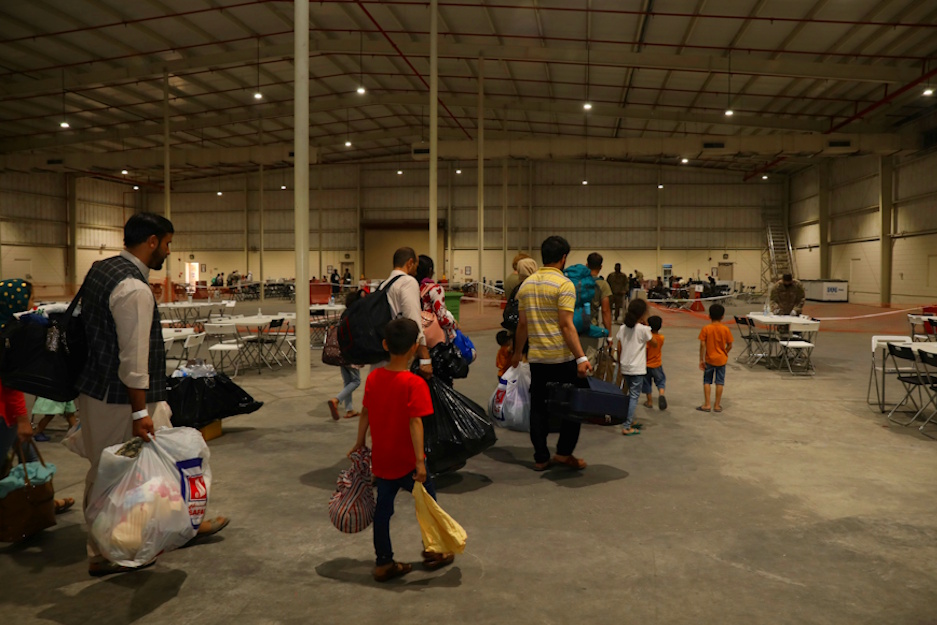
More than 1,100 Afghan nationals who worked alongside U.S. forces remain stranded at Camp As Sayliyah, a former U.S. military facility in Qatar, where they have been awaiting visa processing and relocation decisions for months. As the Biden administration’s initial timelines lapse, Washington is now scrambling to find alternative countries willing to resettle them.
According to a report by The Wall Street Journal, U.S. officials are in discussions with several nations in sub-Saharan Africa and Southeast Asia to take in the evacuees. The push comes after a March 31 deadline to close the Qatari facility passed without a resolution. The camp reportedly costs more than $10 million per month to operate, and Qatari authorities have urged the United States to finalize resettlement plans and shut down the site.
The evacuees were originally intended to pass through Qatar temporarily after the Taliban takeover of Afghanistan in 2021. However, plans to move them to the United States stalled under tightened U.S. immigration restrictions introduced in January 2026. The Trump administration’s policy suspended visa issuance for most Afghan nationals, including Special Immigrant Visas (SIVs), leaving many cases frozen despite earlier expectations of resettlement.
Dire conditions and growing despair
Conditions at Camp As Sayliyah have become increasingly difficult, with morale among residents declining as uncertainty over their future grows. Many of those at the facility say they fear returning to Afghanistan due to the risk of retaliation, detention, or worse under Taliban rule.
According to The Wall Street Journal, some Afghans have been offered cash payments ranging from $1,200 to $4,500 per family member to abandon hopes of reaching the United States and instead return to Afghanistan. Notably, U.S. government forms themselves acknowledge that returnees could face serious danger if sent back, raising ethical questions about such financial incentives. Advocates warn that any pressure on Afghans to return could expose them to severe reprisals. No official U.S. figures have been released on how many have accepted these payments.
Failed outreach and widening search
A U.S. official cited by the Journal said attempts to persuade Arab and Muslim-majority countries to accept the evacuees have so far failed, prompting Washington to widen its search to more distant destinations. However, no country has yet publicly agreed to take the group, leaving the stranded Afghans’ future unresolved months after their expected onward movement.
The case has become one of the clearest examples of the unfinished legacy of the 2021 U.S. withdrawal from Afghanistan, when tens of thousands of Afghans linked to the American mission were evacuated in haste. While many were resettled, others remained trapped in legal, political, and bureaucratic limbo especially those whose immigration categories were later delayed, restricted, or suspended.
Lawmakers and advocates urge action
U.S. lawmakers have repeatedly called for action. Senator Jeanne Shaheen (D-N.H.) said Washington has a moral and practical responsibility toward these individuals, warning that they could face grave risks if forced to return home. Shawn VanDiver, head of the advocacy group Afghan Evac, described the situation as deeply frustrating for those affected, noting that many feel stuck in limbo after multiple deadlines passed without clear communication.
Meanwhile, the U.S. State Department has pointed to earlier policy decisions including challenges stemming from the chaotic withdrawal from Afghanistan—as contributing to the current stalemate. With no confirmed relocation plan and the Qatari facility’s monthly costs mounting, the fate of the stranded evacuees remains uncertain and increasingly urgent. The situation underscores the ongoing difficulties in resettling Afghan allies, years after the end of the U.S. military presence, as thousands remain in temporary locations worldwide awaiting permanent relocation.
Our Pashto-Dari Website

Support Dawat Media Center
If there were ever a time to join us, it is now. Every contribution, however big or small, powers our journalism and sustains our future. Support the Dawat Media Center from as little as $/€10 – it only takes a minute. If you can, please consider supporting us with a regular amount each month. Thank you
DNB Bank AC # 0530 2294668
Account for international payments: NO15 0530 2294 668
Vipps: #557320

Comments are closed.