

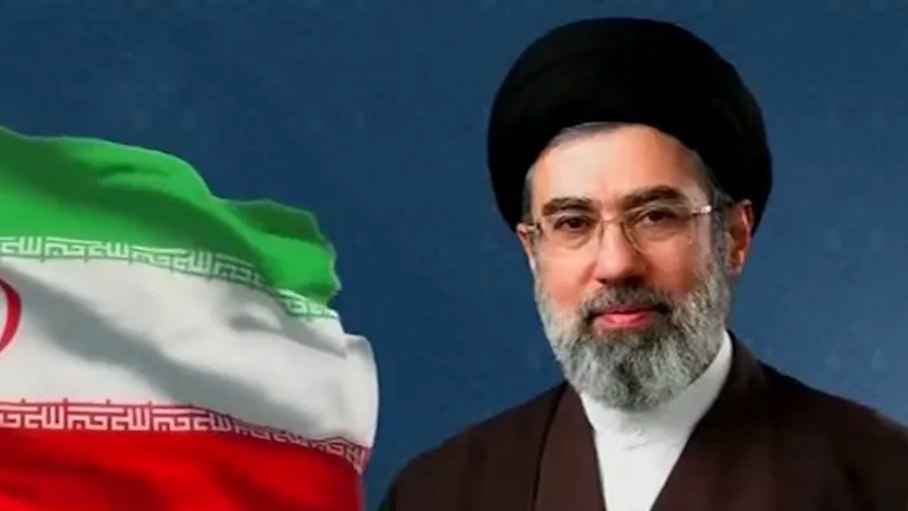
In his first message, published in writing by Iranian state radio and television three days after his selection by the Assembly of Experts, the third Supreme Leader of the Islamic Republic of Iran, Ayatollah Mojtaba Khamenei, did not hesitate to challenge the United States. In his inaugural address, he vowed to continue the closure of the Strait of Hormuz and to increase the cost of war against Iran, both regionally and internationally. This message was quickly reflected in global oil markets, as the price per barrel surged past one hundred dollars.
This, however, was not his only message. His second address was directed inward, toward the Iranian populace, calling for national unity against an external enemy targeting Iranian society and its geography.
His third message reiterated Iran’s longstanding position justifying its actions against Arab Gulf states, invoking the familiar narrative that its strikes target only American bases and would continue as long as the war persists.
Mojtaba Khamenei in the Public Sphere
On March 9, 2026, Iran’s Assembly of Experts announced the election of Sayyid Mojtaba Khamenei as the third Supreme Leader of the Islamic Republic, succeeding his father, Ali Khamenei, who was assassinated on February 28 during joint US-Israeli strikes on Iran.
This selection occurred under immense security pressure. Israel had explicitly threatened that anyone chosen as the new Leader would be a target for assassination. Simultaneously, US President Donald Trump demanded a role in determining the identity of the new Leader, having previously declared his rejection of Mojtaba Khamenei succeeding his father.
This extraordinary context is not merely a backdrop but a fundamental part of the event’s very structure; the choice was made under dual pressure:
-
External pressure seeking the collapse of the system.
-
Internal pressure within the system searching for continuity to ensure its cohesion.
Born on September 8, 1969, in Mashhad, Mojtaba is the second son of Ali Khamenei. His childhood coincided with his father’s years of opposition to the Shah’s regime, followed by the triumph of the 1979 Revolution and the establishment of the Islamic Republic. This upbringing placed him at the heart of the political scene, not on its periphery.
He participated in the Iran-Iraq war as part of the elite Habib ibn-Mudhahir battalion. This unit later became a notable source for numerous security and intelligence leaders, meaning his connections within the military establishment are rooted in wartime camaraderie, not merely in later political appointments.
He entered the Qom Seminary in 1999 at the age of thirty, a relatively late start compared to the traditional path for religious students. He studied under Ayatollah Taghi Mesbah-Yazdi, known for his jurisprudential rigidity. During his seminary education, he held the rank of Hojjat al-Islam, a title elevated to Ayatollah by virtue of his selection by the Assembly of Experts.
If one word could describe the third Leader’s persona before assuming his new position, it would be “ambiguity.” This is because Mojtaba’s candidacy differed from traditionally considered religious figures for the role of Supreme Leader, which typically relies on established religious authority. Instead, his influence was built upon a dense network of security, military, and economic connections.
His presence in the general political arena became noticeable around the time of the ninth presidential election, which brought Mahmoud Ahmadinejad to power on a distinctly populist platform marked by intense hostility toward the Iranian reformist movement, which was often linked to the West and the United States. Many observers believe Mojtaba, with his symbolic weight and influence, favored Ahmadinejad’s victories in both the 2005 and 2009 presidential elections.
Within the political system, it is believed that most of the commanders close to him are veterans of the Iran-Iraq war, specifically those who served in the Habib ibn-Mudhahir battalion—named after a prominent commander of Imam Hussein (AS) in the Battle of Karbala. This unit is known for its focus on war veterans. Notably, many of these veterans later assumed positions within the security apparatus of the Islamic Revolutionary Guard Corps (IRGC).
The orchestrated engineering of Iran’s electoral landscape, which began systematically around 2005, brought Mojtaba Khamenei’s name into public discourse. Discussions emerged regarding roles attributed to him in this process. It is believed that this engineering, often conducted through the IRGC’s intelligence wing, led to periodic conflicts with the Ministry of Intelligence.
It appears Mojtaba viewed the IRGC’s security apparatus as critically important and in need of firm control. This perspective might explain the dismissal of Hossein Taeb from the leadership of the IRGC Intelligence Organization in 2022 after approximately 13 years in the post. At the time, it was rumored that the younger Khamenei had eliminated a close ally.
As discussions of Mojtaba’s involvement in the IRGC’s security apparatus grew, so did references to another role he played: in the economic sphere. This role involved managing the economic affairs related to his father’s position as a Source of Emulation (Marja-e Taqlid). According to the principles of the Twelver Ja’fari school of thought, a Marja is entitled to collect khums (one-fifth) from his followers as a religious authority and representative of the Hidden Imam. This economic management brought him significant influence, leading the United States to impose sanctions on him in 2019.
Within the public economic sphere, his name became associated with the management of the massive economic foundation known as Setad Ejraiye Farmane Imam (The Headquarters for Executing the Order of the Imam). This powerful conglomerate was established in 1989 to manage assets and properties confiscated from the former monarchy. This combination of presence in both the security and economic institutions provided Mojtaba with compounded sources of power as a cleric, a reality now magnified as he becomes the third Supreme Leader.
The Third Leader and the Choice of Necessity
Mojtaba Khamenei was never far from the list of potential successors to his father. However, his insistence on remaining in the shadows, avoiding the public political arena, and shunning public appearances and speeches, left the impression that he might not be seeking the position, or that his father might not favor it. It later became known that his father had indicated to those around him that he did not prefer such an option. Yet, his name never disappeared from succession lists, returning with force after his father’s assassination in the US-Israeli strike. Five key factors can explain this outcome:
First: The passing of most key figures who possessed revolutionary legitimacy—those who stood beside the founder, Ayatollah Khomeini. The few remaining are in frail health. This void opens the door for other factors to influence the selection process.
Second: The state of war imposed on Iran (in Iranian terminology) and the assassination of the Leader. A prolonged leadership vacuum could project images of systemic weakness or division, potentially signaling to the US and Israel that they could engage the military situation differently.
Third: The system’s primary priority at this stage. It seems firmly established within the Iranian system’s mindset that the imposed war is existential: the Islamic Republic either endures or ceases to exist. Therefore, having a Leader closely associated with the previous Leader, who managed Iran for 37 years, appears a safe choice to ensure the transition of the system and the country into a new phase with minimal damage to the system’s structure and institutions. The main title of this new phase is the survival of the regime.
Fourth: The explicit hostility from the US and Israel toward the selection of the third Leader, their attempts to influence the process, talk of American interference, and threats of assassination—all were perceived by the political establishment as a profound insult. This perception likely pushed them toward a defiant, situational decision. In this context, the American administration seems to misunderstand the political culture governing the Islamic Republic, which operates on a simple principle: whoever is supported by America and the West is definitely against the Islamic Republic, and whoever is rejected by them is important to the Islamic Republic. This very perception contributed to the near-total elimination of the reformist movement in Iran. The impact of the media offensive and US-Israeli threats on the decision to choose Mojtaba Khamenei as Leader cannot be underestimated.
Fifth: The presence of a Supreme Leader like Ayatollah Mojtaba Khamenei may be seen as a necessity for making the difficult decisions required by the Islamic Republic at this historical juncture. It has lost much of its regional leverage, its nuclear program has been targeted, and the state’s infrastructure faces continuous assault in a war that shows no signs of ending soon. These are decisions about survival and preserving the Islamic Republic. This means navigating between the revolutionary imperative to protect the system and the need for strategic repositioning to weather the storms, all aimed at safeguarding the regime. Furthermore, the legitimacy derived from blood—having lost his father and, symbolically, his mother’s security—grants him precedence among the system’s pillars, supplementing his existing sources of power.
Conclusion
The perceived return of hereditary succession to Iran’s foremost political office is an undeniably significant development, evoking the country’s historical experience with monarchy. Its importance is amplified within the context of a religious state that deliberately avoided this path during the first transition from Khomeini to Khamenei.
This choice appears to be one of necessity, dictated by the extraordinary circumstances surrounding the Islamic Republic. The political system’s collective memory of the second round (February 2026) of the US-Israeli campaign aimed at ending the Islamic Republic’s experiment undoubtedly dominates most decision-making at this stage.
The third Leader’s paramount priority will be the safety and integrity of the system and the state. This could open pathways for both escalation and de-escalation, though the choice will not be Iran’s alone. Considering the trajectory of the conflict, escalation seems more likely to precede any serious political repositioning, whether concerning the war itself or Iran’s relations with the region and the world. It is within these turbulent contexts that the third Leader will begin to establish his chosen path for the Islamic Republic, and his distinct leadership imprint will start to emerge.
The concept of influence within the institutions established by the second Leader, operating beyond the constitutional text, will persist and likely expand during the third Leader’s tenure. This may be viewed as a necessity amid heightened threats—a role Mojtaba performed even before becoming Leader. In clearer terms, Iran may be reverting to the early 1980s model of centralized power and decision-making.
The third Supreme Leader seeks to present himself to Iranians as a younger man in a youthful society, aiming to offer better opportunities for the young. However, in the arena of foreign policy, he will likely continue the rhetoric of confrontation and defiance toward America, Israel, and their supporters.
On the regional front, specifically concerning the Arab Gulf states, Iran may revert to the dynamics of the 1980s: an era of deep mistrust and the dominance of security-centric interpretations of its neighbors’ actions. This will cast a long, negative shadow over any potential progress in rebuilding trust in its relations with its immediate vicinity.
Mojtaba Khamenei has become the third Supreme Leader under exceptional circumstances for the Islamic Republic. While this reality may gradually gain acceptance, it will not silence critical questions about his level of religious scholarship (ijtihad). Memories of how his own father was selected will resurface. And the most profound question regarding heredity will persist: Does the legitimacy of the third Supreme Leader stem from the claim of family and blood, or from the legitimacy of the Revolution?
It seems the new Khamenei era is forging its path with difficulty, caught in the midst of a brutal storm.
Support Dawat Media Center
If there were ever a time to join us, it is now. Every contribution, however big or small, powers our journalism and sustains our future. Support the Dawat Media Center from as little as $/€10 – it only takes a minute. If you can, please consider supporting us with a regular amount each month. Thank you
DNB Bank AC # 0530 2294668
Account for international payments: NO15 0530 2294 668
Vipps: #557320

Comments are closed.