
Landmark Myanmar Rohingya Genocide Case Opens at UN’s Top Court, Setting Precedent for International Justice

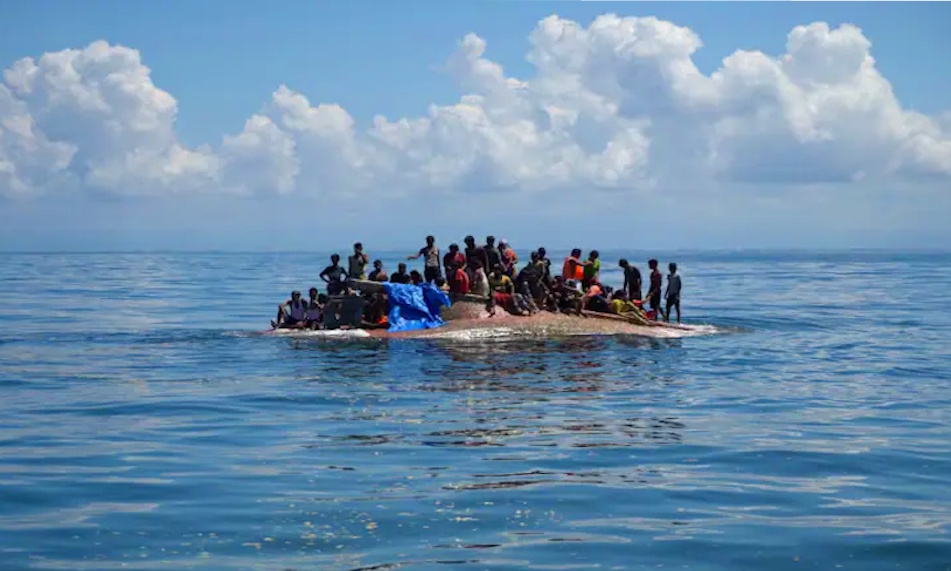
A landmark case accusing Myanmar of committing genocide against the minority Muslim Rohingya opened at the United Nations’ highest court on Monday, marking a pivotal moment in international law and accountability. The proceedings at the International Court of Justice (ICJ) in The Hague are expected to shape future genocide rulings and have immediate repercussions for other high-profile cases before the court.
This will be the first genocide case the ICJ, also known as the World Court, will hear in full in over a decade. The outcome is being closely watched not only for its impact on Myanmar but also for its potential influence on South Africa’s separate genocide case at the ICJ against Israel concerning the war in Gaza. Legal experts suggest the court’s interpretations and standards of proof established here could create critical benchmarks.
“The case is likely to set critical precedents for how genocide is defined and how it can be proven, and how violations can be remedied,” Nicholas Koumjian, head of the UN’s Independent Investigative Mechanism for Myanmar, told Reuters.
The case was initiated in 2019 by The Gambia, a predominantly Muslim West African country, acting on behalf of the 57-member Organization of Islamic Cooperation. It accuses Myanmar of systematic violations of the 1948 Genocide Convention during a brutal 2017 military crackdown in Rakhine State.
That offensive, launched in response to attacks by a Rohingya militant group, forced at least 730,000 Rohingya to flee to neighboring Bangladesh. Survivors provided consistent and widespread testimony of executions, mass rape, torture, and the burning of entire villages. A subsequent UN fact-finding mission concluded that Myanmar’s military operations included “genocidal acts” with intent to destroy the Rohingya population in whole or in part.
Myanmar has consistently rejected the genocide characterization. During preliminary hearings in 2019, the country’s then civilian leader, Aung San Suu Kyi, personally appeared before the court to dismiss Gambia’s accusations as “incomplete and misleading.” She argued the military campaign was a legitimate counter-terrorism response.
The current hearings, scheduled to span three weeks, represent a significant procedural advance. For the first time, Rohingya survivors of the alleged atrocities will provide direct testimony to an international court. These victim testimony sessions, however, will be closed to the public and media to protect their safety, privacy, and due to the sensitivity of the accounts.
The proceedings unfold against a backdrop of profound turmoil inside Myanmar. The country has been engulfed in conflict and repression since a February 2021 military coup that toppled Suu Kyi’s elected government. The junta’s violent suppression of pro-democracy protests has ignited a nationwide armed rebellion, further complicating the international legal response to the Rohingya crisis.
Myanmar’s current military rulers, who are defending the state in this case, are concurrently conducting phased elections that have been widely condemned by the United Nations, Western nations, and human rights groups as a sham designed to cement their power.
As the ICJ justices begin their detailed examination of the evidence, hundreds of thousands of Rohingya remain in refugee camps in Bangladesh, living in precarious conditions with no clear path to safe or dignified repatriation. The world court’s eventual ruling, while legally binding, faces enforcement challenges, yet it carries immense moral and historical weight for a long-persecuted community seeking recognition of their suffering.
Our Pashto-Dari Website

Support Dawat Media Center
If there were ever a time to join us, it is now. Every contribution, however big or small, powers our journalism and sustains our future. Support the Dawat Media Center from as little as $/€10 – it only takes a minute. If you can, please consider supporting us with a regular amount each month. Thank you
DNB Bank AC # 0530 2294668
Account for international payments: NO15 0530 2294 668
Vipps: #557320

Comments are closed.