

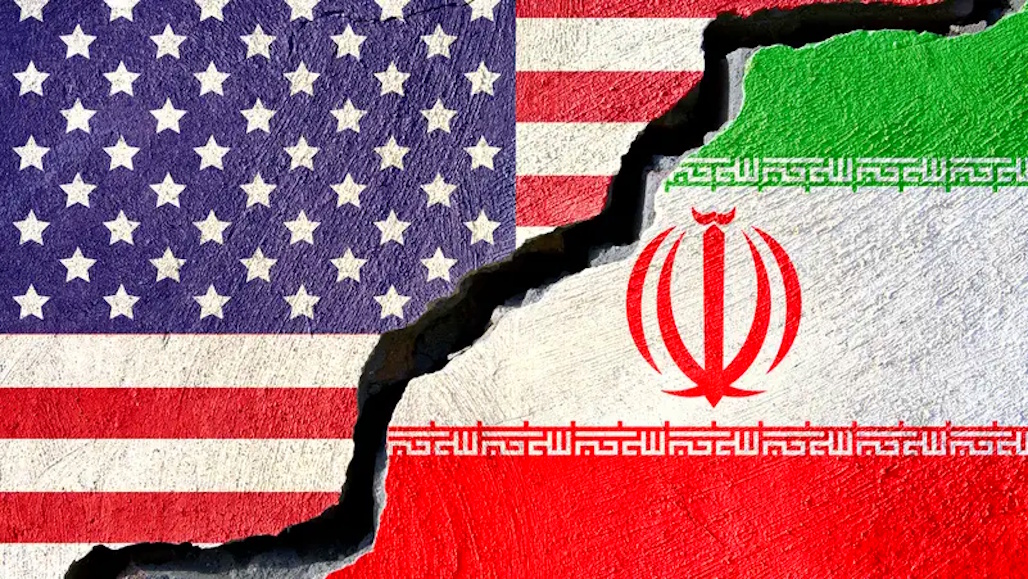
Trump Abandons “Surrender or Destruction” Ultimatum After Last-Minute Diplomatic Intervention Led by Pakistan
In a dramatic late-night reversal, the United States and Iran agreed to a two-week conditional ceasefire on Tuesday evening, temporarily averting a large-scale American military strike and securing Tehran’s promise to reopen the strategic Strait of Hormuz. The deal, brokered in a frantic last-minute diplomatic push led by Pakistan, effectively nullified an ultimatum from President Donald Trump that had demanded Iran’s unconditional surrender or threatened “widespread destruction.”
Trump’s announcement of the ceasefire came less than two hours before his self-imposed 8 p.m. Eastern Time deadline to bomb Iranian power plants and bridges a move that legal scholars, officials from numerous countries, and even the pope had warned could constitute war crimes.
Just hours earlier, a visibly agitated Trump had written on his Truth Social platform: “A whole civilization will die tonight, never to be brought back again. I don’t want that to happen, but it probably will.” Multiple news outlets reported that American B-52 bombers were already en route to Iranian airspace before the ceasefire was finalized.
The Pakistan-Mediated Breakthrough
By Tuesday evening, however, Trump announced that a ceasefire had been mediated through Pakistan, whose Prime Minister, Shehbaz Sharif, had personally requested a two-week pause in hostilities to “allow diplomacy to run its course.” In a subsequent post, Trump wrote:
“Subject to the Islamic Republic of Iran agreeing to the COMPLETE, IMMEDIATE, and SAFE OPENING of the Strait of Hormuz, I agree to suspend the bombing and attack of Iran for a period of two weeks.”
In a later social media post, Trump called Tuesday “a big day for world peace,” claiming that Iran had “had enough.” He added that the U.S. would be “helping with the traffic buildup” in the strait a conduit for roughly one-fifth of the global energy supply and that “big money will be made” as Iran begins reconstruction.
Israel’s Cautious Endorsement
For several hours after the deal, Israel’s position remained unclear. But just before midnight ET, Prime Minister Benjamin Netanyahu issued a statement saying Israel backed the U.S.-Iran ceasefire, though he added a critical caveat: the deal did not cover fighting against Hezbollah in Lebanon. His office further stated that Israel supported ongoing U.S. efforts to ensure Iran no longer posed a nuclear or missile threat.
Notably, Pakistan’s prime minister had previously asserted that the agreed ceasefire covered “everywhere including Lebanon,” hinting at potential friction between Washington and Jerusalem in the coming days.
Confusion Over the 10-Point Plan
The ceasefire process was clouded by uncertainty after Iran released two different versions of the 10-point plan intended as the basis for negotiations—a document Trump called a “workable basis on which to negotiate.” In the Farsi version, Iran included the phrase “acceptance of enrichment” for its nuclear program. For reasons that remain unclear, that phrase was missing in English versions shared by Iranian diplomats with journalists.
Pakistan has invited the U.S. and Iran to talks in Islamabad on Friday. Tehran said it would attend, but Washington has yet to publicly accept the invitation. In a telephone call with Agence France-Presse, Trump said he believed China had persuaded Iran to negotiate, adding that Tehran’s enriched uranium would be “perfectly taken care of,” without providing further detail.
Terms of the Ceasefire
During the two-week window, Trump expressed confidence that the U.S. and Iran could negotiate a final armistice based on the 10-point proposal. “This will be a double-sided CEASEFIRE!” he wrote. “The reason for doing so is that we have already met and exceeded all military objectives, and are very far along with a definitive agreement concerning long-term peace with Iran, and peace in the Middle East.”
Iran’s Foreign Minister, Abbas Araghchi, issued a statement shortly after Trump’s announcement confirming Tehran’s commitment. “For a period of two weeks, safe passage through the Strait of Hormuz will be possible via coordinating with Iran’s Armed Forces,” he wrote.
Market Reaction and Lingering Violence
Oil prices dived, stocks surged, and the dollar weakened on Wednesday as the truce sparked a relief rally, fueled by hopes that oil and gas flows through the strait would soon resume. Yet despite the provisional ceasefire, attacks continued across the region in the hours after Trump’s announcement. Before the deadline, airstrikes hit two bridges and a train station in Iran, while the U.S. struck military infrastructure on Kharg Island, a key hub for Iranian oil production.
The sudden about-face allows Trump to step back from a conflict that had dragged on for five weeks, with little sign that Tehran was ready to surrender or release its stranglehold on the strait, where maritime traffic had slowed to a trickle. Trump had earlier rejected the 10-point plan as “not good enough,” but he has set—and then allowed to expire multiple deadlines over the course of the war. On Tuesday, he insisted the ensuing hours would be “one of the most important moments in the long and complex history of the world” unless “something revolutionarily wonderful” happened, driven by “less radicalized minds” within Iran’s leadership.
International Reactions: Cautious Welcome
News of the provisional ceasefire was welcomed with cautious optimism globally.
-
Iraq’s foreign ministry called for “serious and sustainable dialogue” between the U.S. and Iran “to address the root causes of the disputes.”
-
Germany’s Foreign Minister, Johann Wadephul, said the deal “must be the crucial first step towards lasting peace, for the consequences of the war continuing would be incalculable.”
-
Australia’s Energy Minister, Chris Bowen, warned against premature celebration: “People shouldn’t take today’s progress and expect prices to fall. We welcome progress, but I don’t think we can say the strait is now open.”
-
New Zealand’s Foreign Minister, Winston Peters, welcomed the “encouraging news” but noted “there remains significant important work to be done to secure a lasting ceasefire.”
-
Japan described the move as “positive,” with Chief Cabinet Secretary Minoru Kihara saying Tokyo wanted to see de-escalation on the ground. Japan depends on the Middle East for about 90% of its crude oil imports, most of which transits the Strait of Hormuz.
-
South Korea’s foreign ministry expressed hope that “negotiations between the two sides will be successfully concluded and that peace and stability in the Middle East will be restored at an early date,” adding wishes for “free and safe navigation of all vessels through the strait.”
What Comes Next
All eyes are now on Islamabad, where Friday’s talks could determine whether the two-week pause becomes a stepping stone to a longer-term settlement or merely a brief intermission in hostilities. For now, the world breathes easier but the underlying fault lines between Washington, Tehran, and their respective allies remain dangerously unresolved.
Our Pashto-Dari Website

Support Dawat Media Center
If there were ever a time to join us, it is now. Every contribution, however big or small, powers our journalism and sustains our future. Support the Dawat Media Center from as little as $/€10 – it only takes a minute. If you can, please consider supporting us with a regular amount each month. Thank you
DNB Bank AC # 0530 2294668
Account for international payments: NO15 0530 2294 668
Vipps: #557320

Comments are closed.