

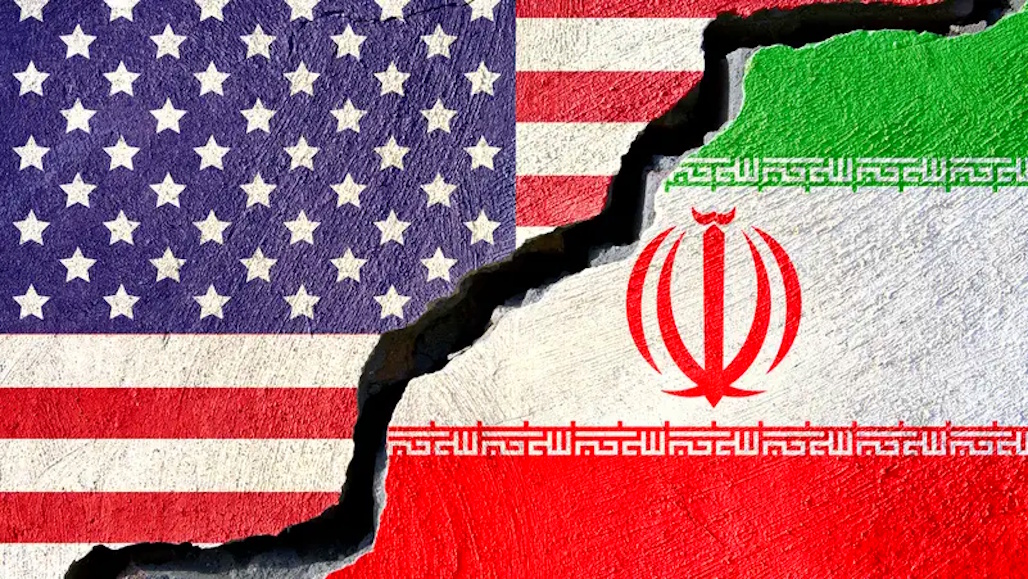
Iran issued a stark warning on Sunday, stating it would strike U.S. military bases in the Middle East if attacked by Washington. The threat comes even as the two adversaries resumed high-stakes nuclear negotiations for the first time in years, a diplomatic effort clouded by military posturing and deep-seated distrust.
Following talks in Oman, both sides agreed to keep talking but traded sharp warnings over regional security. Iranian Foreign Minister Abbas Araghchi, addressing a forum in Tehran, sought to direct Tehran’s potential retaliation, stressing that neighboring countries would not be targeted—only American bases.
“Their military deployment in the region does not scare us,” Araghchi declared, referring to the recent arrival of the U.S. aircraft carrier USS Abraham Lincoln in the Arabian Sea. He framed Iran’s stance as one of defiance, not expansion, stating, “Our atomic bomb is the power to say ‘no’ to the great powers.”
A Diplomatic Opening Amid Military Muscle
The talks reopened on Friday in Oman, a rare diplomatic channel after years of escalating hostility. Iran’s primary goal is the lifting of crippling U.S. economic sanctions, offering in return what Araghchi called “a series of confidence-building measures” regarding its nuclear program. The U.S., along with Western allies and Israel, suspects Iran is pursuing nuclear weapons—a claim Tehran consistently denies.
However, the diplomatic table is surrounded by shows of force. As the talks proceeded, a U.S. delegation visited the USS Abraham Lincoln. Lead U.S. negotiator Steve Witkoff echoed President Trump’s strategy in a social media post, calling the carrier’s presence a pillar of “peace through strength.”
President Trump called the initial discussions “very good” and suggested further talks could happen soon. His demands remain unchanged: Iran must curb its uranium enrichment, ballistic missile development, and support for regional proxy forces. Concurrently, he signed an executive order preparing new tariffs on nations doing business with Iran and announced fresh sanctions targeting Iranian oil exports.
Deep Distrust and a Rising Protest Toll
The atmosphere of suspicion is mutual. Araghchi openly questioned Washington’s sincerity, pointing to the ongoing sanctions and military movements. “We have little trust in Washington,” he said, adding that Iran is “monitoring the situation closely” to decide whether to continue negotiating.
The talks also unfold against a grim domestic backdrop in Iran. On Sunday, Iranian authorities published a list acknowledging 3,117 deaths during the widespread protests that began late last year, attributing most to security forces and bystanders. This figure is contested internationally; the U.S.-based Human Rights Activists News Agency (HRANA) reports a verified death toll of 6,961, with over 51,000 arrests, suggesting the true cost of the crackdown is far higher.
Regional Alignments and an Uncertain Path Forward
The tensions draw in other key players. Israeli Prime Minister Benjamin Netanyahu is set to discuss Iran with U.S. leaders, pushing for restrictions that go beyond the nuclear issue. Since the collapse of the 2015 nuclear deal, the region has been locked in a cycle of sanctions, military incidents, and proxy conflicts, with recent naval deployments heightening fears of a direct confrontation.
While Iran’s President Masoud Pezeshkian called the Oman talks “a step forward,” the path remains fraught. With deep disagreements entrenched, military pressure persisting, and trust in short supply, the future of the negotiations—and the stability of the region—hangs in a precarious balance.
Our Pashto-Dari Website

Support Dawat Media Center
If there were ever a time to join us, it is now. Every contribution, however big or small, powers our journalism and sustains our future. Support the Dawat Media Center from as little as $/€10 – it only takes a minute. If you can, please consider supporting us with a regular amount each month. Thank you
DNB Bank AC # 0530 2294668
Account for international payments: NO15 0530 2294 668
Vipps: #557320

Comments are closed.