

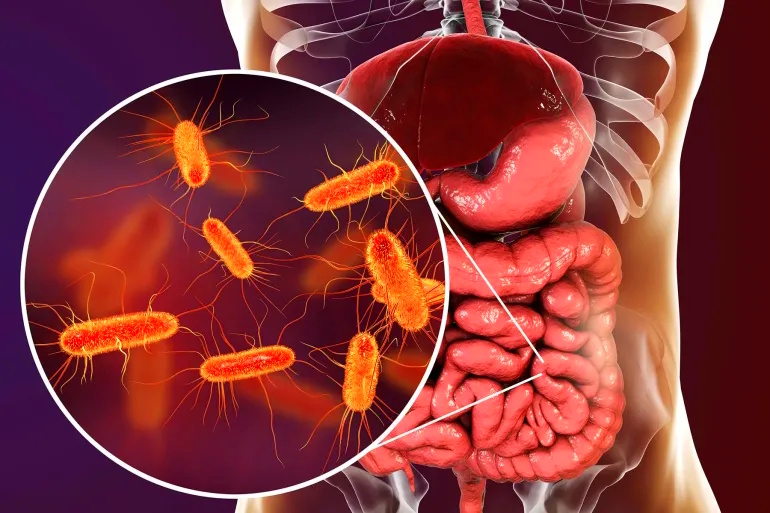
A groundbreaking study titled “Rosenburia inulinivorans Enhances Muscle Strength,” published in the journal Gut, has revealed an unexpected link between gut bacteria and muscle strength, reinforcing the emerging concept of the “gut-muscle axis” in human physiology.
Researchers discovered that a specific type of beneficial bacterium, Rosenburia inulinivorans, is associated with improved muscle performance in humans. Individuals with higher levels of this bacterium demonstrated greater strength across various physical tests, including grip strength and other functional mobility assessments.
Genomic and Mechanistic Insights
The study’s design relied on comprehensive metagenomic analyses conducted on groups of adults both young and old who were rigorously evaluated for muscle strength. The researchers examined the relationship between different bacterial species and indicators of muscular performance. To establish a causal link, they orally administered candidate bacterial strains to antibiotic-treated mice. Further metabolic analyses and muscle tissue examinations were carried out to uncover the underlying biological mechanisms.
Key Findings
The results were striking: older adults whose intestines harbored Rosenburia inulinivorans exhibited approximately 30% greater muscle strength compared to those without it. Similar, though less pronounced, benefits were also observed in younger individuals. These findings were supported by laboratory experiments on animals, where introducing the bacterium led to clear improvements in muscle strength and favorable changes in muscle fiber structure.
Implications and Future Directions
The researchers suggest that this discovery could pave the way for developing novel probiotic-based therapies or nutritional supplements aimed at enhancing physical fitness and preventing age-related muscle decline (sarcopenia). However, they emphasize that further human studies are necessary before any clinical applications can be recommended. This research not only opens new avenues for non-invasive treatments but also highlights the profound influence of our microbiome on seemingly unrelated bodily systems.
Our Pashto-Dari Website

Support Dawat Media Center
If there were ever a time to join us, it is now. Every contribution, however big or small, powers our journalism and sustains our future. Support the Dawat Media Center from as little as $/€10 – it only takes a minute. If you can, please consider supporting us with a regular amount each month. Thank you
DNB Bank AC # 0530 2294668
Account for international payments: NO15 0530 2294 668
Vipps: #557320

Comments are closed.