
Iran Partially Restores Internet Access After Months-Long Shutdown Amid Tense U.S. Negotiations

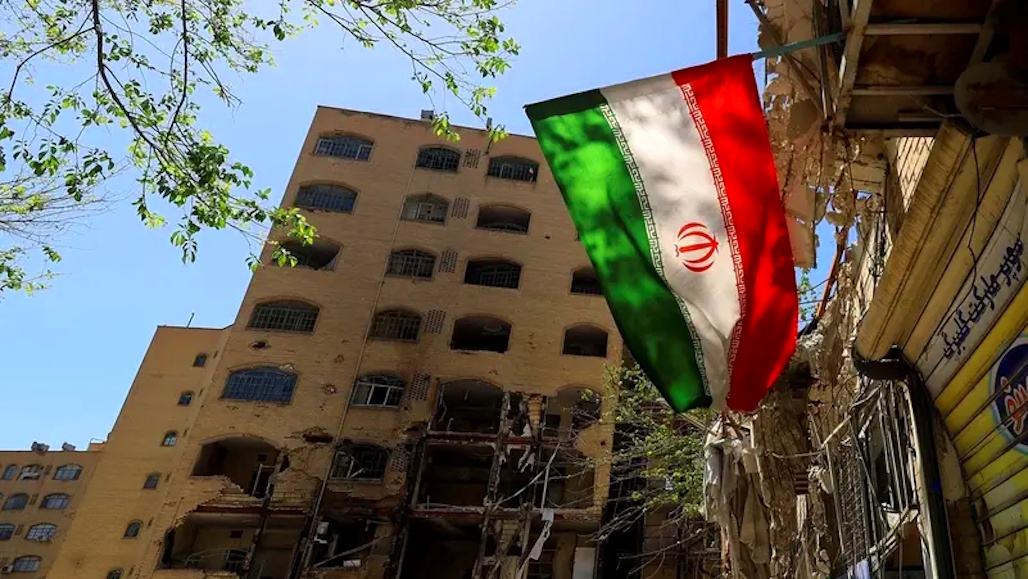
Tehran – Iranian authorities on Tuesday partially restored internet connectivity after an unprecedented nationwide shutdown that had lasted nearly three months, imposed during the height of the conflict involving Iran, Israel, and the United States.
The blackout, which began on February 28, largely severed Iranians from the global internet, leaving only a restricted domestic intranet available for essential daily functions such as shopping, ride-hailing, online banking, and education.
Internet monitoring group NetBlocks reported signs of recovery.
“Live metrics show a partial restoration to internet connectivity in Iran on day 88 of the shutdown,” the organization said in a post on X, noting that it remained unclear whether the move represented a permanent reversal of what it described as “the longest nationwide internet shutdown in modern history.”
Iranian Vice President Mohammad Reza Aref confirmed the move, describing it as “the first step toward free and regulated access to cyberspace,” and promised that public demands for broader digital freedom “will be fulfilled.”
State media outlets IRNA and Fars claimed that full international internet access had resumed for fixed broadband users, though this was not independently verified by NetBlocks.
Reports from inside Iran suggested restoration remained limited and uneven. Mobile internet services remained largely blocked, while some residential broadband users regained partial access often still requiring VPN services to reach major international platforms.
“A few minutes ago I could open international websites using my home internet provider,” said a 22-year-old resident of the western city of Kermanshah, speaking anonymously for security reasons.
A business employee in Tehran reported his company’s wired internet service had returned, but mobile access remained unavailable.
Others described service as highly inconsistent across provinces.
A Shutdown Rooted in War and Protest
The latest internet blackout followed a similar shutdown imposed on January 8, when Iran faced widespread anti-government protests.
Rights organizations say those protests were met with severe repression, leaving thousands dead or detained. Activists have argued that restricting internet access was intended to conceal the scale of the crackdown while preventing further mobilization.
Doug Madory, director of internet analysis at U.S.-based monitoring firm Kentik, cautioned that the latest restoration should be viewed carefully.
“Iran has a long way to go to return to pre-January 8 traffic levels,” he wrote on X.
The prolonged shutdown also intensified domestic criticism, particularly from the administration of President Masoud Pezeshkian, who has advocated for a more moderate approach and reportedly sought to end restrictions that have severely damaged Iran’s digital economy.
However, major cybersecurity and national security decisions remain under the authority of the Supreme National Security Council, chaired by hardliner Mohammad Bagher Zolghadr.
Parliamentary national security commission member Yaghoub Rezazadeh confirmed Monday that final authority over internet policy “rests with the Supreme National Security Council.”
The judiciary earlier Tuesday suspended a newly established presidential cyber-governance body that had ordered the internet’s restoration.
The Special Headquarters for Organizing and Governing the Country’s Cyberspace, created by President Pezeshkian on May 12, had reportedly approved restoring access after local media reported the president personally ordered the measure.
Leadership Transition Raises Questions
Complicating the political landscape is the emergence of Mojtaba Khamenei as Iran’s de facto supreme authority following the death of his father, Ali Khamenei, who was killed at the outbreak of the war.
Mojtaba Khamenei has yet to make a public appearance but remains the country’s highest-ranking political figure in theory.
His influence has become increasingly visible through official statements.
In remarks released during the annual Hajj pilgrimage, he declared:
“The clock cannot be turned back, and the nations and lands of the region will no longer be a shield for American bases.”
He added:
“From now on, the slogans ‘Death to America’ and ‘Death to Israel’ will be the slogans of the Islamic nation and the oppressed people of the world, especially the youth.”
The rhetoric signaled Tehran’s continued defiance despite indirect negotiations with Washington.
Iran Condemns Fresh U.S. Strikes
The restoration of internet access came as Iran sharply condemned recent U.S. military strikes in southern Iran, calling them a “gross violation” of a fragile ceasefire that has technically been in place for nearly seven weeks.
The U.S. military described Monday’s strikes as defensive operations targeting Iranian missile launch facilities and vessels allegedly preparing to lay naval mines in the Persian Gulf.
Secretary of State Marco Rubio, speaking to reporters aboard his plane in Jaipur, India, defended the action.
“The Strait of Hormuz must remain open one way or the other,” he said.
Iran’s Revolutionary Guard (IRGC) responded by claiming it had shot down one U.S. drone and engaged another drone and a fighter jet that allegedly violated Iranian airspace.
Iran’s Foreign Ministry accused Washington of acting in “bad faith and unreliability” even as diplomatic talks toward a broader ceasefire continue.
Rubio said negotiations could still produce a breakthrough “within days.”
Strait of Hormuz Crisis and Global Economic Shock
The conflict, which began with coordinated U.S. and Israeli strikes on February 28, has disrupted one of the world’s most critical shipping chokepoints.
Normally, 125–140 vessels transit the Strait of Hormuz daily. Current traffic has dropped to only a few dozen.
The strait carries roughly 20 percent of global oil and liquefied natural gas supplies, and disruptions have triggered a severe energy shock.
Global benchmark Brent crude rose nearly 3 percent Tuesday to $98.91 per barrel, pushing up global fuel, fertilizer, and food costs.
Iran has selectively permitted passage to vessels tied to allied nations while maintaining restrictions on broader traffic.
Doha Talks and Frozen Funds
Behind the scenes, indirect diplomacy has intensified.
Iranian Parliament Speaker Mohammad Bagher Ghalibaf, Foreign Minister Hossein Amir-Abdollahian, and Iran’s central bank governor traveled to Doha on Monday for talks with Qatari officials.
Iranian sources say negotiations focus on a preliminary memorandum of understanding that would:
- End military escalation across all fronts
- Establish a 30-day shipping framework through Hormuz
- Release approximately $24 billion in frozen Iranian assets
- Launch second-phase talks on Iran’s nuclear program
According to Tasnim and Fars news agencies, unfreezing Iranian funds remains the final major obstacle.
U.S. President Donald Trump said Monday that talks were progressing “nicely,” but warned that failure would trigger renewed military action.
“It will only be a great deal for all or no deal at all,” he wrote on Truth Social.
Regional Tensions Persist
Meanwhile, tensions continue elsewhere in the region.
Israeli Prime Minister Benjamin Netanyahu vowed to intensify strikes against Hezbollah in Lebanon despite an April ceasefire.
Israel’s military issued evacuation warnings Tuesday to residents of Nabatieh, signaling possible new airstrikes.
Saudi Arabia has also resisted U.S. pressure to join the Abraham Accords, insisting normalization with Israel requires a credible roadmap toward Palestinian statehood.
Public Relief Over Internet Return
For many Iranians, however, Tuesday’s partial internet restoration offered a rare moment of relief.
Social media users reacted with disbelief and celebration.
“YouTube without a VPN!!! Oh my God, am I dreaming?” one user posted.
Another simply wrote:
“Hello my dear Twitter.”
For now, the return remains incomplete but after nearly three months of digital isolation, even limited reconnection marks a significant shift in Iran’s turbulent political and technological landscape.
With reporting from Reuters and AFP
Our Pashto-Dari Website

Support Dawat Media Center
If there were ever a time to join us, it is now. Every contribution, however big or small, powers our journalism and sustains our future. Support the Dawat Media Center from as little as $/€10 – it only takes a minute. If you can, please consider supporting us with a regular amount each month. Thank you
DNB Bank AC # 0530 2294668
Account for international payments: NO15 0530 2294 668
Vipps: #557320

Comments are closed.