
Former Afghan Parliamentarian Extradited to U.S. on Charges of Drug Trafficking and Arms Dealing

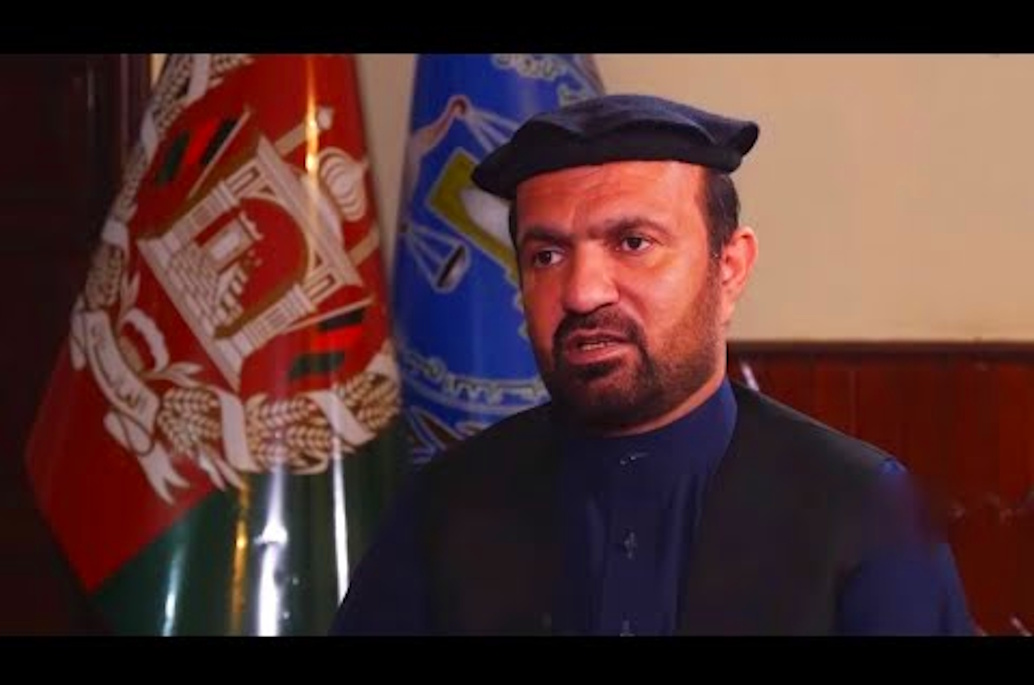
NEW YORK — Abdul Zahir Qadeer, a former Afghan general and high-ranking parliamentary official, has been extradited to the United States to face federal charges alleging he orchestrated a vast international conspiracy to traffic heroin and methamphetamine while supplying military-grade weaponry, including rocket-propelled grenade launchers and heavy machine guns.
U.S. authorities confirmed that Qadeer, 52, was transferred from Kenyan custody and made his initial appearance on Friday before a federal judge in Manhattan. He was ordered detained pending trial, according to the U.S. Attorney’s Office for the Southern District of New York. The criminal complaint against him was unsealed the same day.
Arrest and Extradition
Qadeer was arrested by Kenyan authorities in Nairobi on April 15, 2025, following a meeting he allegedly believed was with representatives of an international drug-trafficking syndicate. According to court documents, the participants in that meeting were confidential sources working in coordination with the U.S. Drug Enforcement Administration (DEA).
Following his arrest, Qadeer contested extradition, with his legal team in Kenya arguing that the proceedings were politically motivated. However, Kenya’s High Court rejected that challenge on April 22, 2026, ruling that the country’s international cooperation obligations provided a sufficient legal basis for his surrender. He was subsequently transported to the United States.
The Alleged Conspiracy
Federal prosecutors allege that Qadeer leveraged his military and political stature to operate a transnational criminal enterprise. According to an affidavit cited by CBS News, a DEA source initiated contact with Qadeer in November 2024 regarding the supply of hundreds of kilograms of narcotics.
The investigation alleges that by December 10, 2024, Qadeer had facilitated the delivery of a two-kilogram test shipment of methamphetamine to a buyer in Johannesburg, South Africa, in exchange for $14,000. Following this test, negotiations expanded significantly. By February 2025, prosecutors say, Qadeer was in discussions to supply 500 to 600 kilograms of heroin and methamphetamine intended for sale in the United States.
The scope of the alleged operation expanded further to include a substantial arsenal. Prosecutors claim Qadeer offered to supply hundreds of heavy machine guns, assault rifles, sniper rifles, rocket-propelled grenade launchers, pistols, grenades, and thousands of rounds of ammunition. The confidential source allegedly told Qadeer that these weapons would protect the drug operation from U.S. law enforcement. Court documents reveal that Qadeer provided specific price lists for the weaponry, including $11,579 for a sniper rifle, $9,670 for a machine gun, and $1,770 for a box of 10 grenades.
Official Statements
Acting U.S. Attorney General Todd Blanche condemned the alleged scheme, stating that Qadeer “presented himself as a political leader while allegedly running a criminal enterprise dealing in dangerous narcotics and heavy weapons.”
U.S. Attorney Jay Clayton, whose office is prosecuting the case, characterized Qadeer as a “large-scale international trafficker” of both narcotics and military-grade arms. DEA Administrator Terrance Cole underscored the significance of the extradition, noting that the case demonstrates that “former political status will not put suspects beyond the reach of U.S. authorities.”
Background and Defense
Qadeer, also known as Haji Abdul Zahir, comes from a politically influential family in eastern Afghanistan’s Nangarhar province. He is the son of Haji Abdul Qadeer, a senior member of the anti-Taliban Northern Alliance and one of the first vice presidents of Afghanistan’s post-2001 transitional administration, who was assassinated in 2002.
The younger Qadeer previously served as a general in Afghanistan’s Border Force, commanding the Eighth Border Battalion in Takhar province. He was elected to represent Nangarhar in Afghanistan’s House of the People in 2010 and became first deputy speaker of the lower house in 2012, a position he held until the National Assembly ceased functioning following the Taliban’s return to power in August 2021.
Through his attorney, Qadeer has denied all allegations, maintaining his innocence. During his extradition hearings in Kenya, his defense argued the charges were a political pretext. It is not yet clear who will represent him in the ongoing U.S. proceedings.
Potential Penalties
If convicted of the narcotics conspiracy charge, Qadeer faces a mandatory minimum sentence of 10 years in prison and a maximum of life imprisonment. The weapons-related charges carry a mandatory minimum of 30 years, also with a potential maximum sentence of life.
Investigation and Presumption of Innocence
The investigation was led by the DEA’s Special Operations Division, with assistance from the Federal Bureau of Investigation (FBI) and Kenyan law enforcement and prosecution authorities.
It is important to note that the charges contained in the complaint are merely allegations. As in all federal criminal cases, Qadeer is presumed innocent unless and until proven guilty beyond a reasonable doubt in a court of law.
Our Pashto-Dari Website

Support Dawat Media Center
If there were ever a time to join us, it is now. Every contribution, however big or small, powers our journalism and sustains our future. Support the Dawat Media Center from as little as $/€10 – it only takes a minute. If you can, please consider supporting us with a regular amount each month. Thank you
DNB Bank AC # 0530 2294668
Account for international payments: NO15 0530 2294 668
Vipps: #557320

Comments are closed.