
300-Member Uzbek Business Delegation Arrives in Kabul to Bolster Bilateral Economic Ties

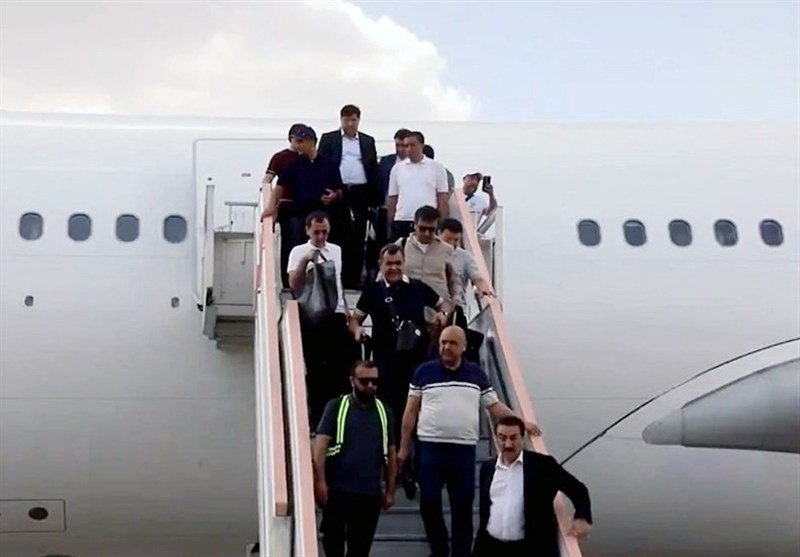
Historic Delegation Marks New Chapter in Afghanistan-Uzbekistan Relations
A landmark 300-member delegation of Uzbek traders, investors, and senior government officials has arrived in Kabul to participate in the Afghanistan-Uzbekistan Business Forum, signaling a significant deepening of economic engagement between the two nations, Afghanistan’s Chamber of Commerce and Investment announced on Sunday.
The delegation, one of the largest trade missions to visit Afghanistan in recent years, comprises business leaders across multiple sectors, including mining, agriculture, manufacturing, energy, and transportation, alongside high-ranking officials from Uzbekistan’s economic ministries and regional governors’ offices.
Delegation Composition and Arrival
Ehsanullah Ehsan, spokesperson for Afghanistan’s Chamber of Commerce and Investment, provided details about the delegation’s phased arrival. A 120-member advance group, which included the Governor of Fergana province and his accompanying economic delegation, arrived in Kabul on Sunday morning. They subsequently joined a 180-member contingent led by Uzbekistan’s Deputy Prime Minister Jamshid Khojaev, who had arrived the previous day. This combined force of 300 business and investment representatives represents the most comprehensive Uzbek economic delegation to visit Afghanistan since the Islamic Emirate’s return to power in 2021.
The delegation includes ministers and deputy ministers from Uzbekistan’s trade, investment, transport, agriculture, and energy portfolios, as well as prominent private sector leaders representing major Uzbek conglomerates and state-owned enterprises. The presence of regional governors from Uzbekistan’s border provinces underscores the importance of cross-border economic integration at the sub-national level.
Business Forum and Economic Cooperation Agenda
The delegation is scheduled to engage with Afghan traders, business representatives, and government officials at the Afghanistan-Uzbekistan Business Forum, where discussions will center on concrete measures to strengthen economic cooperation, increase bilateral trade volumes, and encourage sustainable investment flows. The forum is expected to facilitate business-to-business matchmaking sessions, industry-specific roundtables, and the signing of memoranda of understanding between companies from both countries.
Key sectors identified for cooperation include:
-
Mining and mineral processing, with Uzbekistan expressing strong interest in Afghanistan’s vast untapped mineral resources
-
Agricultural trade, particularly in fresh and dried fruits, food products, and livestock products including meat and cotton
-
Energy cooperation, encompassing electricity transmission and joint infrastructure projects
-
Transit and logistics, focusing on improving trade routes and cross-border connectivity
-
Industrial manufacturing, including the establishment of processing facilities in Afghan border zones
Growing Economic Ties and Regional Integration
The visit comes against the backdrop of steadily expanding economic relations between Afghanistan and Uzbekistan over the past several years. Both sides have demonstrated commitment to deepening commercial relations and developing new areas of economic cooperation, recognizing the mutual benefits of enhanced regional integration.
Uzbekistan, which shares a substantial border with Afghanistan’s northern provinces, has maintained consistent engagement with Kabul across multiple domains, including trade facilitation, transit arrangements, and energy cooperation. The two countries have conducted high-level meetings focused on strengthening economic linkages, improving regional connectivity, expanding cross-border commerce, and developing joint infrastructure projects that would benefit the broader Central Asian region.
Afghanistan’s total exports to Uzbekistan reached US$150 million in the previous fiscal year, according to Uzbek officials. Since the beginning of the current year, exports have already reached US$111 million, with projections indicating further growth by year-end. Uzbekistan has also issued 5,000 visas to Afghan nationals, reflecting the continued expansion of people-to-people connections and economic relations between the two countries.
High-Level Diplomatic Engagements
Meeting with Deputy Prime Minister Baradar
Afghanistan’s Deputy Prime Minister for Economic Affairs, Mullah Abdul Ghani Baradar, convened a meeting on Sunday with Uzbekistan’s Deputy Prime Minister Jamshid Khojayev and his accompanying delegation at the Chahar Chinar Palace in the Arg (the presidential palace complex) to discuss expanding bilateral economic cooperation at the highest levels.
During the talks, the two sides held substantive discussions on strengthening economic, trade, investment, and transit cooperation. Baradar emphasized that stronger and more stable relations between Kabul and Tashkent would not only serve the economic interests of both countries but also contribute significantly to regional stability and economic prosperity. He added that the Islamic Emirate stands ready to utilize all available capacities to further strengthen and expand bilateral ties, demonstrating Afghanistan’s commitment to becoming a reliable economic partner in the region.
Baradar stressed the importance of the effective implementation of the joint action plan previously agreed between the two countries, describing it as an important milestone toward boosting economic growth and achieving tangible results for both nations. He identified several priority areas requiring immediate attention and cooperation, including:
-
Removing obstacles to the movement of Afghan export vehicles to Uzbekistan, streamlining border crossing procedures
-
Granting exemptions for Afghan transit goods arriving from China, Central Asia, and Russia, facilitating Afghanistan’s role as a regional transit corridor
-
Facilitating exports of Afghanistan’s agricultural products, fresh and dried fruits, food products, and valuable minerals to the markets of Central Asia, Russia, and China
-
Increasing the capacity of transit infrastructure and expanding customs facilities at border crossing points
-
Easing the issuance of visas for Afghan citizens engaged in trade and business activities
-
Enhancing cooperation in the energy sector and advancing joint infrastructure projects of regional significance
Baradar concluded that broader cooperation between Afghanistan and Uzbekistan would not only elevate bilateral economic relations but could also serve as a model of good neighborly relations for other countries in the region, demonstrating the benefits of constructive engagement despite complex geopolitical circumstances.
Deputy Prime Minister Khojayev’s Commitments
For his part, Deputy Prime Minister Khojayev outlined Uzbekistan’s concrete commitments to deepening economic engagement with Afghanistan. He announced that Uzbekistan is prepared to invest in Afghanistan’s mining sector, which holds immense potential for both countries, and to increase imports of Afghan meat and cotton, providing valuable market access for Afghan agricultural producers.
In a significant development, Khojayev announced Uzbekistan’s readiness to construct a US$50 million zinc processing plant in Hairatan, the major border crossing point in northern Balkh province. This facility would create employment opportunities for Afghan workers, develop local processing capacity, and add value to Afghanistan’s mineral resources before export, maximizing economic benefits for both nations.
Khojayev also confirmed that the Uzbek delegation would work closely with relevant institutions of the Islamic Emirate in the areas of transport infrastructure development, energy cooperation, agricultural development, banking sector collaboration, trade promotion, economic cooperation frameworks, and capacity-building programs for Afghan citizens, demonstrating Uzbekistan’s comprehensive approach to economic partnership.
Meeting with Prime Minister Akhund
Prime Minister Mullah Mohammad Hassan Akhund received Deputy Prime Minister Khojayev at the Gulkhana Palace on Sunday, with the meeting attended by Dr. Mullah Abdul Wasi, Chief of Staff of the Office of the Prime Minister; Hedayatullah Badri, Minister of Mines and Petroleum; and Abdul Ghafar Bahr, Ambassador of the Islamic Emirate to Uzbekistan, underscoring the high priority Afghanistan places on the Uzbek relationship.
At the outset of the meeting, Deputy Prime Minister Khojayev reiterated that the purpose of the high-level Uzbek delegation, comprising ministers, deputy ministers, business leaders, and investors, was to strengthen the economic and political relations between the two countries and translate previous commitments into concrete outcomes.
Referring to the cordial ties between Uzbekistan and Afghanistan, Khojayev stated that Afghanistan holds an important place in Uzbekistan’s foreign policy, reflecting Tashkent’s strategic vision of regional integration and economic cooperation. He added that, under the directives of President Shavkat Mirziyoyev, the primary objective of the visit is to begin the practical implementation of commitments made in the areas of investment and trade, ensuring that both countries can see tangible results on the ground.
Khojayev provided encouraging trade statistics, noting that Afghanistan’s total exports to Uzbekistan reached US$150 million last year, with US$111 million already achieved in the current year and the figure expected to increase further by year-end. He also highlighted Uzbekistan’s issuance of 5,000 visas to Afghan nationals, reflecting continued expansion of people-to-people exchanges and economic relations between the two countries.
Prime Minister Akhund’s Response
Prime Minister Mullah Mohammad Hassan Akhund welcomed Deputy Prime Minister Khojayev and the accompanying delegation, describing the visit as significant for strengthening bilateral relations between Afghanistan and Uzbekistan at a critical juncture.
He emphasized that the visit of the high-level Uzbek delegation and the expansion of economic cooperation demonstrate Uzbekistan’s strong confidence in Afghanistan’s future and its commitment to building a mutually beneficial economic relationship despite international restrictions and persistent economic challenges facing Afghanistan.
At the conclusion of the meeting, Prime Minister Akhund assured the Uzbek Deputy Prime Minister that Afghanistan welcomes stronger relations with the friendly and brotherly country and remains fully committed to implementing the commitments that have been made, providing the necessary support and facilitation for Uzbek businesses and investors interested in operating in Afghanistan.
Broader Context and Implications
The visit of the 300-member Uzbek delegation signals a continued effort by both sides to build robust economic relations through direct engagement between business communities and government administrations. However, the expansion of trade and investment ties will also depend on improvements in Afghanistan’s business environment, including security conditions, banking access and financial infrastructure, transport infrastructure development, and regional transit arrangements.
The latest visit highlights Uzbekistan’s continued economic engagement with Afghanistan as Kabul seeks to strengthen regional trade and investment ties despite international sanctions, banking restrictions, and persistent economic challenges. For Afghanistan, the deepening relationship with Uzbekistan offers a vital economic lifeline and access to Central Asian markets. For Uzbekistan, engagement with Afghanistan provides opportunities for resource access, market expansion, and the realization of its vision as a regional trade and transit hub.
The business forum is expected to provide a platform for companies from both countries to explore potential partnerships and investment projects, while discussions between officials could focus on improving trade routes and transit links connecting Afghanistan with Central Asia, including the development of the Trans-Afghan railway corridor and other connectivity initiatives that would benefit the broader region.
As both nations work to translate diplomatic commitments into economic realities, the success of the Afghanistan-Uzbekistan Business Forum and subsequent initiatives will be closely watched by regional observers and international stakeholders as a test case for Afghanistan’s economic integration with its neighbors. The large Uzbek delegation’s arrival in Kabul represents not only a significant diplomatic gesture but also a concrete demonstration of Uzbekistan’s strategic commitment to Afghanistan’s economic development and regional stability.
Our Pashto-Dari Website

Support Dawat Media Center
If there were ever a time to join us, it is now. Every contribution, however big or small, powers our journalism and sustains our future. Support the Dawat Media Center from as little as $/€10 – it only takes a minute. If you can, please consider supporting us with a regular amount each month. Thank you
DNB Bank AC # 0530 2294668
Account for international payments: NO15 0530 2294 668
Vipps: #557320

Comments are closed.