
Afghan Migrant Woman Miscarries After Police Raid in Pakistan, Warns MSF Amid Growing Healthcare Access Crisis

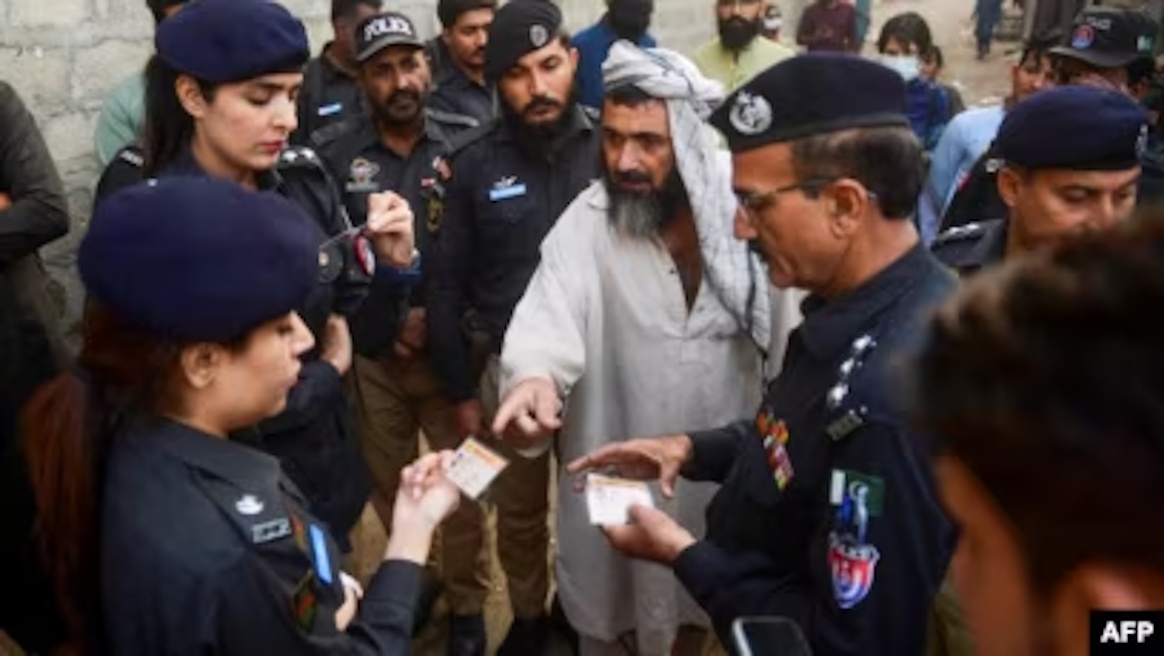
Médecins Sans Frontières (MSF) has reported that an Afghan migrant woman in Pakistan suffered a miscarriage shortly after police raided her home and detained her husband a case the humanitarian organization says underscores a deepening crisis: vulnerable Afghan migrants are increasingly avoiding or delaying essential medical care out of fear of arrest and deportation.
In a statement released on Tuesday, MSF urgently called on Pakistani authorities to halt forced deportations of Afghan migrants and to guarantee that all individuals regardless of their legal status can access healthcare safely, without the threat of detention or removal.
The organization detailed the harrowing account of an Afghan family living in Pakistan. A man identified as Najib told MSF that his pregnant wife began experiencing severe bleeding after police entered their residence and took him into custody. Although Najib said he possessed a Proof of Registration (PoR) card a document intended to provide some legal recognition he was still arrested during the operation.
“She was three months pregnant when the police arrested me,” Najib recounted to MSF staff. He described his wife as deeply traumatized by the raid, and said she later developed heavy bleeding, which he directly attributes to the intense stress and fear she endured during and after the incident.
Terrified of being detained again, Najib initially hesitated to take his wife to a hospital. By the time the family finally sought medical help, he said, it was too late she had already miscarried.
MSF emphasized that this tragedy is not an isolated incident, but rather a symptom of a wider humanitarian emergency. The organization warned that Pakistan’s ongoing deportation campaign is creating a climate of fear that actively discourages Afghan families from seeking timely medical care. Some migrants, MSF said, are choosing to endure treatable illnesses or worsening symptoms rather than risk exposure at clinics or hospitals, where they fear authorities may be present.
“This delay or avoidance of care can have fatal consequences,” MSF noted, “particularly for pregnant women, children, and those with chronic conditions.”
The organization is now urging Pakistani authorities to implement clear protections that allow migrants especially those in need of urgent medical attention to travel to and from health facilities without facing arrest, interrogation, or deportation. MSF also called on the government to separate immigration enforcement from healthcare delivery, ensuring that hospitals and clinics remain safe spaces for all.
Beyond immediate medical risks, MSF highlighted the broader toll of the deportation drive. The constant threat of eviction, combined with loss of livelihoods and mounting food insecurity, is pushing Afghan migrant families into increasingly vulnerable conditions. Many are unable to work, rent stable housing, or send their children to school, compounding physical and mental health strains.
Since opening a health clinic in Quetta, the capital of Balochistan province home to a large Afghan population MSF reported alarming malnutrition rates among the migrant community. Of the Afghan women and children assessed at the facility, 7.6% were diagnosed with severe acute malnutrition, while a further 25.7% suffered from moderate acute malnutrition figures that MSF described as critical and requiring immediate intervention.
Pakistan launched its nationwide campaign to deport undocumented Afghan migrants in late 2023, a policy that has since led to the return or forced removal of hundreds of thousands and by some estimates over a million Afghans. The initiative has drawn sharp criticism from humanitarian organizations, UN agencies, and international rights groups, who have repeatedly warned about the dangers of mass forced returns, particularly for those fleeing conflict or persecution in Afghanistan.
In recent months, Pakistani authorities have also intensified scrutiny of Afghan nationals whose legal documents, including PoR cards and visas, have expired. This has added a new layer of uncertainty and fear, even among those who were previously considered legally protected. Migrant communities report that many are now reluctant to seek any form of government service including healthcare out of concern that their papers will be checked and they will be detained.
MSF’s appeal comes amid growing global attention on the treatment of Afghan refugees in neighboring countries. The organization stressed that access to healthcare is a fundamental human right and must not be conditional on immigration status. “No one should have to choose between saving their life and risking arrest,” an MSF spokesperson said. “Pakistan must take immediate steps to ensure that medical facilities remain neutral, accessible, and safe for everyone, regardless of their documentation.”
The humanitarian group reaffirmed its commitment to providing care to all in need, but warned that without systemic change, more preventable tragedies like Najib’s will occur. It called on the international community to pressure Pakistan to uphold its obligations under international law and to ensure that Afghan migrants who have sought refuge from decades of war are treated with dignity and protection.
Our Pashto-Dari Website

Support Dawat Media Center
If there were ever a time to join us, it is now. Every contribution, however big or small, powers our journalism and sustains our future. Support the Dawat Media Center from as little as $/€10 – it only takes a minute. If you can, please consider supporting us with a regular amount each month. Thank you
DNB Bank AC # 0530 2294668
Account for international payments: NO15 0530 2294 668
Vipps: #557320

Comments are closed.