
Over 2,000 Afghan Returnees Arrive from Iran and Pakistan as Repatriation Efforts Intensify

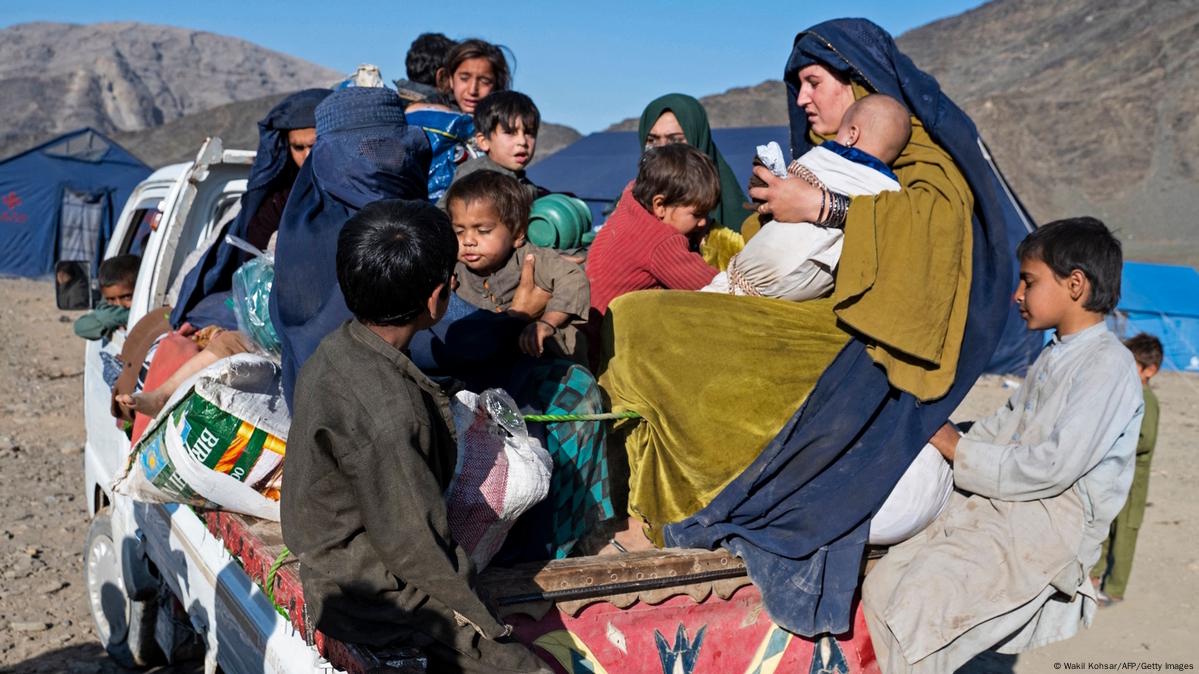
KABUL, Afghanistan — In a significant wave of return migration, a total of 431 families comprising 2,199 individuals have crossed back into Afghanistan from neighboring Iran and Pakistan over the past 24 hours, according to the High Commission for Addressing Migrants’ Problems. The repatriation, facilitated through multiple border points, underscores the ongoing challenges faced by Afghan refugees and the government’s strained capacity to receive them.
Mullah Hamdullah Fitrat, deputy spokesman for the Islamic Emirate, released the commission’s daily situational report on Monday, detailing the distribution, assistance, and logistical support provided to returnees at various entry points.
Torkham Crossing (Nangarhar Province) The Busiest Gateway
The vast majority of returnees 337 families totaling 1,769 people entered through the Torkham border crossing in eastern Nangarhar province on Sunday. Upon arrival, all were registered by commission staff. Of these, 232 families were immediately transported onward to their home provinces, while 308 families received critical cash assistance and supplementary aid to ease their transition.
A deeper breakdown from Torkham shows that 155 families (802 people) were relocated to Nangarhar, Kunar, Laghman, and Kabul provinces, with the government disbursing over 676,000 afghanis (approximately $7,700 USD) to cover their transportation costs. Additionally, 252 families were given direct cash handouts totaling 2.09 million afghanis (around $23,800 USD). The Omari camp near the border also provided temporary shelter, along with free healthcare check-ups and telecommunications services to help returnees contact relatives.
Spin Boldak Crossing (Kandahar Province) – Southern Route
In the south, 39 families (213 individuals) returned through the Spin Boldak crossing in Kandahar province. Authorities reported that 28 of those families (148 people) were transported to various provinces, with more than 360,000 afghanis (about $4,100 USD) spent on travel. Cash assistance of 338,000 afghanis (roughly $3,850 USD) was distributed among all 39 families, who also received food parcels, medical aid, and mobile communication services at the border facility.
Pul-i-Abrisham Crossing (Nimroz Province) – Western Flow
At the Pul-i-Abrisham border point in Nimroz province, 42 families (167 people) crossed into Afghanistan, alongside 294 individual travellers who were not part of family units. Four families received 32,000 afghanis (around $365 USD) in emergency cash, while 231 people accessed on-site healthcare services, reflecting the growing medical needs among returnees arriving after long journeys.
Islam Qala Crossing (Herat Province) Northwestern Entry
Meanwhile, 13 families (50 individuals) returned via the Islam Qala crossing in Herat province. Each family received cash support, with a total of 90,000 afghanis (approximately $1,025 USD) distributed to help cover immediate expenses such as food, shelter, and local transport.
Internal Transport and National Coordination
Beyond border operations, the Transport Committee in Kabul facilitated the onward movement of 49 families (311 people) from the capital to their final provincial destinations, spending more than 239,000 afghanis (around $2,725 USD) on bus fares and logistics.
Total Snapshot and Humanitarian Context
In aggregate, the commission confirmed that 431 families representing 2,199 returnees have entered Afghanistan through four major border crossings. Of these, 232 families (1,261 people) have been transported to their provinces of origin, while 308 families received financial aid and other forms of support, including food, health services, and communication assistance.
The latest returns come amid heightened pressure on Afghan migrants in both Iran and Pakistan, where stricter visa enforcement, economic hardships, and security concerns have prompted many to leave. The Afghan government, along with international humanitarian agencies, has struggled to provide adequate housing, employment, and basic services for the growing number of returnees, many of whom have been abroad for years or decades.
Local officials have called for increased donor support to expand reception facilities, medical teams, and cash-for-work programs, warning that winter conditions and limited resources could worsen the humanitarian situation in the coming weeks. The commission reiterated its commitment to registering and assisting every returning family, but acknowledged that sustained international cooperation remains essential for long-term reintegration.
Our Pashto-Dari Website
Support Dawat Media Center
If there were ever a time to join us, it is now. Every contribution, however big or small, powers our journalism and sustains our future. Support the Dawat Media Center from as little as $/€10 – it only takes a minute. If you can, please consider supporting us with a regular amount each month. Thank you
DNB Bank AC # 0530 2294668
Account for international payments: NO15 0530 2294 668
Vipps: #557320

Comments are closed.