
Iran Proposes Trilateral Free Trade Zone with Afghanistan and China to Reshape Regional Commerce

Iranian officials have announced a strategic initiative to establish a trilateral free trade and industrial zone involving Iran, Afghanistan, and China. The proposal, unveiled in late July 2026, is designed to deepen economic cooperation, attract foreign direct investment, and create a resilient alternative to existing, often volatile, trade routes in Central and South Asia.
The Framework and Regional Advantages
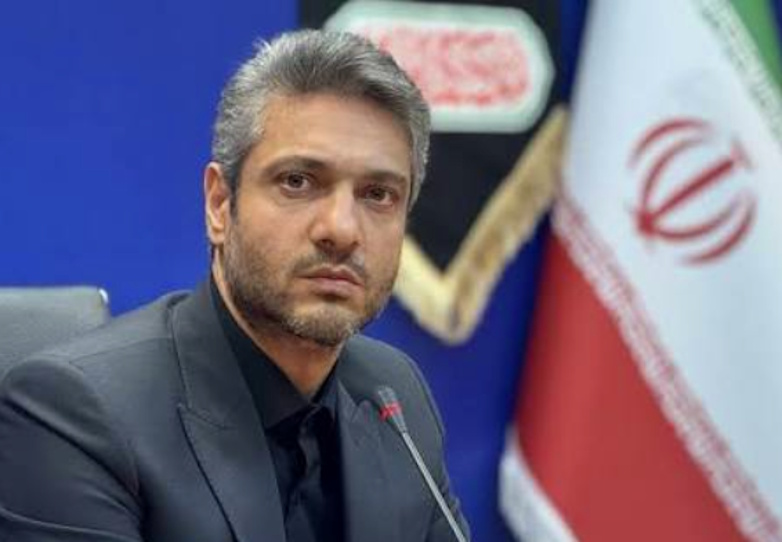
Morteza Zakarian, Director General of Economic and Financial Affairs for Iran’s South Khorasan Province, confirmed that the plan leverages the unique geographical, mineral, and transit capacities of the three nations. “The Iran-Afghanistan-China route can serve as a secure and sustainable corridor, creating unprecedented opportunities for expanded trade and economic cooperation among regional countries,” Zakarian stated during a meeting with a visiting Chinese economic delegation at the South Khorasan Special Economic Zone.
Administrative and expert reviews of the plan are currently ongoing, with the proposal having been formally presented to the Iranian president during a gubernatorial visit to South Khorasan in December 2025. Zakarian emphasized that the project’s success hinges on private-sector participation, particularly from Chinese investors, rather than relying solely on strained government resources.
A Symbiotic Economic Triad
The proposed zone is built on a complementary economic model:
-
Iran offers established industrial infrastructure, a skilled workforce, abundant land for development, and its strategic position along major transit arteries. South Khorasan, which shares a lengthy border with Afghanistan, is positioned as the logistical anchor.
-
Afghanistan contributes vast untapped mineral resources, including critical rare-earth elements essential for modern technology, alongside its geographic role as a land bridge between Central and South Asia.
-
China provides the requisite financial capital, advanced technological expertise, and the massive market demand to drive the initiative forward.
Mojtaba Shariatifar, South Khorasan’s Deputy Governor for Economic Affairs, noted that the proposal received a positive initial response from the visiting Chinese economic delegation. He added that the next steps involve formal engagement through China’s embassy, with potential cooperation agreements possibly signed during a future visit by China’s ambassador to the province.
Growing Chinese Interest on the Ground
Zakarian highlighted that Chinese investment in South Khorasan is already on the rise. Since 2024, 12 investment projects by Chinese nationals have been approved in the province, with more than half receiving authorization in the last two years alone. These projects span mining, manufacturing, and logistics, signaling Beijing’s growing interest in Iran’s eastern gateway.
The Geopolitical Catalyst: Escaping the Pakistan Bottleneck
The initiative gains added urgency from the persistent political and security tensions between Afghanistan and Pakistan. Recurring border closures, skirmishes, and trade restrictions have periodically choked Afghan exports and imports, creating an acute need for Kabul to diversify its trade routes. Iran has aggressively positioned itself as this alternative, with the Chabahar Port developed in partnership with India offering Afghan businesses access to international markets without exclusive reliance on Pakistani transit routes.
For Afghanistan, deeper integration with Iran and China represents a lifeline: it offers a pathway to attract mining investment, build infrastructure, and reduce dependency on a single, fragile corridor. For Iran, the zone strengthens its role as a regional transit hub, potentially mitigating the economic isolation imposed by international sanctions.
Critical Challenges and Hurdles
Despite its promise, the plan faces substantial obstacles that could delay or derail its implementation:
-
International Sanctions: The broad U.S. and EU sanctions regime targeting Iran’s economy remains a major deterrent for large-scale international financing and technology transfers, complicating even private-sector Chinese engagement.
-
Afghanistan’s Internal Stability: While the Taliban government has sought economic engagement, political recognition, internal security, and institutional capacity remain profound challenges that could spook long-term investors.
-
Infrastructure Gaps: Connecting Afghanistan’s mineral-rich interior to Iranian ports and onward to China requires significant investment in rail, road, and energy infrastructure that does not currently exist at the required scale.
-
Regulatory Harmonization: Aligning customs procedures, taxation, labor laws, and trade regulations across three vastly different legal systems is a monumental bureaucratic undertaking.
Next Steps and Long-Term Vision
The proposed free trade zone remains at the planning stage, with its future dependent on high-level trilateral negotiations. Key milestones will include formal intergovernmental memorandums of understanding, detailed feasibility studies, and the establishment of a joint steering committee to oversee implementation.
If successfully developed, the corridor could become a cornerstone of a new Central-South Asian trade architecture, linking Afghanistan’s resource wealth with Iranian infrastructure and Chinese financial might. It would challenge the traditional dominance of Pakistani routes and offer a stable, alternative pathway for goods moving between the Indian Ocean and the heart of Eurasia.
For now, the initiative is a bold vision on paper one that requires political will, diplomatic persistence, and substantial capital to transform into an economic reality. However, in a region marked by shifting alliances and the search for new trade paradigms, it represents one of the most ambitious cross-border cooperation projects in recent years.
Our Pashto-Dari Website

Support Dawat Media Center
If there were ever a time to join us, it is now. Every contribution, however big or small, powers our journalism and sustains our future. Support the Dawat Media Center from as little as $/€10 – it only takes a minute. If you can, please consider supporting us with a regular amount each month. Thank you
DNB Bank AC # 0530 2294668
Account for international payments: NO15 0530 2294 668
Vipps: #557320

Comments are closed.