
UNAMA Quarterly Report Exposes Deepening Human Rights Crisis, Media Repression, and Persistent Violence in Afghanistan

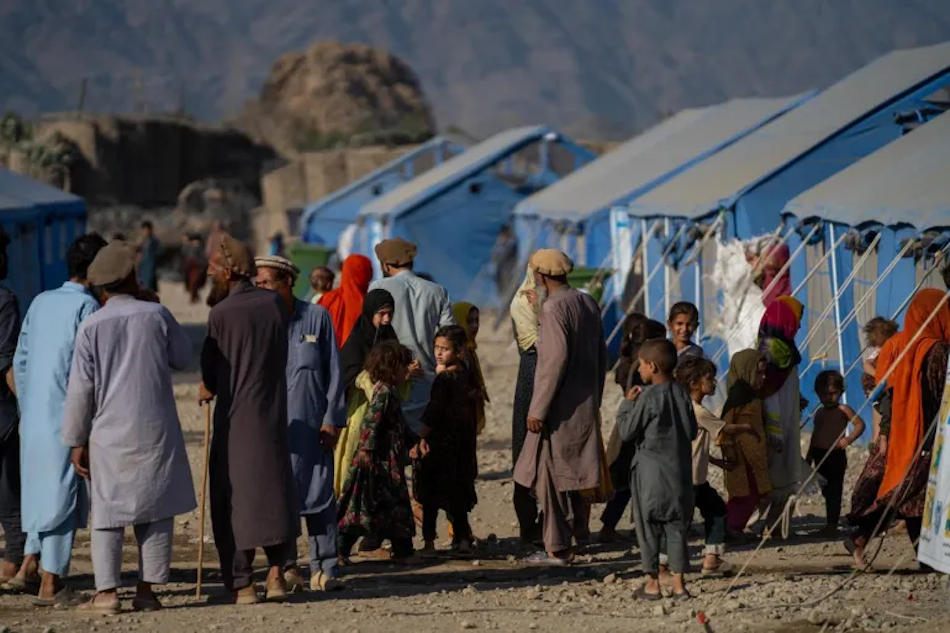
The United Nations Assistance Mission in Afghanistan (UNAMA) has released its latest quarterly human rights report, covering April 1 to June 30, painting a grim picture of systemic rights abuses, expanding restrictions on civil liberties, and ongoing violence that continues to claim civilian lives. The findings underscore a deteriorating environment for Afghan citizens particularly women, former government personnel, and journalists despite the de facto authorities’ repeated public assurances of stability and amnesty.
Arbitrary Detentions, Torture, and Public Flogging Surge
During the three-month reporting period, UNAMA documented 389 cases of arbitrary arrest and detention, 65 instances of ill-treatment, and 137 public floggings most carried out in provincial stadiums or market squares, often in front of crowds of onlookers. According to the report, personnel from the Ministry for the Propagation of Virtue and Prevention of Vice (PVPV) were responsible for the vast majority of these arrests, which were largely linked to alleged violations of strict morality codes.
These included:
-
Mandatory hijab violations for women;
-
Men’s non-compliance with beard-length requirements;
-
Prohibition on “Western-style” haircuts and clothing;
-
Playing or listening to music, which is considered un-Islamic under the Taliban’s interpretation of Sharia law.
UNAMA noted that while the authorities ceased publicly announcing corporal punishment sentences after April, floggings and other physical penalties continue to be carried out routinely across all 34 provinces, often without transparent judicial proceedings or access to legal representation.
Women’s Rights Under Systematic Erosion
The report highlights the continued and intensifying marginalization of women and girls. It confirms that the de facto authorities have not reversed the ban on girls’ education beyond sixth grade now entering its third consecutive academic year and have imposed new restrictions on female UN staff, including barring Afghan women employees from working alongside international colleagues. Moreover, new regulations affecting family life such as mandatory male guardianship for travel and restrictions on women’s participation in public spaces have effectively erased women from most social, economic, and political spheres.
UNAMA warned that these policies constitute gender-based institutional discrimination and could amount to persecution under international humanitarian law, urging the international community to respond with coordinated diplomatic and legal pressure.
Former Government Officials and Security Personnel Persecuted Despite Amnesty Claims
Despite repeated Taliban assurances of a “general amnesty” issued upon their return to power in August 2021, former Afghan government officials and security force members remain prime targets for reprisal attacks. UNAMA recorded:
-
8 extrajudicial killings,
-
29 cases of arbitrary arrest and detention,
-
5 confirmed cases of torture or other severe ill-treatment,
involving individuals who previously served under the Islamic Republic or the Afghan National Defense and Security Forces.
The UN did not explicitly name the perpetrators, but the pattern of arrests, disappearances, and physical abuse suggests involvement of Taliban intelligence units and local commanders acting outside official chain-of-command oversight. One particularly alarming case cited in the report involves a former Afghan National Army soldier who was forcibly deported from Iran to Herat on April 10 and disappeared the same day. His family has not received any information about his whereabouts or condition since.
UNAMA further warned that deported Afghans especially those with past government or security ties face heightened risks of abduction, torture, and summary execution upon arrival, particularly at border crossings where Taliban screening processes lack transparency or due process. The report echoes previous calls from Amnesty International and Human Rights Watch urging neighboring countries including Iran, Pakistan, and Turkey to halt involuntary returns of Afghans who may face persecution due to their former affiliations.
Growing Repression of Media Freedom and Civil Expression
In a separate section, the report raises significant concerns over media freedom. Over the reporting period, UNAMA documented:
-
Closure of at least 12 independent media outlets;
-
Arbitrary detention of 14 journalists and media professionals;
-
Harassment, threats, and physical intimidation of reporters, particularly those covering women’s issues, political dissent, or international criticism.
The de facto authorities have imposed strict content guidelines, including a ban on broadcasting music, airing interviews with opposition figures, or publishing material deemed “contrary to Islamic values.” International broadcasters such as the BBC and Voice of America continue to face signal jamming and online censorship, while Afghan journalists report operating in a climate of self-censorship and fear.
UNAMA called on the Taliban to uphold the right to freedom of opinion and expression under Article 19 of the Universal Declaration of Human Rights, and to release all detained journalists immediately and unconditionally.
Civilian Casualties Persist Amid Fragile Security
Despite a marked reduction in large-scale armed conflict since August 2021, Afghanistan remains unsafe for ordinary citizens. The report confirms 399 civilian casualties (killed or injured) between April and June, resulting from:
-
Residual attacks by Islamic State-Khorasan (ISIS-K) and other armed groups;
-
Unexploded ordnance and landmines a legacy of four decades of war which disproportionately affect children;
-
Cross-border shelling and security operations by Pakistani forces in eastern provinces;
-
Interpersonal violence and tribal disputes, often aggravated by weak formal judicial systems.
UNAMA emphasized that civilian protection mechanisms remain severely under-resourced, and that victims of conflict-related violence have limited recourse to justice, medical aid, or psychosocial support.
International Community at a Crossroads
The report concludes with a stark call to action: Afghanistan’s human rights trajectory is worsening, and the international community must move beyond rhetoric to adopt a coherent strategy that combines:
-
Targeted sanctions against individuals and entities responsible for gross rights violations;
-
Conditional humanitarian aid tied to verifiable improvements in women’s rights and media freedom;
-
Safe pathways and resettlement quotas for at-risk groups, including female judges, civil society activists, and LGBTQ+ individuals;
-
Support for independent monitoring mechanisms, including UNAMA’s mandate renewal and expansion.
Roza Otunbayeva, the UN Secretary-General’s Special Representative for Afghanistan, stated: “The de facto authorities are testing the limits of international tolerance. Accountability is not optional it is essential if we are to prevent further atrocities and preserve the fundamental dignity of the Afghan people.”
Our Pashto-Dari Website
Support Dawat Media Center
If there were ever a time to join us, it is now. Every contribution, however big or small, powers our journalism and sustains our future. Support the Dawat Media Center from as little as $/€10 – it only takes a minute. If you can, please consider supporting us with a regular amount each month. Thank you
DNB Bank AC # 0530 2294668
Account for international payments: NO15 0530 2294 668
Vipps: #557320

Comments are closed.