

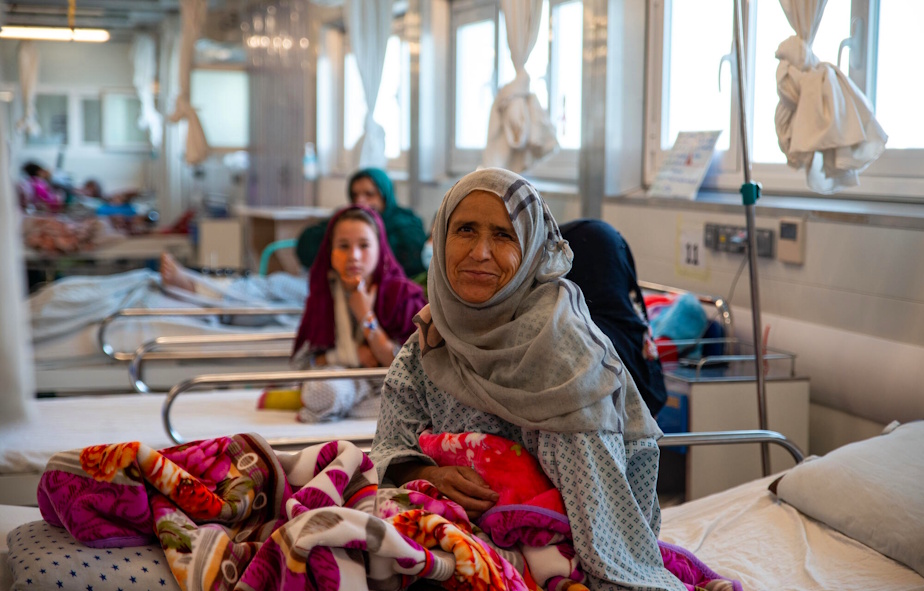
The United Nations special rapporteur for Afghanistan has sounded the alarm over what he describes as a rapidly deteriorating health crisis affecting women and girls across the country, warning that recent restrictions have pushed an already fragile healthcare system to its breaking point.
Richard Bennett, the UN Special Rapporteur on human rights in Afghanistan, released a comprehensive report detailing how Afghan women are facing unprecedented barriers to medical care since the Taliban’s return to power. The findings paint a stark picture of how bans on female education, employment restrictions, and severe limitations on freedom of movement have compounded into a public health emergency.
The assessment draws from extensive fieldwork, including group discussions and individual interviews with 137 people across 29 provinces, 17 written submissions, and survey data from more than 8,000 women spanning 33 provinces. Researchers describe it as one of the most thorough investigations into women’s healthcare access in Afghanistan since the Taliban takeover.
According to the report, women have lost nearly all autonomy over their own medical decisions and bodily health. The restrictions mean that even when women recognize the need for medical attention, they often cannot seek it without male permission, nor can they travel freely to reach healthcare facilities. Without urgent international intervention, the report warns, Afghanistan’s women face a grim trajectory in public health outcomes.
The findings reveal a troubling narrowness in how women’s health is approached under current policies. Healthcare provision has been largely reduced to maternal and reproductive services, while critical areas such as chronic disease management, mental health support, and preventive care remain almost entirely neglected. Deeply entrenched patriarchal norms, combined with women’s economic dependence on male relatives, frequently mean that treatment is delayed until illnesses have reached critical stages.
Since seizing control in August 2021, Taliban authorities have systematically dismantled women’s access to public life. Afghanistan now stands as one of the only countries in the world where girls are completely barred from attending secondary schools and universities a policy with far-reaching consequences for the future of women’s healthcare, including the training of female medical professionals.
The crisis is most acute in rural and remote regions, where the scarcity of clinics is compounded by vast distances, lack of transportation infrastructure, prohibitive treatment costs, and a severe shortage of female healthcare workers. Cultural norms that discourage women from being examined by male doctors create an additional, often insurmountable, barrier. Many women simply endure illness rather than seek care that would require violating social codes.
The report also highlights how intersecting factors poverty, systemic discrimination, disability, ethnic marginalization, religious constraints, and lack of official identification documents magnify these healthcare barriers for the most vulnerable women.
Bennett’s urgent call to action emphasizes that the international community cannot afford to look away. He stresses that protecting Afghan women’s fundamental right to health demands immediate, coordinated global engagement to prevent an already dire situation from spiraling further into catastrophe.
Our Pashto-Dari Website

Support Dawat Media Center
If there were ever a time to join us, it is now. Every contribution, however big or small, powers our journalism and sustains our future. Support the Dawat Media Center from as little as $/€10 – it only takes a minute. If you can, please consider supporting us with a regular amount each month. Thank you
DNB Bank AC # 0530 2294668
Account for international payments: NO15 0530 2294 668
Vipps: #557320

Comments are closed.