

The ongoing war of choice launched by the United States and Israel against Iran has shattered the geopolitical status quo in the Middle East. As Washington finds itself entangled in yet another costly quagmire, reports increasingly suggest that President Donald Trump’s administration is in urgent need of a political off-ramp. The alternative unlimited escalation threatens to drag the entire Gulf into an abyss from which no regional actor can easily emerge unscathed.
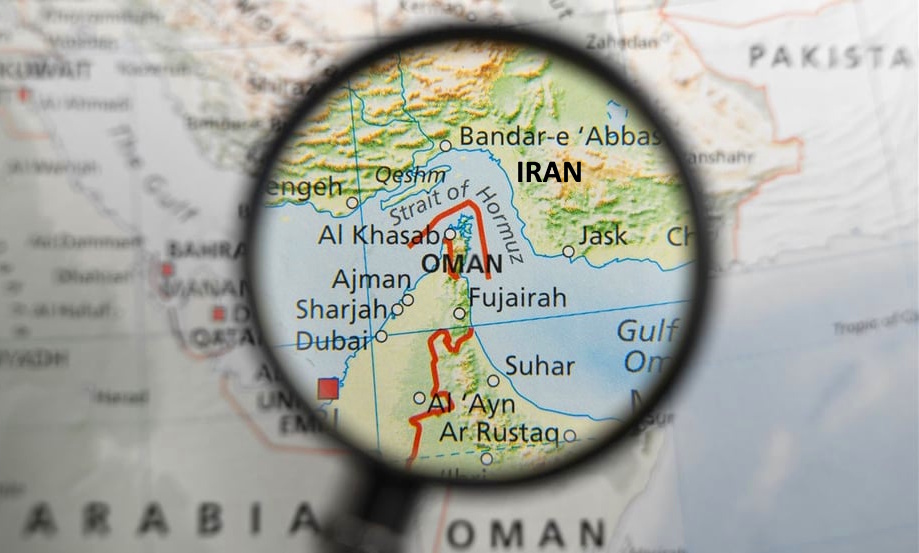
The littoral states of the Strait of Hormuz possess a rare, collective opportunity to provide that off-ramp. By taking the initiative to establish a new, locally managed security architecture for the world’s most vital oil and gas chokepoint, our nations can elevate their strategic significance in both regional geopolitics and the global economy. The alternative to this win-win scenario is prolonged conflict, ensuring that a new regional order is eventually imposed unilaterally by Tehran an outcome that would permanently diminish the Gulf Cooperation Council (GCC) states’ leverage.
A Trap Between Two Bad Options
Seeking to balance their positions, the GCC states currently appear trapped between two unacceptable choices. Confronting Trump, especially in the midst of active hostilities, would undoubtedly carry significant costs and invite unpredictable reactions from an increasingly mercurial leader. Yet their inability to avoid being perceived by Iran as at least passive participants in the aggression against the country makes them legitimate targets under Tehran’s increasingly assertive military doctrine a doctrine explicitly designed to prevent the recurrence of such wars for the foreseeable future.
This grim reality also exposes the limits of America’s security patronage. These limits particularly during what appears to be a historically unconditional U.S. alignment with Israel, in which Israeli interests increasingly trump American interests in the region suggest that the existing status quo is simply unsustainable. A new order will inevitably replace the old one, as conditions for all regional states will further deteriorate if the conflict continues to escalate. There is no longer any scenario in which Iran remains a target while the GCC carries on as usual, as was briefly the case during the 12-day war of June 2025.
Iran’s Leverage and the Collective Nature of Insecurity
Iran’s ability to choke maritime traffic through the Strait using $20,000 drones produced in underground facilities and launched from virtually anywhere in the country demonstrates that it possesses immense, asymmetric leverage. Iranian officials have stated clearly that this capability will now be utilized to forge a new order for Hormuz, with or without regional partners.
Relations between Iran and the GCC states have seen dramatic ups and downs since the Islamic Revolution of 1979. For decades, hostility defined the relationship, until a radical, positive transformation occurred over the past few years. The recent Iranian attacks against military and economic infrastructure in GCC states, along with the expulsion of Iranian diplomats from some GCC capitals, undoubtedly constitute a severe regression toward the past. However, this crisis has also reaffirmed a fundamental truth: security is a collective good. The current war proves how one state’s insecurity renders all states in the region insecure. A security architecture built at the expense of a neighbor is no longer viable. Iran has already begun dismantling the former order but the new order does not need to be exclusively Iranian in its design.
Historical Inspiration from Europe
For a path forward, we can look to Europe’s successful historical experiments in achieving regional order. From the Congress of Vienna (1814–1815), which stabilized Europe following Napoleon’s wars of aggression, to the gradual economic, political, and security integration that followed World War II these milestones should serve not as rigid templates, but as sources of inspiration. What made them successful was not the absence of conflict, but the shared recognition among rivals that a rules-based framework serves everyone’s long-term interests better than perpetual confrontation.
The Legal Anomaly of Hormuz
The Strait of Hormuz suffers from a profound legal anomaly: it remains one of the few critical maritime arteries of its kind lacking a dedicated international regulatory treaty. Unlike Turkey, whose sovereign control and regional stability are partially anchored in the Montreux Convention regulating the Bosporus and Dardanelles, Hormuz operates without a codified maritime framework. This vacuum has made the Strait uniquely vulnerable to superpower imposition throughout history. The current war can thus, to a significant extent, be understood as a direct product of this unregulated environment a space where might has repeatedly trumped right.
Convening a “Congress for Hormuz” could help regional states collectively design a new security architecture, fill this legal vacuum, and ensure the stability of not only our region but also the global economy. The ultimate goal of such a platform should be the codification of a treaty that formalizes the status of the Strait, provides the legal certainty currently absent, and elevates the strategic weight of regional states by ensuring that the management of Hormuz remains a local prerogative.
A Dual Timeframe: Off-Ramp and Long-Term Stability
In the short term, this framework can serve to reopen the Strait and provide President Trump with a face-saving exit from the quagmire allowing him to claim that his regional allies have helped restore transit. In the long term, this framework would protect GCC countries from a patron willing to sacrifice international law and regional stability for the benefit of its principal ally, Israel; an ally that none of us will ever be able to replace or meaningfully compete with. The future of Hormuz belongs in the hands of its inhabitants, not the superpowers who have historically exploited it and are currently destabilizing it to pursue their own or Israel’s interests.
The Cost of Delay
While a multilateral platform and a formal treaty represent the ideal path toward long-term stability, it is imperative to recognize that the current existential war launched against Iran a conflict facilitated precisely by the old regional status quo has made the emergence of a new order a non-negotiable necessity for Tehran. Should the GCC states choose to prioritize the demands of their Western allies over regional integration (which is likely to prolong the conflict, inflicting costs on all sides), Iran will undoubtedly proceed to forge this new order unilaterally.
In that scenario, the resulting framework would be an imposed order, born of strategic necessity and survival rather than consensus. Under such conditions, the common ground for shared peace, regional stability, and collective prosperity would be significantly diminished. That would not be a managed transition it would be a lost opportunity, perhaps the last one for a generation.
Conclusion: Architects or Observers?
The GCC states must now decide whether they wish to be the architects of this new regional era or merely passive observers. The window for collective action is neither permanent nor forgiving. Either the littoral states of the Strait of Hormuz come together to write a new rules-based order for its waters, or that order will be written for them by Tehran, by Washington, or by the relentless logic of escalation. The choice, for once, is genuinely ours.
The views expressed in this article are the author’s own and do not necessarily reflect Dawat Media’s editorial stance.
Our Pashto-Dari Website

Support Dawat Media Center
If there were ever a time to join us, it is now. Every contribution, however big or small, powers our journalism and sustains our future. Support the Dawat Media Center from as little as $/€10 – it only takes a minute. If you can, please consider supporting us with a regular amount each month. Thank you
DNB Bank AC # 0530 2294668
Account for international payments: NO15 0530 2294 668
Vipps: #557320

Comments are closed.