

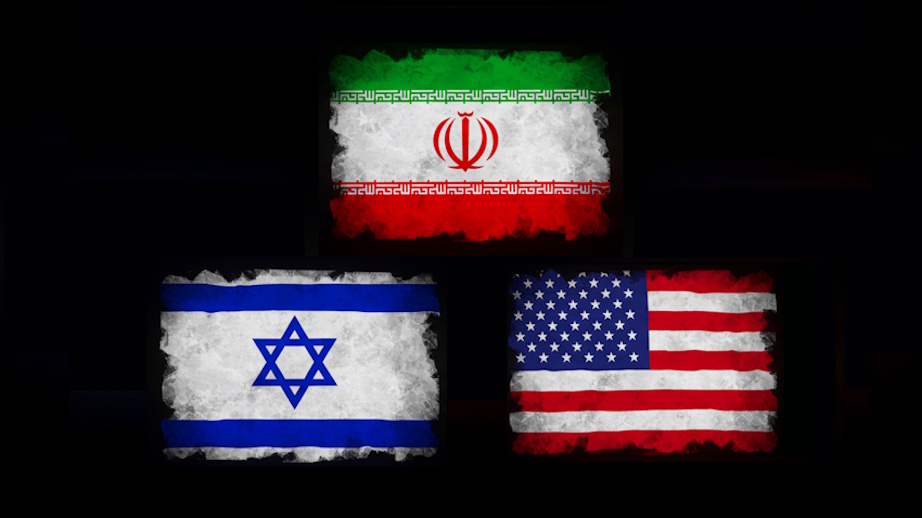
There’s a peculiar strain of American arrogance that refuses to die. It’s the belief, dressed up in high-minded rhetoric, that the United States possesses a universal blueprint for how societies should be organized—and that it has both the right and the power to impose that blueprint on any country, by force if necessary. This is the logic of the “blank slate,” a hubris that has shaped U.S. foreign policy in the Middle East for decades. Successive administrations have looked at ancient, complex societies and treated them as if their political cultures could be erased and rewritten overnight with American military power.
The conceit rests on a seductively simple assumption: remove a tyrant, and a liberated people will spontaneously embrace Western-style democracy and free markets. It’s a fantasy that ignores history, culture, and the stubborn reality that nations are not made from scratch.
George W. Bush’s administration after 9/11 was the high priest of this delusion. In Iraq, the belief was that toppling Saddam Hussein would reveal a populace eager to build a shining democracy. The White House seemed to genuinely think that the Iraqi people wanted exactly what Americans wanted and that eliminating the Ba’athist obstacle would allow those shared aspirations to flourish naturally. They blithely dismissed the absence of a cohesive national identity and the deep sectarian fractures that had been held together by iron fist for decades.
Decades later, Donald Trump made the same catastrophic error, albeit with a different aesthetic. When he launched his “Epic Fury” campaign against Iran, he promised that overwhelming airstrikes would empower the Iranian people to “take control” of their government and form a new, U.S.-friendly state with ease. He addressed Iranians directly, urging opponents of the regime to seize their institutions, promising them the country would be “yours.” War, he framed, was a gift of freedom for future generations.
Both leaders treated these ancient, intricate civilizations as blank slates. Both ignored the fact that political institutions, loyalties, and behaviors are the products of centuries of cultural and social evolution not prefabricated structures that can be airlifted in and bolted onto a foreign land. Neither seemed to grasp that regimes are woven into the very fabric of a society, and that external attacks, more often than not, either galvanize nationalist solidarity or trigger chaotic fragmentation. They rarely yield a tidy, orderly liberal democracy.
Nation-Building: Between a Sacred Mission and Cold Calculation
The American drive to remake other nations is not merely a tool in a military toolbox; it’s a reflection of the nation’s soul. It oscillates between two impulses: a messianic mission to spread freedom, and a transactional interest in securing strategic dominance. This philosophical foundation runs deep.
It begins with the doctrine of “American exceptionalism”—the idea that the U.S. is not just a superpower but a unique moral force for liberty, burdened with a sacred duty to redeem the world. This philosophical root stretches back to the 17th-century Puritan vision of their colonies as a “city upon a hill.” Over time, that vision mutated from “leading by example” to “intervening by force.” The belief became that American power could and should be used to reshape sovereign nations in its own image.
This impulse found political justification in “democratic peace theory,” the idea that democracies don’t fight each other. In this logic, transforming autocracies into liberal democracies became not just an act of idealism but an existential investment in American security. It was the engine driving the Bush administration’s conviction that dismantling the Ba’athist system and building a democratic Iraq would create a cascading effect, ushering in an era of sustainable peace across the Middle East.
Completing the philosophical picture is the school of “international liberalism,” which wrapped nation-building in the guise of “modernization.” This line of thought linked poverty and tyranny to the rise of terrorism, making the reconstruction of failed states’ infrastructure and legal systems a supposedly urgent tool for integrating them into the global order and free markets. In this way, nation-building became less a reform project than an attempt to impose a form of political and legal globalization, one that assumed American values were universal aspirations waiting to be liberated from local dictators.
In the post-Cold War era, this potent mix of moral certainty and strategic theory metastasized into an ambitious foreign policy doctrine of “expansion.” Bolstered by unprecedented, unipolar power, the U.S. launched a historic effort to fundamentally alter the internal political and economic structures of other sovereign nations. The core premise was that American values democracy, free markets, the rule of law were not culturally specific but were universal yearnings, merely suppressed by autocrats. It was as if the nation’s history of religious missionaries was being secularized into a campaign to convert entire countries into market democracies.
But this philosophy was fatally flawed. It crashed against cultural reality. Modern Western institutions are built on impersonal rules and bureaucratic networks. The societies America targeted Iraq, Afghanistan, and others were largely built on kinship networks, where primary loyalties belonged to tribe, clan, sect, or religious group. The abstract, impersonal nature of Western governance was foreign. When American forces tried to implant Western-style democratic institutions, they encountered fierce resistance, not because people didn’t want freedom, but because the cultural foundations and social networks simply couldn’t support the alien structures being imposed on them.
If Bush’s approach was the moral crusade, Trump’s was the transactional shakedown. He didn’t see the Middle East as a mission field for democracy, but as a strategic and economic chessboard. His goal was not to build nations but to force adversaries into “unconditional surrender,” ensuring American dominance and economic gains. In this view, the region was an investment opportunity, a fulcrum between continents where U.S.-aligned economies could flourish once disruptive forces like Iran were crushed.
Despite stripping away the idealistic rhetoric, Trump’s utilitarian philosophy rested on the same false premise as Bush’s: that overwhelming American coercion could fundamentally alter the political trajectory and cultural fabric of a foreign nation. It assumed that a decapitated Iran would quickly realign with American interests out of pure self-interest. Like Bush, Trump suffered from a profound cultural blindness.
George W. Bush: The Armed Social Worker
It’s a striking irony that George W. Bush entered the White House deeply skeptical of nation-building. He campaigned in 2000 arguing that the military’s job was to fight and win wars, not to build countries. But after the 9/11 attacks, his administration launched the most ambitious, costly, and protracted nation-building project in modern American history.
After the swift defeat of Saddam’s army, the U.S. effectively dismantled the entire Iraqi state and established the Coalition Provisional Authority (CPA). The CPA became a kind of “armed social worker,” tasked with reconstructing a nation from scratch. It assumed nominal responsibility for every aspect of Iraqi life, from overhauling the economy to rewriting traffic laws. The goal was nothing less than transforming a Ba’athist police state into a vibrant democracy with a free-market economy.
The administration operated under a hallucinatory assumption: that American troops would be greeted as liberators, and the existing Iraqi bureaucracy would seamlessly transition to democratic rule under U.S. tutelage. This approach tragically ignored the country’s political sociology. Iraq had never forged a unified national identity. Its people were deeply divided along Sunni, Shia, and Kurdish lines, their allegiances tied to sectarian identities, not the artificial borders of the state.
By dismantling the Ba’athist system, the U.S. didn’t pave the way for democracy; it unleashed a vicious sectarian civil war. American officials, largely ignorant of Iraq’s language, culture, and history, found themselves trying to build a nation while fighting a growing insurgency from the very people they intended to govern. CPA members were often selected for political loyalty to the Bush administration rather than any relevant expertise, leading to surreal scenarios where candidates were asked their views on American abortion laws before being sent to run a country in the Middle East.
The catastrophic failure of Bush’s nation-building project demonstrated a harsh truth: no matter how powerful, the American military cannot artificially manufacture a cohesive nation or impose liberal democracy on a society whose cultural and political realities are fundamentally incompatible with the American model.
Donald Trump: The Realist of Ruin
If Bush was a reluctant “armed social worker,” Donald Trump positioned himself as the “realist of ruin.” He campaigned on ending “endless wars,” criticizing his predecessors’ costly, open-ended interventions as disastrous. Yet in his second term, he launched “Epic Fury” against Iran—a massive, sustained military campaign aimed at destroying Iran’s military capabilities and toppling its regime.
Trump’s strategy sought the ultimate goal of nation-building regime change without the messy, costly commitment of a ground invasion or the burden of post-war responsibility. He envisioned a war where American airpower would obliterate the autocratic state apparatus, and the local population would spontaneously rise up to build a pro-American democracy. His approach deliberately abandoned the Colin Powell Doctrine’s requirements of clear objectives and overwhelming ground force, relying instead on ambiguity, excessive airpower, and a refusal to engage in traditional state-building.
He hoped to achieve definitive ends at a low political cost, effectively bypassing the nation-building quagmire that had ensnared Bush. But history offers little support for the idea that a country’s internal politics can be radically restructured using airpower alone. Bombs can destroy infrastructure and decapitate leadership, but they cannot create organized political alternatives or fill the resulting power vacuums.
At the heart of Trump’s Iran strategy was a “decapitation” strike. On the war’s first day, U.S. and Israeli forces launched intense daylight airstrikes on Tehran, assassinating Supreme Leader Ayatollah Ali Khamenei along with a host of top political and military officials. Trump and Israeli Prime Minister Benjamin Netanyahu bet that removing the head of Iran’s leadership would cause the immediate collapse of the Islamic Republic—like toppling a dictator in a hyper-personalized authoritarian state.
This logic exploited what they perceived as a weakness, assuming that deep political change would naturally follow the violent overthrow of the state’s architects. But the decapitation strategy revealed a profound misunderstanding of Iran’s political and military culture. Unlike brittle systems driven by a single personality, the Islamic Republic had spent nearly half a century entrenching its rule and building overlapping, redundant power structures designed specifically to withstand such attacks. The office of the Supreme Leader is buttressed by a dense network of institutions meant to constrain, monitor, and survive any individual.
In response to the decapitation threat, Iran had implemented a “mosaic defense” doctrine, distributing the command and control of the Revolutionary Guard across 31 autonomous regional units. This structure enables local commanders to wage guerrilla warfare independently, launch rockets, and continue operations even if the central command in Tehran is wiped out. So, while Khamenei was killed and infrastructure was devastated, the Iranian military apparatus didn’t collapse. Instead, it quickly devolved into a decentralized war of attrition, escalating the conflict horizontally across the region.
By relying on decapitation, Trump pursued an approach of smashing the façade of the state, but it lacked a coherent strategy. More importantly, cutting off the head of a leader was never going to solve America’s problem with Iran.
A Recurring Failure
Though their approaches were radically different—Bush’s idealism manifested in direct military occupation and comprehensive institutional engineering, Trump’s transactional realism in overwhelming airpower, violent strikes, and the absence of a ground presence—both presidents ultimately fell into the same strategic trap. The failure of both experiments is stark, and the root cause is identical: a deep, arrogant disregard for the cultural, historical, and social realities of the nations they sought to change.
Both leaders operated under the illusion that American military superiority could be seamlessly translated into desired political outcomes. Bush thought toppling Saddam would automatically yield a liberal democracy, ignoring the tribal and sectarian divisions defining Iraqi society and its legacy of resistance to occupiers. Trump thought assassinating Khamenei and bombing the Revolutionary Guard would lead to the immediate collapse of the Islamic Republic and the formation of a U.S.-friendly government, ignoring the regime’s deep institutional resilience, its decentralized military structure, and the nationalist sentiments of the Iranian people. In both cases, the United States treated ancient, complex civilizations as blank slates waiting to be inscribed with American preferences.
The central lesson from the Bush and Trump eras is that while the U.S. military possesses an unparalleled capacity to destroy centralized state authority, it lacks an equal capacity to manage the chaos that follows. Externally imposed regime change—whether through full-scale occupation or remote decapitation—rarely produces the democracy its architects imagine. More often, it yields fragmentation, insurgency, and prolonged regional instability.
War, as Clausewitz wrote, is politics by other means. But without a clear political objective grounded in a deep understanding of enduring cultural and social traditions, military intervention becomes a fool’s errand. It unleashes forces that the United States cannot control or contain. Because both administrations prioritized their own domestic political narratives and ideological fantasies over the concrete realities on the ground, their ambitious designs for regional transformation collapsed into bloody, long-term failures.
Our Pashto-Dari Website

Support Dawat Media Center
If there were ever a time to join us, it is now. Every contribution, however big or small, powers our journalism and sustains our future. Support the Dawat Media Center from as little as $/€10 – it only takes a minute. If you can, please consider supporting us with a regular amount each month. Thank you
DNB Bank AC # 0530 2294668
Account for international payments: NO15 0530 2294 668
Vipps: #557320

Comments are closed.