
The Unthinkable Exit: Arijit Singh Retires from Playback Singing, Leaving a Void in Bollywood

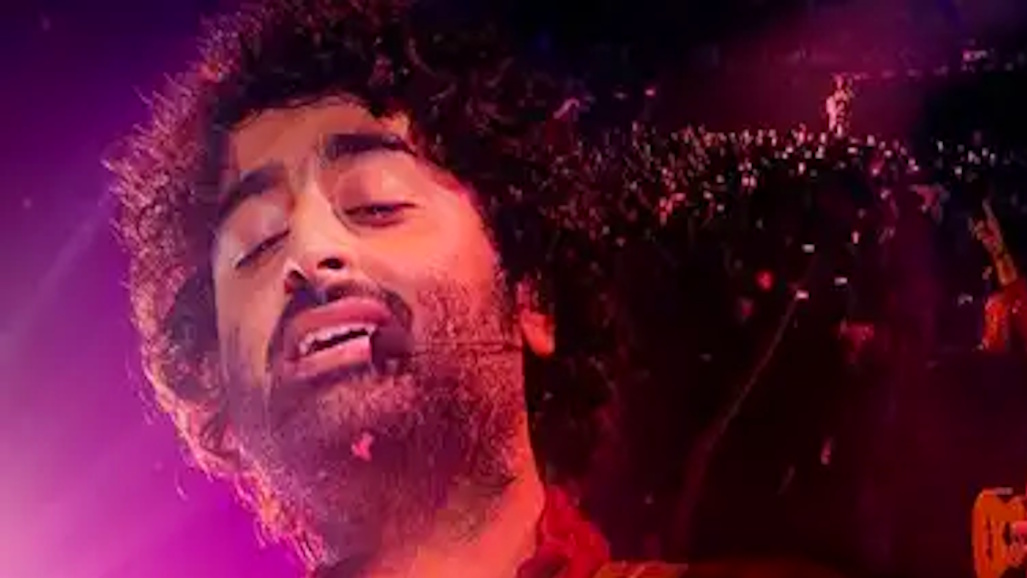
In a move that has sent seismic waves through the Indian music and film industries, Arijit Singh—the voice that defined a generation of Bollywood romance—has announced his retirement from playback singing. The announcement, made via social media on a quiet Tuesday night, felt like a sudden silence in a room filled with constant, beloved music. For an industry that has, for over a decade, treated his voice as its emotional backbone—always present, always resonant—the news landed with a thud of collective disbelief.
“I am calling it off. It was a wonderful journey,” Singh wrote, clarifying that while he would honor existing commitments, he would accept no new playback assignments. In a subsequent, more personal note on a private account, he peeled back the layers on his startling decision, revealing an artist not in crisis, but in pursuit of renewal.
Beyond Burnout: The Anatomy of a Decision
Singh’s reasons transcend the typical narrative of celebrity fatigue. He outlined a triad of motivations that speak to an artist at a profound crossroads:
-
Creative Restlessness: “I get bored pretty quick,” he admitted, referencing his habit of re-arranging his own hits for live performances. The cycle of film music, despite its grandeur, had become predictable. “I need to do some other music to live,” he stated, highlighting a deep-seated need for creative evolution beyond the constraints of cinematic briefs.
-
A Desire for New Inspiration: In a remarkably selfless and forward-looking sentiment, Singh expressed excitement to hear new voices emerge. “I am excited to hear some singer come up and give me real motivation,” he wrote, seemingly wanting to step aside to let the spotlight—and the industry’s reliance—shift onto fresh talent.
-
A Return to Roots: The most poignant reason points inward, to a journey back to where it all began. “I am going to go back to Indian Classical Music,” Singh declared. “I wanna go back to making music. I wanna start again… as a small little artist.” This speaks to a desire to shed the immense weight of his “star singer” mythology and reconnect with the pure, unmediated act of creation.
The End of an Era: A Voice That Shaped a Decade
To understand the magnitude of this exit, one must reckon with Singh’s unparalleled dominance. His rise was not overnight; after an early stint on Fame Gurukul (2005) and years in the background, his breakthrough came with ‘Tum Hi Ho’ (2013). That song didn’t just make him a star; it recalibrated the very sound of mainstream Bollywood, anchoring it in a vulnerable, yearning romanticism delivered in his unmistakable, textured timbre.
What followed was a reign unlike any other. From the cathartic ‘Channa Mereya’ and ‘Agar Tum Saath Ho’ to the anthemic ‘Gerua’ and ‘Kesariya’, his voice became the default emotional translator for every major hero and every scale of production. He amassed awards, crossed linguistic borders, and in July 2025, achieved a staggering metric of modern fame: becoming the most-followed artist on Spotify globally, with over 150 million followers.
The Financial Legacy and the Unfilled Void
At his peak, Singh commanded reported fees of ₹15-20 lakhs per song, a testament to his considered indispensable value. His departure leaves not just an emotional but a financial void—a “safe bet” for producers and music directors has now voluntarily left the table.
The industry’s reaction has oscillated between shock, respect, and a nervous glance toward the future. Composers who built hit machines around his reliability, and actors whose on-screen romance was so often animated by his voice, now face a new landscape. As one veteran music director privately noted, “It’s like the lead actor in a long-running play has decided to exit stage left, and the understudy hasn’t been cast yet.”
Not a Farewell, but a Rebirth
Crucially, Singh has emphasized this is not a retirement from music. “Just to be clear that I won’t stop making music,” he assured fans, promising independent work. He signed off his note with a playful, “Ab aayega maza!!” (Now the fun will begin!), signaling a liberation rather than an end.
Arijit Singh’s decision is a powerful narrative about artistic autonomy in an era of industrial-scale production. It challenges the notion that peak success is the ultimate destination, suggesting instead that the courage to reinvent oneself is a higher form of achievement. For millions of listeners, his playback songs remain an eternal playlist of their lives. But for Arijit Singh himself, the next track is one he needs to write, compose, and sing entirely for himself. The voice that belonged to Bollywood has now chosen, courageously, to belong solely to its owner once more.
Our Pashto-Dari Website


Support Dawat Media Center
If there were ever a time to join us, it is now. Every contribution, however big or small, powers our journalism and sustains our future. Support the Dawat Media Center from as little as $/€10 – it only takes a minute. If you can, please consider supporting us with a regular amount each month. Thank you
DNB Bank AC # 0530 2294668
Account for international payments: NO15 0530 2294 668
Vipps: #557320

Comments are closed.