

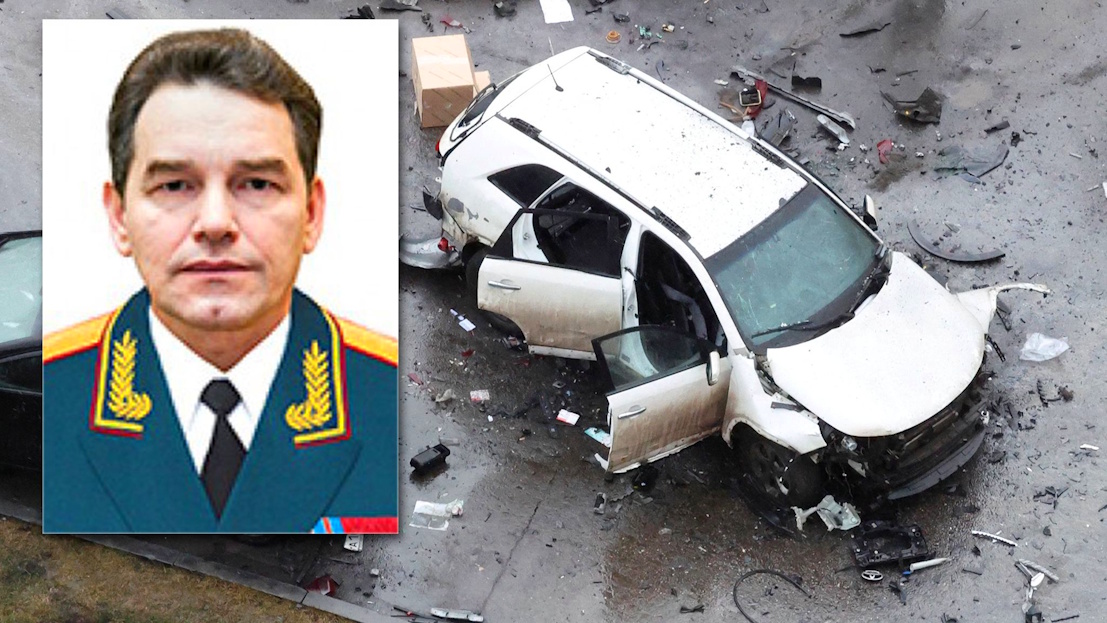
The timing of the recent assassination of a senior Russian military officer appears strategically significant, underscoring Kyiv’s campaign to demonstrate its enduring resolve and capability to strike deep within Russian territory.
Lieutenant General Fanil Sarvarov, a high-ranking officer within the Russian General Staff, was killed when a powerful car bomb detonated outside a residential complex in the Moscow region, a mere ten miles from the Kremlin walls. As the head of the operational training directorate, Sarvarov was no mere figurehead; he was pivotal in preparing and shaping Russian forces for future deployment, drawing on extensive combat experience from campaigns in Chechnya and Syria.
This attack marks the latest in a string of high-profile assassinations targeting Russian military and political figures since the 2022 invasion. While no party has immediately claimed responsibility, Russian authorities have pointed the finger at Ukrainian special services—an accusation grounded in a established pattern of similar covert operations. Just last year, Ukraine publicly claimed responsibility for the assassination of Lieutenant General Igor Kirillov, whom they accused of ordering the use of chemical weapons against Ukrainian troops.
A Calculated Message to Multiple Audiences
The operation serves multiple strategic purposes for Kyiv:
-
To Moscow: A Demonstration of Vulnerability. Eliminating a general on his own doorstep, in a supposedly secure zone near the nation’s political heart, is a profound embarrassment for the Kremlin. It shatters the narrative of Russian homeland security and projects Ukrainian reach and intelligence penetration. These attacks suggest a concerning pattern for Russian elites, transforming even quiet Moscow suburbs into potential front lines.
-
To Washington and Allies: Proof of Resolve and Efficacy. As Western support faces political headwinds, Ukraine is under pressure to prove it remains a dynamic and effective fighting force capable of taking the initiative. Daring assassinations and long-range strikes are tangible evidence of this, intended to reassure allies that military aid is being used decisively to weaken Russian command structures and morale.
-
To the Russian Military: A Morale Attack. Such strikes are designed to sow fear, uncertainty, and distrust within the Russian officer corps. If a general is not safe at home, where is he safe? This psychological warfare aims to corrode morale and create a climate of paranoia, potentially affecting command decisions and operational security.
The Escalating Shadow War
The death of General Sarvarov represents an escalation in the shadow war being waged far from the conventional battlefield. Ukraine has increasingly leveraged sabotage, drone strikes on strategic infrastructure, and targeted killings to compensate for its disadvantages in sheer manpower and traditional firepower. These tactics are central to a strategy of asymmetric warfare, aiming to level the playing field by attacking critical nodes in the Russian system—its leadership.
As the conflict grinds on, such audacious acts are likely to continue. They are a stark reminder that Ukraine’s fight extends beyond trench warfare, encompassing a relentless campaign to degrade Russian command and control and challenge the Kremlin’s sense of impunity, even at its very core.
Our Pashto-Dari Website


Support Dawat Media Center
If there were ever a time to join us, it is now. Every contribution, however big or small, powers our journalism and sustains our future. Support the Dawat Media Center from as little as $/€10 – it only takes a minute. If you can, please consider supporting us with a regular amount each month. Thank you
DNB Bank AC # 0530 2294668
Account for international payments: NO15 0530 2294 668
Vipps: #557320

Comments are closed.