

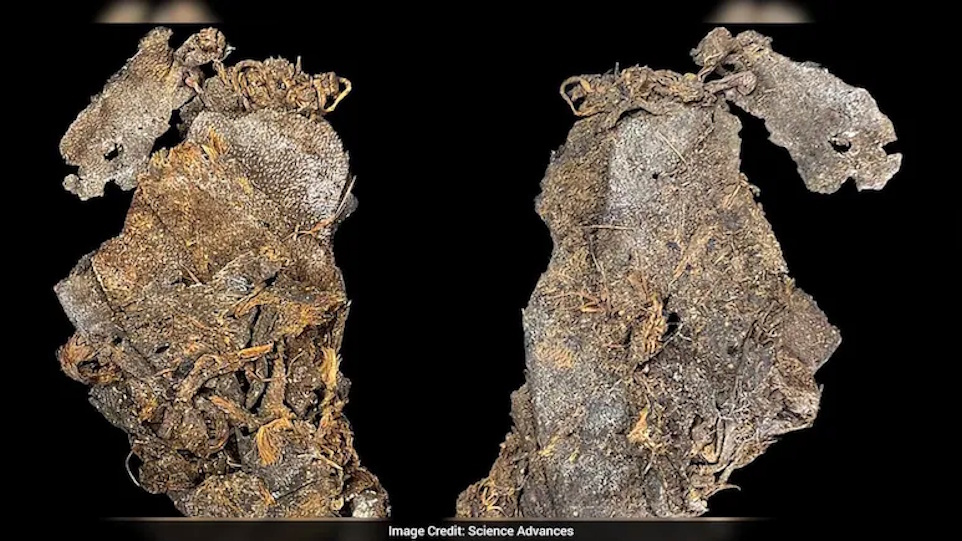
Archaeologists have uncovered fragments of stitched animal hide dating back approximately 12,000 years, potentially making them the oldest known sewn clothing made by humans. The discovery, detailed in a study published in the journal Science Advances, offers a rare glimpse into the advanced craftsmanship of early inhabitants of North America.
The small scraps of hide were found inside Cougar Mountain Cave in Oregon, according to a report by the NYPost. Believed to be elk skin, the remains date to the Late Pleistocene, roughly 12,060 to 12,620 years ago—placing them at the tail end of the last Ice Age. If confirmed as clothing, these artifacts would predate the construction of the Egyptian pyramids (circa 2700 to 1700 BC) by thousands of years.
The pieces of hide were stitched together using cordage made from animal skin. Researchers confirmed their age and origin through radiocarbon dating and species identification. Bone needles were also discovered at the site, along with tools likely used for hunting, suggesting a complete system for creating tailored garments.
What Was It Used For?
While the fragments may have been part of a garment, researchers remain cautious. The stitched skins could also have served as part of a bag, shelter, or other utilitarian object. If they are indeed clothing, they would represent the earliest direct evidence of sewn hides and the first known garments from the Pleistocene era.
Why It Matters
The discovery sheds light on how ancient humans adapted to extreme environments. During the Younger Dryas, a period of abrupt cooling approximately 12,900 to 11,700 years ago, global temperatures plummeted. The ability to sew fitted clothing would have been essential for survival, particularly in northern latitudes.
According to the study, modern humans were the only hominins to permanently settle above 45 degrees north latitude around 45,000 years ago. Surviving the harsh cold and limited resources required advanced techniques for preserving body heat and obtaining food. While untreated animal skins offered limited protection from hypothermia, stitched garments provided better insulation and allowed for greater mobility.
The research also highlights a technological shift over time: bone needles were common during the colder Pleistocene but declined in use during later, warmer periods—underscoring the link between innovation and environmental pressure.
Our Pashto-Dari Website


Support Dawat Media Center
If there were ever a time to join us, it is now. Every contribution, however big or small, powers our journalism and sustains our future. Support the Dawat Media Center from as little as $/€10 – it only takes a minute. If you can, please consider supporting us with a regular amount each month. Thank you
DNB Bank AC # 0530 2294668
Account for international payments: NO15 0530 2294 668
Vipps: #557320

Comments are closed.