
US and Iran Fail to Reach Deal After Marathon Peace Talks in Pakistan; Fragile Ceasefire at Risk

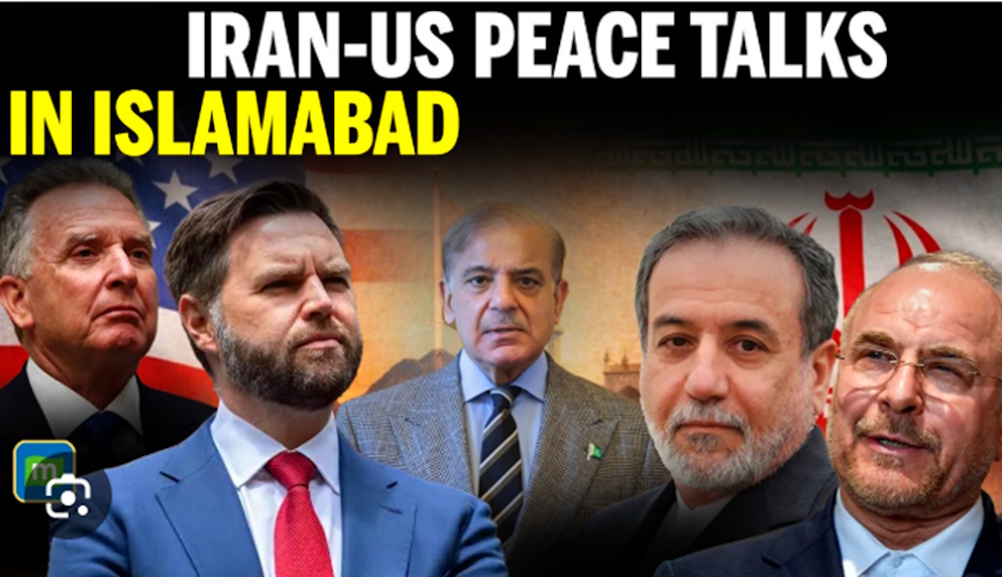
ISLAMABAD – The United States and Iran failed to reach an agreement to end their six-week-long war despite marathon negotiations that concluded on Sunday in the Pakistani capital, Islamabad, casting serious doubt on the survival of a fragile ceasefire.
Each side blamed the other for the collapse of the 21-hour talks, which were intended to halt a conflict that has killed thousands and sent global oil prices soaring since hostilities began in late February.
The failure to secure a deal underscored the deep chasm between the two nations after more than a decade without direct, high-level dialogue. The talks in Islamabad the first such face-to-face meeting since the 1979 Islamic Revolution ended with US Vice President JD Vance departing without a handshake or a joint statement.
‘Bad News for Iran’: Vance Cites ‘Red Lines’
“The bad news is that we have not reached an agreement, and I think that’s bad news for Iran much more than it’s bad news for the United States of America,” Vance, who headed the US delegation, told reporters shortly before leaving Islamabad. “We’ve made very clear what our red lines are.”
Vance said Iran had refused to accept American terms, including a binding commitment not to build nuclear weapons and to forgo the technical means to quickly produce them. “That is the core goal of the president of the United States, and that’s what we’ve tried to achieve through these negotiations.”
Iran’s semi-official Tasnim news agency countered that “excessive” US demands had blocked a deal. Other Iranian media outlets reported that while agreement had been reached on several secondary issues, two main sticking points remained: control over the strategic Strait of Hormuz and the future of Iran’s nuclear program.
A spokesperson for Iran’s foreign ministry said the talks were conducted in an atmosphere of profound mistrust. “It is natural that we shouldn’t have expected to reach an agreement in just one session,” the spokesperson was quoted as saying.
Iran’s 44-Day Internet Blackout Deepens Humanitarian Crisis
As diplomats sparred, the human toll of the conflict and associated censorship measures continued to mount. According to internet monitoring group NetBlocks, Iran’s nationwide internet blackout has now entered its 44th day.
“Network data show Iran’s internet blackout is now in its 44th day, continuing into its seventh week past the 1,032-hour mark,” the group said in a social media post. “The human and economic impacts of the extended censorship measure continue to pile up, breaking global records for shutdowns in a connected society.”
Iranians without access to expensive alternatives like Starlink are completely cut off—not only from the outside world but from each other. The blackout severely curtails citizens’ ability to communicate, organize, or even coordinate basic daily needs, making any form of public mobilization nearly impossible.
A select number of officials, however, retain internet access and continue to post regularly on social media about the war. NetBlocks noted that a previous internet shutdown in January during nationwide protests helped obscure extreme violence against Iran’s population.
Fighting Spreads: Casualties in Lebanon Reported
Even as talks unfolded in Islamabad, violence flared elsewhere in the region. The Fars news agency, which is close to the Iranian security services, reported that 21 people had been killed and 13 others injured in Israeli attacks on Lebanon since Sunday morning. Strikes were reported across southern Lebanon, including the towns of Qana and Maaroub. The information could not be independently verified.
The Israeli military said it struck Hezbollah rocket launchers overnight between Saturday and Sunday. Black smoke was seen rising from the southern suburbs of the Lebanese capital, Beirut, on Sunday. In Israeli villages near the border, air raid sirens sounded, warning of incoming rocket fire from Lebanon.
Iran has insisted that the fighting in Lebanon must stop as part of any broader ceasefire, but US ally Israel has said its campaign against Tehran-backed Hezbollah militants is separate from the Iran-US conflict.
What Was at Stake: The Strait of Hormuz and Frozen Assets
The talks in Islamabad, facilitated by Pakistan, followed a ceasefire agreed upon earlier in the week. But even as negotiations continued, US President Donald Trump signaled on Saturday that a deal was not essential from his perspective. “We’re negotiating. Whether we make a deal or not makes no difference to me, because we’ve won,” he told reporters.
Before the talks began, a senior Iranian source told Reuters that the US had agreed to release frozen Iranian assets in Qatar and other foreign banks. A US official denied agreeing to any such release.
According to Iranian state TV and officials, Tehran’s demands included:
-
Release of assets held abroad,
-
Control over the Strait of Hormuz—a choke point for about 20% of global energy supplies,
-
Payment of war reparations,
-
A regional ceasefire, including in Lebanon,
-
And the right to collect transit fees in the Strait of Hormuz.
Trump’s stated goals have shifted, but at a minimum, he has demanded free passage for global shipping through the strait and the crippling of Iran’s nuclear enrichment program. Tehran has long denied seeking to build an atomic bomb.
Signs of Movement Despite Failure
Despite the lack of a final agreement, there were small but notable signs of progress. Shipping data showed that three fully laden supertankers passed through the Strait of Hormuz on Saturday the first vessels to exit the Gulf since the ceasefire deal. However, hundreds of tankers remain stuck in the Gulf, waiting to transit during the two-week ceasefire period.
“There were mood swings from the two sides, and the temperature went up and down during the meeting,” a Pakistani source said, referring to an early round of talks that began on Saturday and carried on overnight.
Pakistan Urges Ceasefire to Hold
Pakistan’s Foreign Minister Ishaq Dar urged both nations to uphold the existing ceasefire, warning that its collapse could lead to an even wider conflagration.
“It is imperative that the parties continue to uphold their commitment to the ceasefire,” Dar said on Sunday. “Pakistan has been and will continue to play its role to facilitate engagement and dialogue between the Islamic Republic of Iran and the United States of America in the days to come.”
Israeli security cabinet minister Zeev Elkin told Army Radio that more talks were still an option but warned: “The Iranians are playing with fire.”
The US delegation included special envoy Steve Witkoff and Trump’s son-in-law, Jared Kushner. Iran’s team included Parliamentary Speaker Mohammad Bagher Ghalibaf and Foreign Minister Abbas Araghchi. Both delegations have since left Islamabad, according to Pakistani sources.
Our Pashto-Dari Website

Support Dawat Media Center
If there were ever a time to join us, it is now. Every contribution, however big or small, powers our journalism and sustains our future. Support the Dawat Media Center from as little as $/€10 – it only takes a minute. If you can, please consider supporting us with a regular amount each month. Thank you
DNB Bank AC # 0530 2294668
Account for international payments: NO15 0530 2294 668
Vipps: #557320

Comments are closed.