

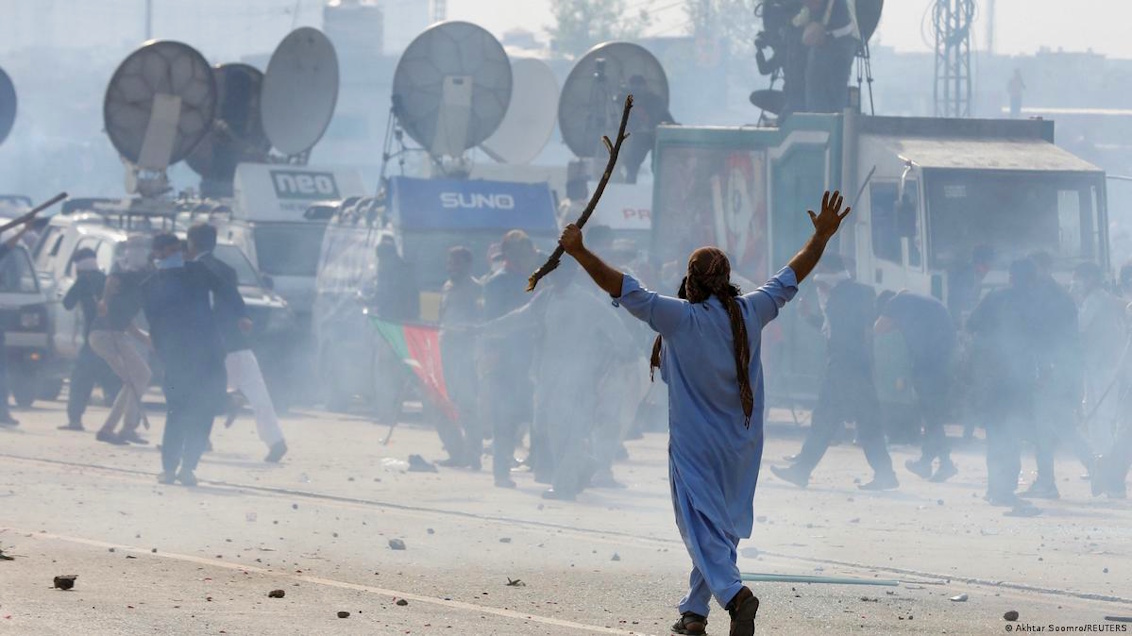
A potent convergence of military overreach, escalating violence, economic collapse, and diplomatic alienation is pushing Pakistan into one of its most unstable and precarious periods in decades. The nation faces a systemic crisis that threatens its foundational stability.
Deepening Authoritarian Control and Political Paralysis
The core of the current turmoil lies in the political sphere, where the military establishment is assertively consolidating power beyond its traditional behind-the-scenes role. According to multiple Pakistani journalists and analysts speaking under conditions of anonymity, the military is no longer content with being a “kingmaker”; it is increasingly seen as seeking to become the king itself through extra-constitutional means. This has eroded the trust of nearly all political parties in the institution, including those it has historically patronized.
There is a growing consensus among political movements that Pakistan is effectively operating under a de facto military regime—a condition that previously only followed a formal coup. Even nominal civilian authorities are described as deeply apprehensive but silenced by fear of military reprisal, creating a climate of political paralysis and suppressed dissent.
Security Unravels Nationwide
The security situation has deteriorated dramatically, breaching its traditional confines. Once largely contained to the restive regions of Khyber Pakhtunkhwa (KP) and Balochistan, militant violence has now spread to the strategic heartland of Punjab and the northern territory of Gilgit-Baltistan.
-
Attacks on military and police installations have reportedly doubled compared to the previous year.
-
KP alone has witnessed a surge of over 200 attacks.
-
In a significant escalation, four intelligence officers were killed in a single attack in Gilgit.
-
Key military facilities in Punjab have also been targeted, signaling a bold new front for militant groups.
Several political figures directly link this worsening insecurity to the military’s own authoritarian and destabilizing policies, which they argue have fueled resentment and fractured social cohesion.
Economic Collapse and Crumbling Trade
Pakistan’s economy, already crippled by monumental debt and inflation, is being dealt further body blows. The government, described as “debt-stricken,” is accused of pursuing short-term financial fixes over substantive reform—celebrating the potential approval of another $2 billion loan while failing to address structural weaknesses.
A critical blow has been the severe constriction of vital trade routes. The longstanding transit trade with Afghanistan, a cheap and profitable export channel, has been massively disrupted following Kabul’s closure of key border crossings. The consequences are immediate and severe:
-
Pakistani perishables, like oranges, are rotting at border markets.
-
The pharmaceutical sector alone estimates losses of up to $200 million in recent days.
-
Multiple industries have warned of imminent collapse if the routes remain closed, threatening massive job losses and further economic contraction.
Growing International Isolation and Scrutiny
Concurrently, Pakistan’s standing on the global stage is diminishing. As regional diplomatic realignments accelerate, Pakistan finds itself increasingly isolated, mired in disputes with neighbors including Afghanistan, India, and Iran. The international community’s confidence has been shaken by the visible erosion of democratic norms and the military’s tightening grip.
This isolation has now taken a concrete, punitive form. In a stark development, 44 members of the U.S. Congress have called for targeted sanctions against Prime Minister Shehbaz Sharif and Army Chief General Asim Munir. In a letter to Secretary of State Antony Blinken, the lawmakers—led by Representative Marco Rubio—cite grave human rights concerns, including:
-
The detention of opposition leaders without trial.
-
The harassment and forced exile of independent journalists.
-
The imprisonment of social media users for dissent.
-
The particularly alarming situation in KP and Balochistan.
They have requested an official response by December 17, signaling that Pakistan’s internal crisis is triggering serious external repercussions.
A Military Under Strain
The scale of the polycrisis appears to be overwhelming the state’s capacity to respond. Notably, the Pakistani military—the country’s most powerful institution—seems strained to its limits. Its senior officials have taken the unusual step of publicly voicing frustration, openly complaining in press conferences and on social media about what they label “Afghan propaganda,” betraying a sense of beleaguerment rarely admitted in the past.
Conclusion
Pakistan is now caught in a vicious, self-reinforcing cycle: authoritarian measures fuel political instability and public resentment, which exacerbates security challenges and scares away investment, leading to economic desperation that further undermines governance. Breaking this cycle will require not just economic bailouts, but a fundamental recalibration of civil-military relations and a restoration of legitimate political processes—a prospect that currently seems distant as the nation’s crises continue to deepen.
Our Pashto-Dari Website

Support Dawat Media Center
If there were ever a time to join us, it is now. Every contribution, however big or small, powers our journalism and sustains our future. Support the Dawat Media Center from as little as $/€10 – it only takes a minute. If you can, please consider supporting us with a regular amount each month. Thank you
DNB Bank AC # 0530 2294668
Account for international payments: NO15 0530 2294 668
Vipps: #557320

Comments are closed.