

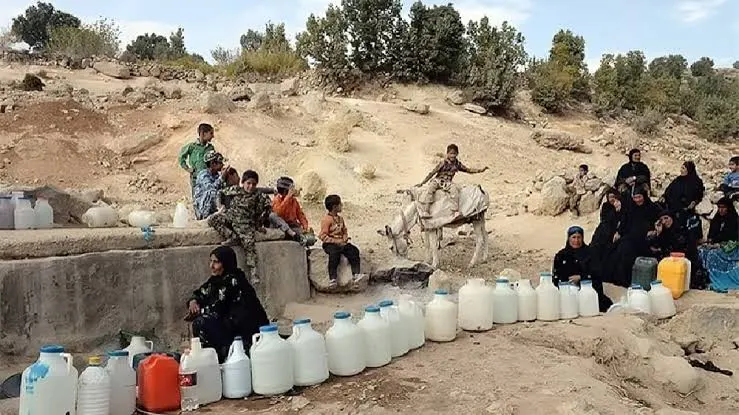
The European Union has issued a stark warning that over 21 million people in Afghanistan—more than half the population—are currently deprived of reliable access to safe drinking water, marking one of the country’s most severe humanitarian crises.
According to a statement from the European Commission’s humanitarian aid office for Asia (ECHO), this critical shortage is the compounded result of decades of conflict, which has destroyed vital infrastructure; intensifying climate change impacts, including persistent drought; and chronic underinvestment. The crisis has escalated sharply in recent years, affecting communities in both urban centers and remote rural areas.
“The lack of access to safe drinking water remains a paramount humanitarian challenge in Afghanistan,” the EU report emphasized. “This scarcity forces vulnerable families to rely on contaminated sources from open wells or stagnant surface water, drastically increasing the spread of waterborne diseases such as cholera, typhoid, and acute diarrhea.” Children, who are particularly susceptible, suffer disproportionately from these conditions, which contribute to high rates of malnutrition and mortality.
In response, the EU and its humanitarian partners are implementing emergency interventions. These include drilling new boreholes, installing hand pumps for vulnerable households, and rehabilitating damaged water networks. The goal is to provide not only immediate relief but also sustainable, long-term access to clean water.
A recent example of such efforts was highlighted by the Norwegian Refugee Council (NRC), which completed a new water supply network serving approximately 300 families in the drought-ravaged Zabul province. “This project offers a lifeline to communities on the brink, where drought and poverty have converged with devastating effect,” an NRC representative stated.
The long-term outlook, however, remains alarming. The United Nations Children’s Fund (UNICEF) has projected that if current rates of extraction and mismanagement continue, Kabul’s groundwater could be entirely depleted by 2030, threatening the future of the capital city. Furthermore, UNICEF estimates that up to 80% of Afghans are compelled to drink contaminated water, underscoring a nationwide public health emergency.
International aid agencies stress that without sustained and scaled-up assistance, the water crisis will deepen poverty, fuel displacement, and reverse any fragile progress in health and stability. The EU’s announcement serves as a urgent call for continued global support to address the root causes and devastating consequences of water scarcity in Afghanistan.
Our Pashto-Dari Website

Support Dawat Media Center
If there were ever a time to join us, it is now. Every contribution, however big or small, powers our journalism and sustains our future. Support the Dawat Media Center from as little as $/€10 – it only takes a minute. If you can, please consider supporting us with a regular amount each month. Thank you
DNB Bank AC # 0530 2294668
Account for international payments: NO15 0530 2294 668
Vipps: #557320

Comments are closed.