

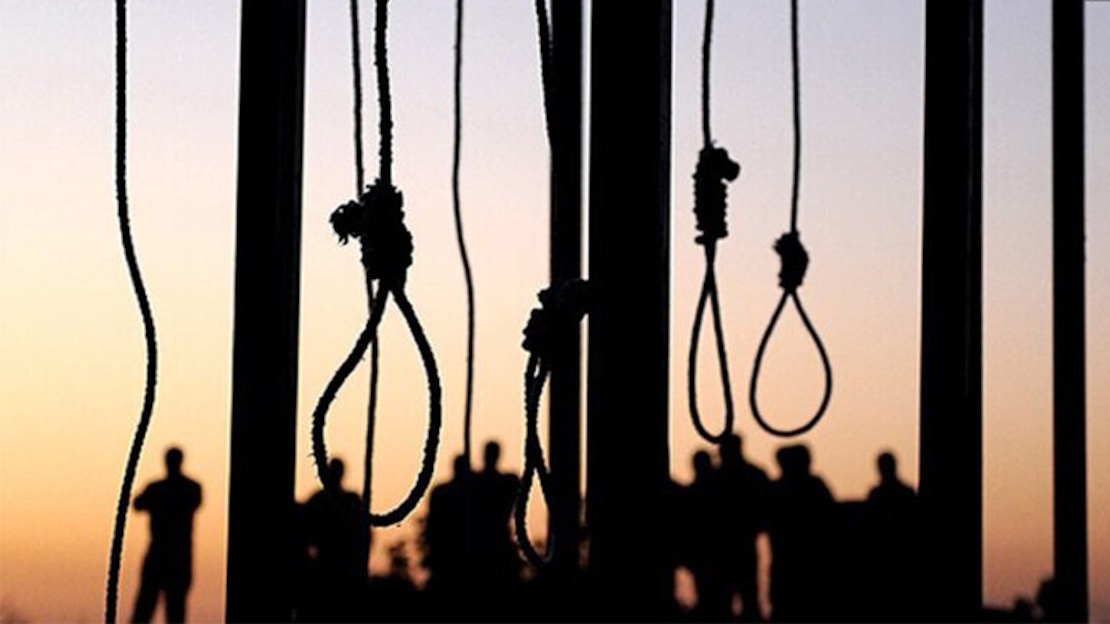
Iran has executed three Afghan nationals on drug-related charges in separate prisons over the past week, according to the Kurdish human rights organization Hengaw, which warns that the number of Afghan citizens put to death in the country continues to rise sharply in 2026.
Hengaw reported that two Afghan men were executed on Sunday in Shiraz Central Prison, located in southern Iran. The organization identified the men as Khalilzadi, 55, a native of Jalalabad in eastern Afghanistan, and Ahmad Shahi, 40, originally from Khost province. According to the group, both had been sentenced to death in separate narcotics-related cases one following an arrest one year ago, the other after a two-year detention and trial process. Hengaw did not specify whether the men had legal representation or access to translators during their proceedings.
On the same day, the rights organization said another Afghan citizen was executed in Zabol Central Prison, located in Iran’s southeastern Sistan and Baluchestan Province, a region with a large ethnic Baloch population and a history of militant activity. That prisoner, whose name has not been released, was also convicted on similar drug-related charges. Iranian judicial authorities and state media have not publicly confirmed any of the three executions, consistent with what rights groups describe as a pattern of limited official disclosure in such cases.
With these latest deaths, Hengaw says at least 12 Afghan nationals have been executed in Iran since the beginning of 2026 an average of roughly two per month. The organization has previously warned of a worrying increase in the execution of foreign nationals, particularly Afghan migrants, who often lack adequate legal defense, language support, and consular access. Many Afghan prisoners in Iran are arrested on drug charges, though rights advocates argue that some cases involve coerced confessions, unfair trials, or insufficient evidence.
A separate rights group, the Baloch-focused organization Hal Vash, reported that Iranian authorities executed another 25-year-old Afghan prisoner in Zahedan Prison on June 18 after he was convicted on drug-related charges. Hal Vash noted that the young man had been held for more than three years and that his family was not notified of his execution date until after it had taken place. Human rights monitors say such cases often receive little public attention and are carried out with limited transparency, making it difficult to track the full scale of foreign national executions.
Iran currently hosts one of the world’s largest Afghan migrant and refugee populations, with an estimated 4 to 5 million Afghans living within its borders many of them undocumented or holding temporary residency permits. The vast majority fled Afghanistan after decades of war, Taliban rule, economic collapse, and humanitarian crisis, seeking work and safety in Iran. However, rights organizations have repeatedly expressed grave concern about the legal protections available to foreign nationals facing capital punishment, noting that they are often tried in Persian-language courts without interpreters and may not fully understand the charges or proceedings against them.
According to the Norway-based organization Iran Human Rights (IHR), Iranian authorities executed at least 84 Afghan citizens in 2025 a figure the group described as one of the highest annual totals recorded for Afghan nationals in recent years. IHR also noted that the overwhelming majority of those executions were drug-related, an offense that carries the death penalty under Iran’s strict narcotics laws. The organization has called on the Iranian government to reform its drug sentencing policies and to ensure fair trials for all foreign defendants.
The United Nations and international rights organizations including Amnesty International and Human Rights Watch have repeatedly raised concerns about Iran’s use of capital punishment, which is applied not only for murder but also for drug offenses, adultery, apostasy, and “enmity against God.” UN data indicate that more than 2,100 executions were reported in Iran during the previous year, giving the country one of the highest execution rates in the world, behind only China in reported numbers. The UN Office of the High Commissioner for Human Rights has urged Iran to impose an immediate moratorium on executions, particularly for non-violent crimes, and to guarantee due process for all defendants regardless of nationality.
Critics argue that the surge in Afghan executions reflects broader systemic issues, including Iran’s economic pressures, its tough-on-drugs posture, and the precarious legal status of its large migrant population. Afghan officials have occasionally raised the issue with Iranian counterparts, but diplomatic efforts have yielded little visible change. As executions continue into the summer, rights monitors fear that 2026 could match or surpass the already dire numbers of the previous year, with Afghan migrants disproportionately bearing the brunt of Iran’s punitive judicial system.
Our Pashto-Dari Website

Support Dawat Media Center
If there were ever a time to join us, it is now. Every contribution, however big or small, powers our journalism and sustains our future. Support the Dawat Media Center from as little as $/€10 – it only takes a minute. If you can, please consider supporting us with a regular amount each month. Thank you
DNB Bank AC # 0530 2294668
Account for international payments: NO15 0530 2294 668
Vipps: #557320

Comments are closed.