

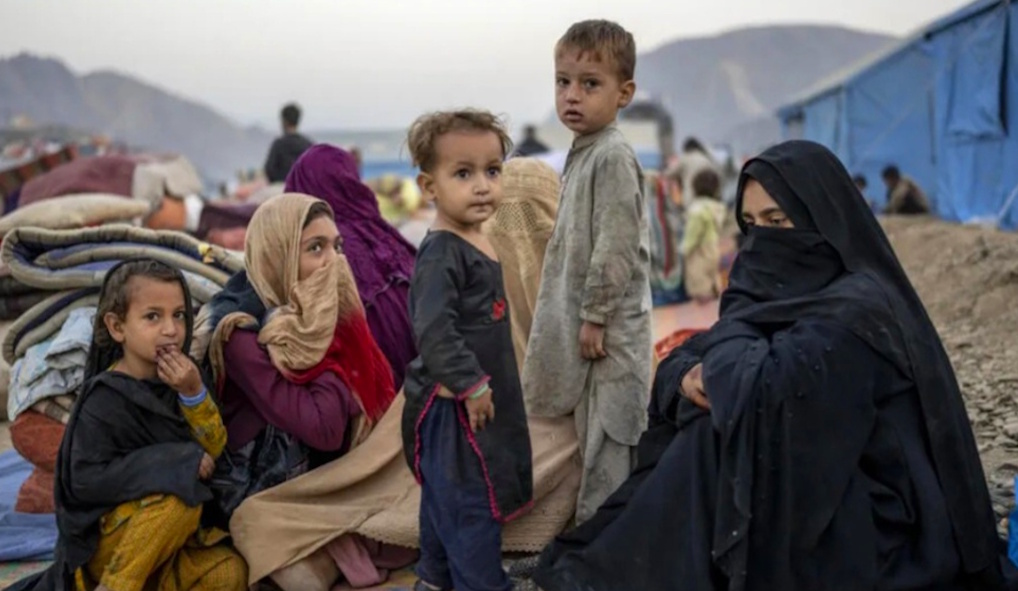
As the world observes World Refugee Day, a profound humanitarian tragedy is unfolding quietly along Afghanistan’s borders. Over the past 18 months, hundreds of thousands of Afghan refugees many of whom had spent decades in neighboring Pakistan and Iran have been forcibly returned to a homeland ill-equipped to receive them. For these families, the journey home has not marked an end to their hardships, but rather the beginning of a new and desperate struggle for survival.
In recent months, the pace of deportations and voluntary returns from neighboring countries has accelerated dramatically. Every day, thousands of Afghans cross the border, driven out by host nations’ shifting policies and rising anti-migrant sentiment. They are returning to an Afghanistan already crippled by a protracted economic collapse, pervasive unemployment, and a humanitarian system stretched to its breaking point. What awaits them is not the promise of a fresh start, but a grim landscape of overcrowded shelters, empty larders, and a future shrouded in uncertainty.
A Crisis by the Numbers
The scale of the return is staggering. According to the International Organization for Migration (IOM), approximately 6.04 million migrants have returned to Afghanistan from Iran and Pakistan between mid-September 2023 and May 30, 2026. The United Nations High Commissioner for Refugees (UNHCR) further reported that an estimated 2.9 million Afghan refugees were returned in the calendar year 2025 alone. This constitutes one of the largest and most rapid forced population movements in the region’s recent history.
The UN has warned that this massive influx is creating severe bottlenecks for reintegration and undermining the country’s already fragile long-term resilience. The humanitarian system, which has been underfunded for years, is now overwhelmed. Returnees are facing catastrophic levels of need, with limited access to the most basic essentials: food, water, shelter, healthcare, and education.
A UN report paints a stark picture of the daily reality for these families:
-
Food Insecurity: More than 80 percent of returned families have been forced to skip at least one meal a day, signaling a widespread hunger crisis.
-
Healthcare Access: Over one-third of returnees have had no access to medical care in the past six months, leading to preventable illnesses and maternal-child health complications.
-
Education Deprivation: The gains made in literacy and schooling are being reversed. While two-thirds of returned boys have access to some form of education, less than half of returned girls are able to attend school, exacerbating gender disparities and robbing a generation of their future.
The UN refugee agency has expressed grave concern over the sudden and often violent nature of deportations, which have caused many families to lose their life savings, homes, and personal belongings. The chaos has increased the risk of family separations, exposed children to exploitation, and deepened existing vulnerabilities, particularly among women, the elderly, and the disabled.
Human Faces of a Statistical Tragedy
Behind the overwhelming numbers are individual stories of loss and resilience. Niaz Mohammad, 42, recently returned to Kabul with his family after years of laboring in Pakistan. He now finds himself in an alien city without a safety net.
“I worked as a laborer in Pakistan, and somehow we managed our lives there,” Niaz Mohammad told reporters. “But now I have no job and no home. We are currently staying in a relative’s crowded house, and I do not know how I will support my family. My children were going to school in Pakistan, but now my daughters are deprived of education, and my son cannot attend school because we simply do not have the resources.”
In Herat, a western province that serves as a major entry point from Iran, Firoza, a mother of four, echoes his despair. She returned with her children with nothing but the clothes on their backs.
“When we returned, we had nothing,” she said. “We are living in a single small room. My husband has not found work, and life is very difficult. Paying rent and finding enough food for my children has become a daily, exhausting struggle.”
The Capacity Gap and Expert Warnings
Experts and activists warn that Afghanistan, in its current state, simply does not have the absorptive capacity to integrate millions of returnees. The economy is stagnant, the banking system is fragile, and international development aid has been drastically reduced. Without significant financial resources and job creation, the influx of returnees will inevitably intensify poverty, unemployment, and social unrest.
Asefa Stanikzai, a migration affairs activist, stressed the urgency of a dual-pronged response. “Returning refugees are facing a multitude of challenges,” she told the media. “The lack of job opportunities and the reduction in humanitarian aid have made life much harder for them. If this situation continues, it could lead to more internal displacement, rising crime, and greater numbers of children being deprived of education.”
Stanikzai called for immediate and sustained intervention: “In the short term, urgent action is needed for shelter, food, and healthcare. In the long term, we need sustainable jobs and permanent housing. International assistance currently covers only a small portion of these needs; that support must be expanded significantly.”
Enayatullah Alokozai, another migration affairs activist, also criticized the handling of the returns. “Many refugees lose everything during deportation their homes, their jobs, their children’s school registration,” he told Dawatmedia24. “After returning, they face multiple, overlapping challenges. The international community must pay serious attention to this issue and pressure Iran and Pakistan to respect refugees’ rights and ensure their returns are dignified, not forced.”
A Call for Urgent Global Solidarity
As the number of returnees continues to rise, Afghanistan is facing one of the largest waves of forced displacement in its recent history. Many of these individuals have lived in Iran and Pakistan for years; some were even born there and know no other home. They are now arriving in a country where 24 million people are already in need of humanitarian aid and where basic services are collapsing.
The world cannot turn a blind eye. The return of nearly 6 million people is not just Afghanistan’s crisis it is a regional and global responsibility. While the immediate needs are for food, shelter, and medicine, the long-term solution requires sustained investment in livelihoods, education, and infrastructure.
On this World Refugee Day, the international community must move beyond rhetoric and take decisive action. The Afghan returnees have endured a long and difficult journey. They must not be left to face an equally uncertain and desperate future in their own homeland.
Our Pashto-Dari Website

Support Dawat Media Center
If there were ever a time to join us, it is now. Every contribution, however big or small, powers our journalism and sustains our future. Support the Dawat Media Center from as little as $/€10 – it only takes a minute. If you can, please consider supporting us with a regular amount each month. Thank you
DNB Bank AC # 0530 2294668
Account for international payments: NO15 0530 2294 668
Vipps: #557320

Comments are closed.