

The formal and decisive rupture of the decades-long alliance between the Bangladesh Nationalist Party (BNP) and the Jamaat-e-Islami marks a seismic shift in the nation’s politics, potentially redrawing its ideological map ahead of crucial national elections.
For over 16 months, Bangladesh has navigated a fragile post-Hasina transition. The mass uprising of August 2024, which culminated in the toppling of Prime Minister Sheikh Hasina after 15 years of increasingly authoritarian rule, created a power vacuum and a profound crisis of political identity. Hasina’s Awami League, now banned and with its leader in exile, had long projected itself as the guardian of Bangladesh’s secular, liberal founding spirit born from the 1971 Liberation War, even as its governance descended into what critics decried as one-party rule, marked by extrajudicial killings, enforced disappearances, and the systematic repression of dissent.
Historically, the BNP-Jamaat alliance was a marriage of political convenience, forged in shared opposition to the Awami League’s dominance. Their inherent ideological contradiction—the BNP’s Bengali nationalism versus the Jamaat’s Islamist foundationalism—was papered over for electoral gain. Now, that fissure has erupted into a public and seemingly irrevocable split.
A New Vocabulary for a New Era
The BNP’s recent rhetoric is a conscious, stark departure from its past. Acting Chairman Tarique Rahman’s invocation of the “blood-soaked memory of 1971” and his veiled condemnation of those who opposed liberation was a direct, unmistakable repudiation of Jamaat’s historical stance. When Secretary-General Mirza Fakhrul Islam Alamgir warns against dividing the country “in the name of religion,” he is appropriating the very language the Awami League used to discredit the BNP-Jamaat combine.
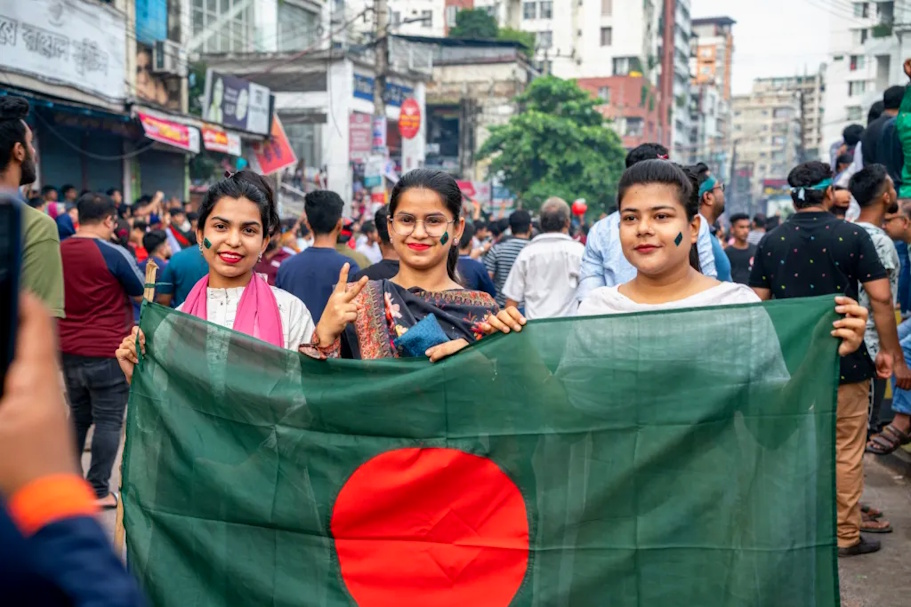
This is more than mere political posturing. It represents a fundamental recalibration driven by a transformed Bangladesh. The 2024 uprising was not just a rejection of Hasina’s rule but a broader civic awakening, particularly among a vast youth population and an urban middle class demanding democratic accountability, pluralism, and moderate governance. In this new environment, the BNP calculates that Jamaat’s overt religio-political agenda is a liability, not an asset.
Filling a Vacuum and Rewriting History
The BNP’s strategy is twofold: occupy an ideological void and rewrite a damaging historical narrative.
First, the liberal-secular political space, once the Awami League’s exclusive domain, is now vacant and contested. By severing ties with Jamaat, the BNP aims to rebrand itself as a broad, inclusive democratic platform. It seeks to attract not only its traditional base but also disillusioned former Awami League voters, secular urbanites, minority communities (notably Hindus and others wary of Islamist politics), and the politically awakened youth who led the 2024 protests.
Second, for decades, the Awami League successfully weaponized the BNP’s alliance with Jamaat—a party accused of wartime atrocities in 1971—to paint the entire opposition as anti-liberation. The BNP is now attempting to flip this script. By publicly denouncing Jamaat’s historical role and embracing the “spirit of 1971” framed around democracy and human rights rather than partisan loyalty, the BNP is challenging the Awami League’s monopolistic claim to the nation’s founding legacy. It is an audacious attempt to detoxify its own brand for a new generation.
Underlying Strains and Calculated Risks
This split did not emerge overnight. It was preceded by months of strategic divergence on core issues: the Jamaat’s insistence on sweeping constitutional reforms before elections clashed with the BNP’s push for a quicker electoral timeline and more modest changes. The break, however, transcends tactical disagreements; it is a deliberate ideological divorce.
Yet, the transformation is fraught with risk. The BNP faces significant scepticism. Critics will question whether this liberal rebranding is a matter of conviction or mere electoral opportunism. Elements within the BNP’s own conservative ranks may resist the shift, potentially causing internal friction. Furthermore, the post-Hasina political landscape is crowded. Newer, youth-driven parties like the National Citizen Party (NCP) and vibrant civil society networks are also vying for the liberal-centrist vote, threatening to fragment the anti-authoritarian constituency.
The Stakes of a Political Rebirth
The strategic logic, however, is compelling. The BNP is no longer positioning itself merely as a centre-right alternative to the Awami League. It is attempting a more ambitious metamorphosis: to become the primary vessel for a diverse, pro-democracy coalition seeking a definitive break with the authoritarianism of the past decade and a half.
Success is not guaranteed. It will hinge on the BNP’s ability to consistently champion its new line, demonstrate genuine commitment to pluralism and democratic norms, and convince the public that its rupture with Jamaat is a permanent, principled realignment rather than temporary electoral choreography.
What is undeniable is that the BNP of 2025 is speaking a new language—of inclusiveness, anti-sectarianism, and democratic renewal. In breaking with Jamaat and boldly stepping onto the ideological ground the Awami League once owned, the BNP is not just reshaping an alliance; it is attempting to reshape the nation’s political identity. If this transformation holds, it could become the most consequential ideological realignment in Bangladesh since the restoration of parliamentary democracy in 1991—a historic inversion where the former centre-right party seeks to become the standard-bearer for a liberal, post-Hasina order. The February elections will be the first major test of whether the electorate believes this new incarnation is authentic.
Our Pashto-Dari Website


Support Dawat Media Center
If there were ever a time to join us, it is now. Every contribution, however big or small, powers our journalism and sustains our future. Support the Dawat Media Center from as little as $/€10 – it only takes a minute. If you can, please consider supporting us with a regular amount each month. Thank you
DNB Bank AC # 0530 2294668
Account for international payments: NO15 0530 2294 668
Vipps: #557320

Comments are closed.