
Why Restricted Access to Jailed Former PM Imran Khan Has Ignited a Political Crisis in Pakistan

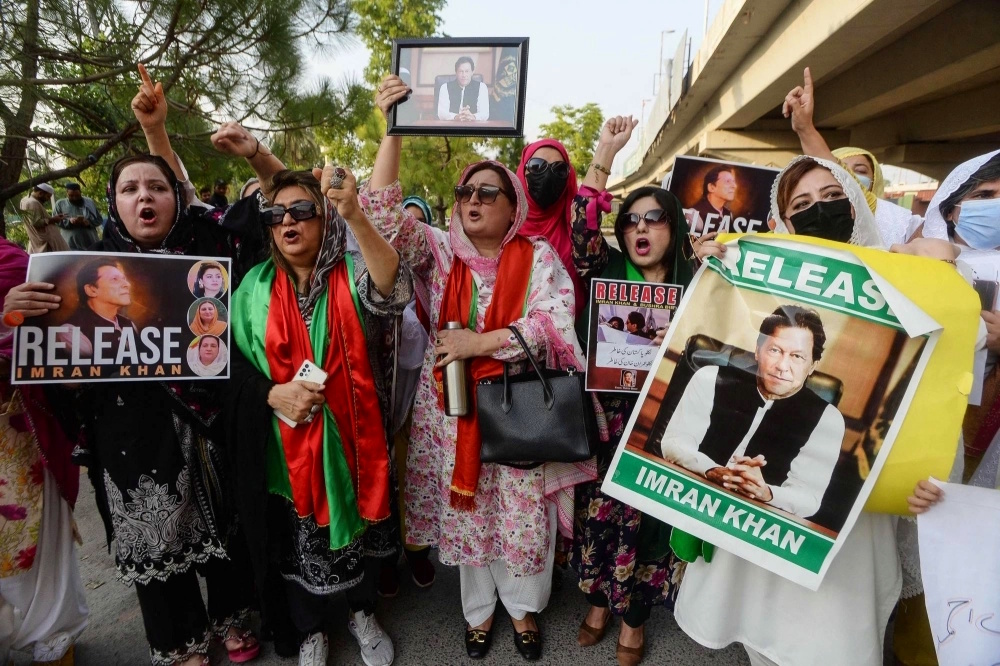
The ongoing imprisonment of former Prime Minister Imran Khan has become the epicenter of Pakistan’s deepening political turmoil. A recent flashpoint—the month-long blocking of family visits to the 73-year-old leader—has sparked public protests, intensified allegations of political persecution, and raised urgent questions about judicial independence and prisoners’ rights.
The Visit That Fueled the Fire
For weeks, Khan’s family and his political party, Pakistan Tehreek-e-Insaf (PTI), claimed they were unlawfully barred from meeting him at Rawalpindi’s Adiala Jail, despite court orders permitting bi-weekly visits. The situation fueled rumors about his health and whereabouts, with some supporters even fearing the worst.
The stalemate broke partially on Tuesday when Khan’s sister, Dr. Uzma Khanum, was finally allowed a supervised 30-minute visit. While she reported that Khan was physically well, she delivered a damning account of his conditions, describing them as “mental torture.” She stated he is confined to his cell for most of the day with minimal outdoor time and no contact with others. “He was very angry and said that this mental torture is worse than physical torture,” she told reporters, alongside her sister Aleema and PTI leaders.
Why Is Imran Khan in Jail?
Khan, prime minister from 2018 to 2022, has been incarcerated since August 2023 following a series of convictions he and his supporters denounce as politically motivated. His legal battles include:
-
Al-Qadir Trust Case: Convicted in January 2025 of accepting land as a bribe, Khan received a 14-year sentence; his wife, Bushra Bibi, was sentenced to 7 years.
-
Toshakhana Case: Found guilty in August 2023 of illegally selling state gifts, leading to a 14-year sentence.
-
Cypher Case: Convicted in January 2024 under the Official Secrets Act for disclosing a classified cable, resulting in a 10-year sentence.
-
Anti-Terrorism Charges: Indicted in December 2024 for alleged involvement in violent protests following his May 2023 arrest. He has pleaded not guilty and awaits trial.
-
Iddat Case: Khan and his wife were acquitted in July 2024 over charges related to their marriage’s timing.
A Pattern of Blocked Access and Escalating Protests
Authorities have not officially acknowledged any visitation ban. However, the Islamabad High Court had to direct the jail superintendent in late October to enforce its March order allowing visits. Khan’s family alleges these orders were consistently ignored.
This perceived obstruction triggered a series of escalating actions:
-
Jail Protests: Khan’s sisters began camping outside Adiala Jail in mid-November, alleging they were “violently detained” by police.
-
Political Sit-ins: Sohail Afridi, a PTI member and Chief Minister of Khyber Pakhtunkhwa province, staged a livestreamed overnight sit-in on November 28 after being denied access eight times.
-
Widespread Solidarity: Protests erupted in PTI strongholds like Peshawar, with demonstrators linking the visitation ban to broader grievances over the crackdown on PTI and the alleged killing of party supporters during earlier protests.
-
Government Crackdown: As protests continued, authorities invoked Section 144 in Islamabad and Rawalpindi, banning public gatherings—a move seen as an attempt to quell the momentum.
The Government’s Stance and Expert Analysis
The government, led by Prime Minister Shehbaz Sharif’s Pakistan Muslim League-Nawaz (PML-N), has been largely silent on the visitation issue. PML-N politician Tariq Fazal Chaudhry told the National Assembly that Khan was in good health and dismissed rumors as foreign media propaganda.
Analysts, however, see a calculated political strategy with significant risks. Imtiaz Gul, Executive Director of the Center for Research and Security Studies, told Al Jazeera that isolating Khan aims “to break him into [agreeing to] a compromise and neutralise the groundswell of anti-government sentiment.”
Usama Khilji, a digital rights advocate and columnist, framed it within Pakistan’s entrenched power dynamics: “In Pakistan, politicians are either in government or in jail, with the security establishment having the main say behind the scenes.” He argues that restricting access, in violation of court orders, sends a chilling message: “if you don’t toe the line, there will be severe consequences.”
The Broader Political Storm
This incident is not isolated but a symptom of a severe political crisis that erupted after the February 2024 elections. The PTI, barred from contesting under its electoral symbol, saw its members run as independents and win the most seats. The party alleges widespread rigging to deny it a majority—a claim supported by international observers noting irregularities. A subsequent coalition government was formed by its rivals.
The PTI has since faced a widespread crackdown, with numerous leaders arrested and protests met with force. Khan’s imprisonment and the control over his access have become the focal point of this struggle, symbolizing the battle between the country’s most popular political figure and the combined might of the established government and military.
The Core Conflict: At its heart, the storm over jail access underscores a fundamental clash. Khan’s supporters see a popular leader being systematically silenced through judicial manipulation and punitive isolation. The state frames its actions as lawful enforcement against a convicted individual. This standoff is deepening political polarization, testing the resilience of Pakistan’s institutions, and keeping the nation in a state of volatile uncertainty. The question of who can see Imran Khan has become a proxy for the larger question of who holds power in Pakistan.
Our Pashto-Dari Website


Support Dawat Media Center
If there were ever a time to join us, it is now. Every contribution, however big or small, powers our journalism and sustains our future. Support the Dawat Media Center from as little as $/€10 – it only takes a minute. If you can, please consider supporting us with a regular amount each month. Thank you
DNB Bank AC # 0530 2294668
Account for international payments: NO15 0530 2294 668
Vipps: #557320

Comments are closed.