
Major Earthquake Strikes Northern Japan, Injuring 30 and Reviving Memories of Past Disasters

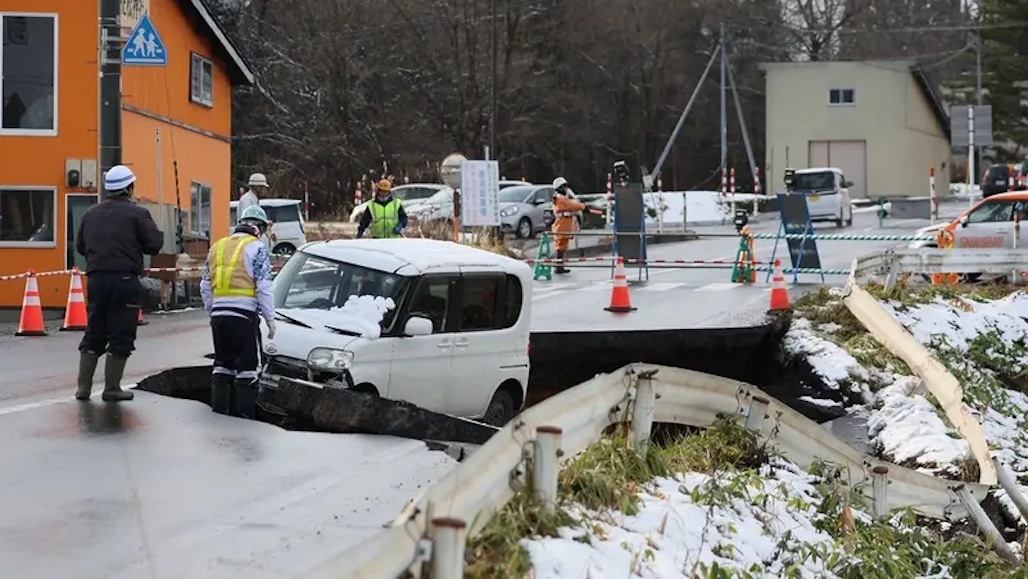
A powerful magnitude 7.5 earthquake struck off the coast of northern Japan on Monday night, injuring at least 30 people, damaging infrastructure, and triggering tsunami advisories that sent thousands fleeing to higher ground in freezing conditions. The quake, which struck at 11:15 p.m. local time (1415 GMT), was a stark reminder of the nation’s ever-present seismic vulnerability.
Immediate Impact and Response
The tremor, centered off the coast of Aomori region, shook buildings violently for up to 30 seconds. Smartphone alarm systems blared across northern Honshu and Hokkaido islands, jolting residents from their sleep.
“The tremor was something that we’ve never experienced,” said Daiki Shimohata, 33, a civil servant in Hashikami, Aomori. “We were holding our children… in our arms. The shaking reminded me of the disaster in 2011,” he told AFP, referencing the catastrophic earthquake and tsunami of that year.
Initial reports from authorities detailed a scene of disruption:
-
Injuries: The Fire and Disaster Management Agency confirmed 30 injuries, with one person in Hokkaido reported seriously hurt.
-
Infrastructure Damage: Footage from affected areas showed deep crevasses splitting roads, with at least one car trapped in a hole. Broken glass from shattered windows littered streets and pavements. Shinkansen bullet train services were suspended for safety checks, though no track damage was immediately reported.
-
Power Outages: In the immediate aftermath, approximately 2,700 homes in Aomori lost power, according to Kyodo News. However, utility providers worked through the night, restoring electricity to most areas by Tuesday morning, with fewer than 40 households still affected.
-
Fires and Evacuations: A single house fire was confirmed by government spokesman Minoru Kihara. Emergency services advised some 28,000 residents to evacuate, with media reports indicating some makeshift shelters reached capacity.
Tsunami Warnings and Nuclear Scare
The Japan Meteorological Agency (JMA) initially warned of potential tsunami waves up to three meters (10 feet), prompting urgent coastal evacuations. While the largest waves recorded peaked at 70 centimeters (28 inches) and all advisories were lifted within hours, the alert underscored the persistent threat.
The quake also triggered immediate scrutiny of nuclear facilities in the seismically active region. Operators reported no abnormalities at the Higashidori nuclear plant in Aomori or the Onagawa facility in nearby Miyagi Prefecture—a critical point of reassurance in a nation deeply scarred by the 2011 Fukushima Daiichi nuclear disaster.
A Nation on Constant Alert
Prime Minister Sanae Takaichi addressed the nation early Tuesday, urging continued vigilance. “Please listen to information from the JMA or local governments for about a week and check if furniture is fixed… and be prepared to evacuate when you feel shaking,” she cautioned. The JMA further warned that the probability of similar or larger tremors in the coming days remained elevated.
The event punctuates Japan’s relentless seismic reality. Situated on the Pacific “Ring of Fire” atop four major tectonic plates, the archipelago of 125 million people endures about 1,500 detectable earthquakes annually.
The Shadow of “Megaquake” Scenarios
This tremor inevitably revived public anxiety about the potential for a far more catastrophic event. In 2011, a magnitude-9.0 quake triggered a tsunami that left 18,500 people dead or missing and caused the Fukushima meltdown.
Scientific forecasts add to this underlying tension. A government panel recently revised upward the probability of a major quake in the Nankai Trough off central Japan within the next 30 years to 75-82%. A subsequent government estimate in March painted a grim picture of what such a “megaquake” and tsunami could entail: up to 298,000 fatalities and economic damages reaching $2 trillion.
While Monday’s quake resulted in limited damage relative to its strength, it served as a powerful, real-time drill and a sobering reminder of the immense forces lying dormant beneath Japan’s surface. The nation’s rigorous preparedness protocols—from early warning systems to swift infrastructure checks and public compliance—were again put to the test, even as the long-term threat of a truly catastrophic event continues to loom.
Our Pashto-Dari Website


Support Dawat Media Center
If there were ever a time to join us, it is now. Every contribution, however big or small, powers our journalism and sustains our future. Support the Dawat Media Center from as little as $/€10 – it only takes a minute. If you can, please consider supporting us with a regular amount each month. Thank you
DNB Bank AC # 0530 2294668
Account for international payments: NO15 0530 2294 668
Vipps: #557320

Comments are closed.