
Greece and Four EU States Push Ahead with Plans for Migrant Return Hubs Outside Europe

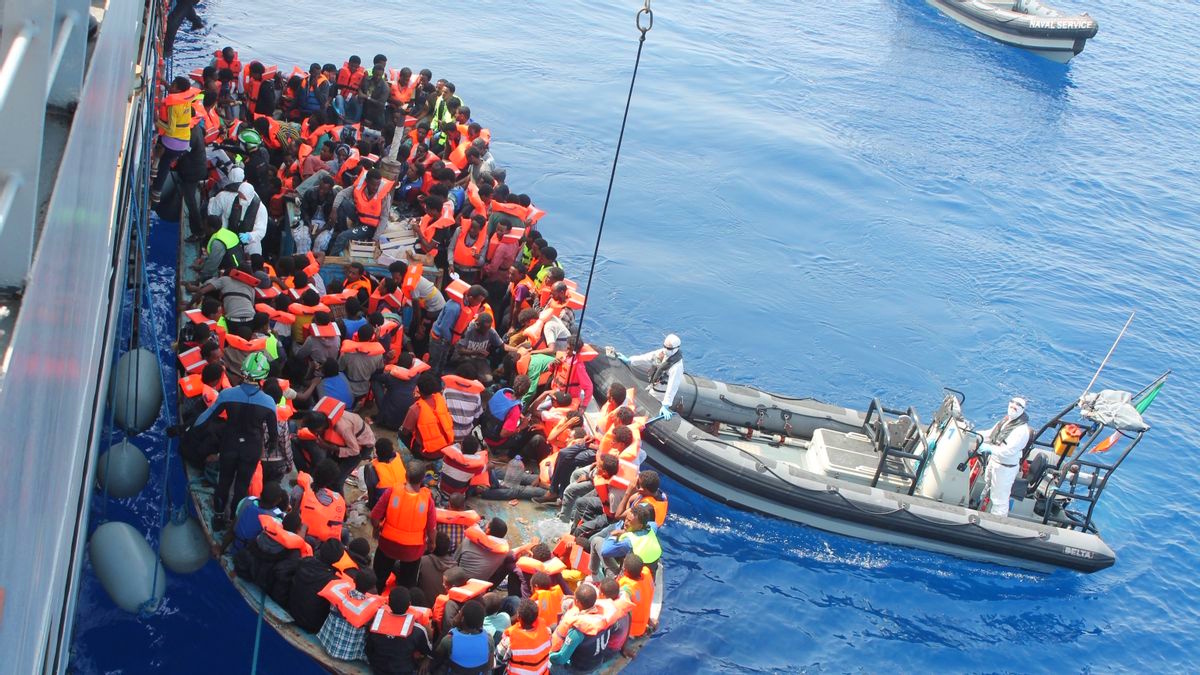
Greece has announced it is collaborating with Germany, the Netherlands, Austria, and Denmark to establish migrant “return centres” located outside the European Union, with the aim of housing individuals whose asylum applications have been rejected.
Thanos Plevris, the Greek Minister of Migration and Asylum, stated that the proposed facilities would specifically host migrants whose claims have been denied but whose countries of origin are unwilling to readmit them. This initiative seeks to resolve a persistent bottleneck in the EU’s migration management system, where deportations are often stalled due to a lack of cooperation from non-EU nations.
Plevris confirmed that the five member states have already held high-level meetings on the matter, with technical teams scheduled to convene next week to work on operational details. “We are no longer speaking theoretically, but moving into practical action,” he said.
While the minister suggested Africa as a likely location for these centres, he did not specify potential host countries, noting that the geography is “not mandatory” and that larger European states are engaging in direct bilateral talks with possible partner nations. The success of the plan hinges on finding a non-EU country willing to host such facilities on its soil—a politically sensitive endeavour that has sparked human rights concerns in the past.
Plevris framed the centres as a crucial deterrent for economic migrants with limited chances of receiving asylum, arguing they would send a clear signal that irregular entry does not guarantee permanent residence. He added that a preliminary plan could be ready within months.
The move is part of a broader rightward shift in migration policy across the continent. Greece, which remains a primary entry point into the bloc for migrants from the Middle East, Africa, and Asia, has significantly toughened its stance in recent years. This initiative aligns with a new migration pact approved by the European Union last week, which grants member states greater leeway to reject applicants from countries deemed “safe” and to outsource asylum processing to third countries.
Greek authorities report that the tougher approach is already showing statistical results. They claim irregular arrivals fell by 21% in 2025 compared to the previous year, representing around 13,000 fewer entries, with a 40% drop recorded in the past five months alone. Building on this, Athens says it will now intensify efforts to increase the rate of returns for rejected asylum seekers, as broader European efforts to curb irregular migration continue to gain momentum.
Our Pashto-Dari Website


Support Dawat Media Center
If there were ever a time to join us, it is now. Every contribution, however big or small, powers our journalism and sustains our future. Support the Dawat Media Center from as little as $/€10 – it only takes a minute. If you can, please consider supporting us with a regular amount each month. Thank you
DNB Bank AC # 0530 2294668
Account for international payments: NO15 0530 2294 668
Vipps: #557320

Comments are closed.