

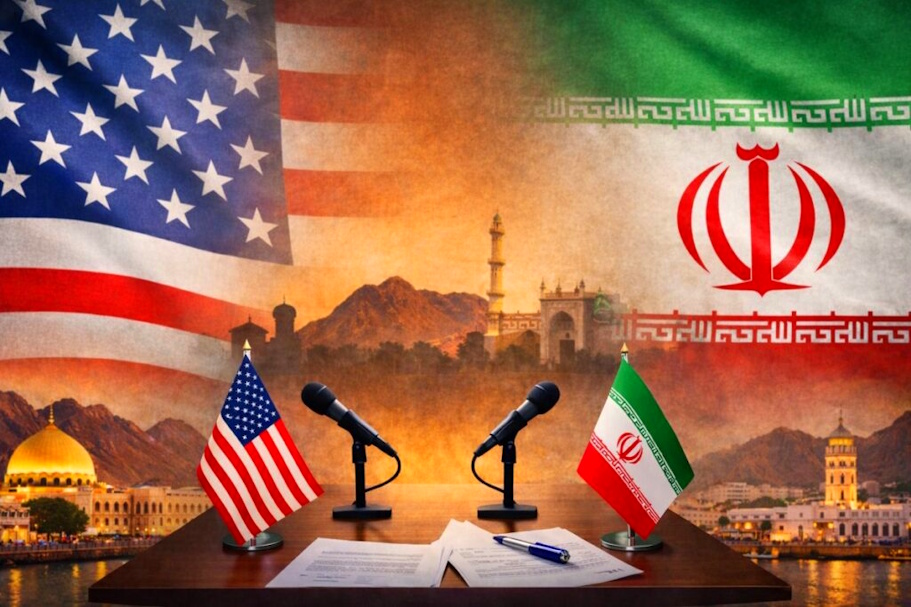
WASHINGTON — President Donald Trump announced Thursday that the United States and Iran could sign a peace deal as soon as this weekend, potentially reopening the Strait of Hormuz and ending a three-month conflict that has killed thousands and sent global energy prices soaring.
If finalized, the agreement would mark the most significant diplomatic breakthrough since the war began on February 28 with a wave of U.S.-Israeli strikes that killed Iran’s former supreme leader, Ali Khamenei. Trump’s announcement came just hours after he called off planned military strikes on Iran, citing unexpected progress in back-channel negotiations.
“We just made a great settlement of the war with Iran,” Trump told reporters at the White House. “The strait will officially open as soon as we sign, which could be soon, very soon, maybe over the weekend in Europe.” He added that Vice President JD Vance could sign on behalf of the United States.
When asked whether Iran’s Supreme Leader Mojtaba Khamenei who succeeded his father after the February strikes had approved the deal, Trump replied: “I understand the answer is yes.”
A ‘Conceptual’ Memorandum
Despite Trump’s optimism, he described the emerging framework as “a very strong memorandum of understanding that is a little conceptual.” The president has repeatedly claimed since mid-March that a deal to end the war was close, even as both sides traded strikes throughout the week, straining a fragile ceasefire announced in April.
Trump reiterated that any peace deal must ensure Iran cannot develop a nuclear weapon. “We have a deal that Iran will never have a nuclear weapon, which was the whole purpose of what we had to go through to get this,” he said.
Iran’s demands include the lifting of international sanctions, the release of billions of dollars in frozen assets, and recognition of its control over the Strait of Hormuz—a vital chokepoint for global oil and gas transport that Tehran has effectively closed since early in the war. A new Iranian body overseeing the strait recently declared it “will be closed until further notice.”
Mixed Signals from Tehran
Iran’s semi-official Fars news agency reported that Tehran is likely to approve the agreement, though it has yet to issue a formal response. However, Foreign Ministry spokesperson Esmaeil Baghaei told IRNA news agency that Tehran “has not yet made a final decision on a possible agreement with the United States.”
The Tasnim news agency noted that Trump had announced a deal was imminent 38 times over the previous two months. “Until Iran announces the matter of a potential understanding, any news from Trump on this subject should be regarded the same as his previous messaging,” it warned.
Meanwhile, Tehran’s mayor said Thursday that the funeral for the late supreme leader, Ali Khamenei, would be delayed until late June or early July.
Regional Reactions and Continued Hostilities
Separately, Israeli Prime Minister Benjamin Netanyahu’s office confirmed that Trump and Netanyahu spoke on Thursday. Israel is “not a party to the memorandum of understanding,” according to a readout, but Netanyahu expressed appreciation for Trump’s commitment to securing a final deal that includes the removal of Iran’s enriched nuclear material and the dismantling of its missile infrastructure.
Trump also told reporters he would soon speak with Turkey’s President Recep Tayyip Erdoğan.
Even as Trump’s announcement raised hopes for a resolution, regional tensions flared. Kuwait reported that Iran had targeted its territory, damaging an airport radar and forcing an airspace closure. Iranian General Ali Abdollahi warned earlier Thursday that if the United States attacked, “it will receive a harsher response than before, and the flames of war… will become more widespread and far-reaching.”
Economic and Human Toll
The war has killed thousands, primarily in Iran and Lebanon, and pushed up global oil prices. In response to Trump’s announcement, U.S. stocks rose and oil futures dropped more than three percent. Earlier in the day, the World Bank revised down its global growth forecast to a level not seen since the coronavirus pandemic, citing the war’s expanding economic impact.
On the ground in Tehran, civilians remain skeptical. Majid, a 35-year-old pharmacist, told reporters: “I am absolutely not optimistic about the agreement being finalized, because the gap between the two countries is too wide.” He blamed the lack of progress on Israel which has continued to trade fire with Iran as well as hardliners at home.
What Comes Next
Trump doubled down Thursday evening, telling reporters: “Time and place of the signing to be announced shortly.” He claimed the finer points of the arrangement had been approved by the United States and its allies in the region, including Israel and Gulf states, with mediation led by countries such as Pakistan and Qatar.
Just a day earlier, Trump had threatened to intensify airstrikes and seize control of Iran’s oil export facility on Kharg Island. Whether the latest diplomatic push will hold or unravel like so many before it remains an open question.
For now, the world waits. As Trump put it: “Discussions and final points have been, in both concept and great detail, approved by all parties involved.” But as Iran’s foreign ministry has yet to sign off, the difference between a conceptual deal and a real one could be measured in more than just days.
Our Pashto-Dari Website

Support Dawat Media Center
If there were ever a time to join us, it is now. Every contribution, however big or small, powers our journalism and sustains our future. Support the Dawat Media Center from as little as $/€10 – it only takes a minute. If you can, please consider supporting us with a regular amount each month. Thank you
DNB Bank AC # 0530 2294668
Account for international payments: NO15 0530 2294 668
Vipps: #557320

Comments are closed.