
US Attacks Iran, IRGC Says Strait of Hormuz to Remain Closed ‘Until Further Notice’ Regional War Escalates

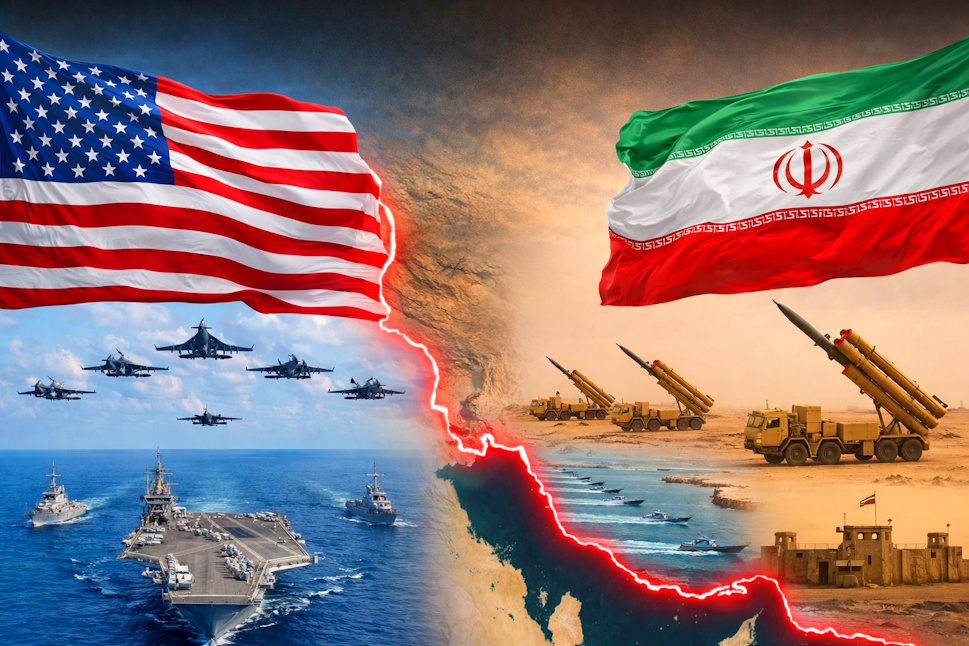
The United States launched a major military offensive against Iran early Sunday morning, retaliating for an Iranian attack on a commercial container ship in the strategic Strait of Hormuz. The strike set the vessel ablaze, forcing its crew to abandon ship, and marked one of the most significant direct confrontations between the two nations since the war began on February 28.
The Strait of Hormuz, a narrow choke point between the Persian Gulf and the Gulf of Oman, has become the central flashpoint in the conflict and the key sticking point in any potential negotiations between Tehran and Washington. Before the war, roughly one-fifth of all globally traded oil and liquefied natural gas passed through the waterway. Iran’s effective stranglehold on the strait during the conflict has triggered a global energy crisis, sending oil prices soaring to wartime highs of $120 per barrel. Although prices have since dropped sharply amid demand fears, the closure of the strait continues to ripple through world markets.
Iran’s Revolutionary Guard Justifies Closure, Warns of Further Strikes
In a statement released Sunday, Iran’s Islamic Revolutionary Guard Corps (IRGC) said multiple vessels “disregarded our warnings and instructions to correct their course and proceed along the approved route.” One of them, the Guard said, “was struck by a warning shot and brought to a stop.” Iran officially declared that the Strait of Hormuz would remain closed “until further notice,” adding that it would consider targeting “additional enemy bases in the region” if it faced more attacks.
Iranian state media reported that U.S. strikes targeted the coastal cities of Bandar Abbas and Sirik, along with other areas along the strait’s shoreline. Tehran offered no immediate information on casualties or the extent of damage, though local sources described explosions in multiple port cities.
U.S. Strikes Intensify: Over 300 Targets Hit in Three Nights
U.S. Central Command confirmed that American forces completed a third round of strikes this week against Iranian military positions, hitting approximately 140 targets on Saturday alone—bringing the total to more than 300 over three nights of operations. The campaign, according to Central Command, is designed “to degrade Iran’s ability to attack civilian mariners and commercial vessels freely transiting the strait.”
Targets have included Iranian missile and drone launch sites, naval assets, ammunition depots, communication networks, and coastal surveillance installations. The U.S. military launched the fresh strikes after Iran attacked a container ship on Sunday, while Tehran simultaneously re-closed the strait and escalated its own attacks on U.S. facilities across Gulf states, according to Reuters.
Trump Declares Ceasefire Over, but Leaves Door Open for Talks
The escalating tit-for-tat attacks over the past several days have led President Donald Trump to formally declare the end of a ceasefire that had been meant to halt the fighting. The truce, brokered in late March, had temporarily paused hostilities between the U.S.-led coalition and Iran. However, Trump has left the door open to continued negotiations, signaling that diplomatic channels are not entirely foreclosed—even as military operations intensify.
Iran Strikes Back Across the Region
In a sharp and unprecedented expansion of its military response, Iran’s Revolutionary Guards announced on Sunday that they had destroyed a command-and-control center and drone hangars at a U.S.-linked base in Jordan, targeted a U.S. military radar site in Kuwait, attacked U.S. aircraft carrier support and refueling platforms in Oman, and destroyed a fighter jet maintenance facility and command center in Qatar. The Guards also reported that they had struck and disabled a second vessel in the Strait of Hormuz.
The United Arab Emirates confirmed that its air defense systems engaged incoming missiles and drones from Iran, while warning sirens sounded across Bahrain and explosions were heard in Doha, Qatar’s capital. Tehran’s strikes mark a notable escalation in both pace and geographic reach. In recent weeks, Iran had confined its attacks to sites in Kuwait and Bahrain, while deliberately avoiding Qatar since early April and the UAE since early May.
Economic and Political Fallout Deepens
The widening war has severely destabilized the Gulf region, while Iran’s effective blockade of the Strait of Hormuz has sent energy prices surging once again, fueling global inflation and reigniting fears of an economic slowdown. Higher gasoline prices are a politically sensitive issue for President Trump ahead of the November congressional elections, adding domestic pressure to an already volatile foreign policy crisis.
Iran reiterated that several ships had attempted to move through the waterway on an “unauthorized route” and ignored warnings to correct their course. The Guards stated that the strait would remain closed until “the end of U.S. interference in this region.”
Diplomatic Warnings and Calls for Compliance
Iran’s Foreign Minister Abbas Araqchi has accused the United States of violating the ceasefire agreement. “There can only be mutual compliance,” he wrote on X on Friday. On Sunday, Iran’s top nuclear negotiator, Mohammad Baqer Qalibaf, posted a stark warning: “The era of one-sided deals is OVER. We told you: keep your word or pay the price. Reality is knocking.”
The U.S. revoked the license authorizing the sale of Iranian crude oil on Tuesday, following attacks on three Qatari and Saudi commercial tankers earlier in the week. That move prompted the U.S. to strike Iranian sites, which in turn triggered Iran’s retaliatory attacks on U.S. military positions in Gulf states, according to Reuters reports.
While Iran has not formally claimed responsibility for the ship attacks, analysts believe Tehran is using such asymmetric actions to gain leverage in any future negotiations over the strait’s status and broader regional security arrangements.
Omani Mediation Continues Amid Chaos
Despite the military escalation, diplomatic efforts have not entirely ceased. Araqchi met with Omani Foreign Minister Badr Albusaidi in Muscat to exchange “views on appropriate mechanisms for the safe passage of ships through the Strait of Hormuz,” according to a statement from Iran’s foreign ministry. Oman’s state news agency confirmed that Omani and Iranian negotiators would continue talks “at the technical and political levels,” suggesting that behind-the-scenes mediation efforts remain active even as fighting intensifies.
Supreme Leader’s Vow of Vengeance
In a written statement released on Saturday, Iran’s new supreme leader, Ayatollah Mojtaba Khamenei, threatened vengeance for the death of his predecessor and father, Ayatollah Ali Khamenei, who was killed in the war’s initial attacks. “We pledge to avenge the blood of the martyred leader and all the martyrs,” the message read, adding that vengeance would be exacted “whatever happens to Iran.”
The statement was issued to mark funeral ceremonies for the former supreme leader, held on Thursday. Notably, Mojtaba Khamenei did not attend the ceremonies and has not been seen in public since the war began, fueling speculation about his security, health, or political positioning within Iran’s fractured leadership.
The U.S.-Iran conflict has entered a dangerous new phase, with both sides trading increasingly heavy blows across the Gulf region. The closure of the Strait of Hormuz a vital artery for global energy supplies—has already sent shockwaves through world markets and threatens to deepen economic turmoil. With the ceasefire shattered and diplomacy teetering on the brink, the coming days will likely determine whether the region spirals into full-scale war or whether backchannel mediation can restore a fragile pause. For now, Iran’s message is clear: the strait stays closed, and the cost of further U.S. action will be met with regional retaliation.

Support Dawat Media Center
If there were ever a time to join us, it is now. Every contribution, however big or small, powers our journalism and sustains our future. Support the Dawat Media Center from as little as $/€10 – it only takes a minute. If you can, please consider supporting us with a regular amount each month. Thank you
DNB Bank AC # 0530 2294668
Account for international payments: NO15 0530 2294 668
Vipps: #557320

Comments are closed.