
US Bombs Iranian Oil Island, Warns of More; Tehran Threatens ‘Catastrophic’ Retaliation

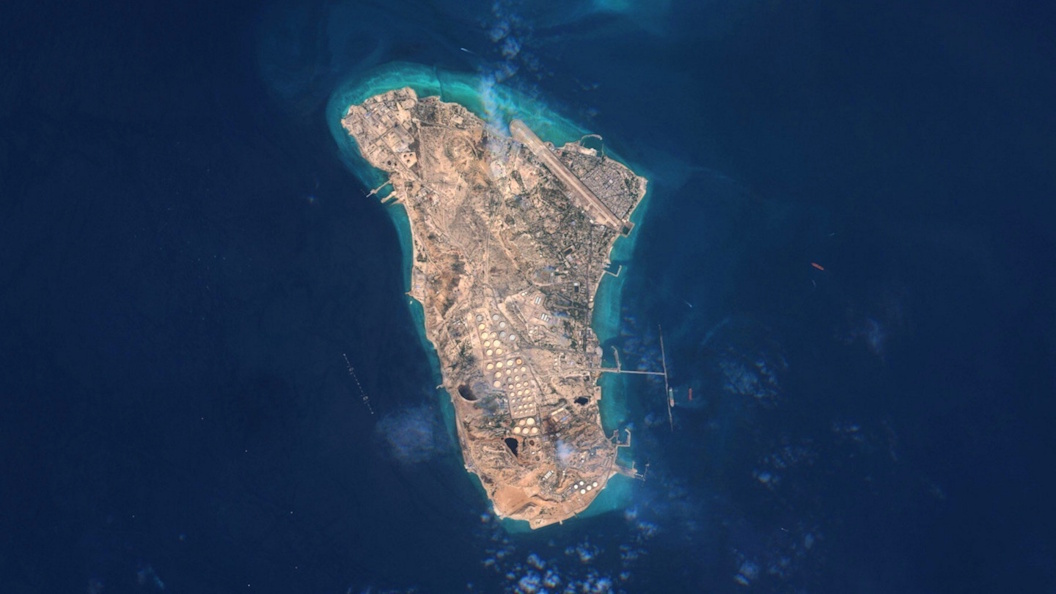
The United States has dramatically escalated its military campaign against Iran, launching a major bombing raid on military installations on Iran’s critical Kharg Island oil terminal. President Donald Trump warned on Friday that the Islamic Republic’s vital oil infrastructure could be targeted next if Tehran continues to disrupt shipping in the Strait of Hormuz, prompting a stark threat from Iran to reduce US-linked oil facilities in the region to “a pile of ashes.”
The attack on Kharg Island, which handles more than 90 percent of Iran’s crude oil exports, marks a significant intensification of the US-Israel conflict with Iran, now in its punishing third week. The strike has sent shockwaves through global energy markets, with crude oil prices surging more than 40 percent since the war began.
‘One of the Most Powerful Bombing Raids’
In a post on his Truth Social platform, President Trump described the operation as a sweeping success, stating that US forces had “totally obliterated” all military targets on the island in what he called “one of the most powerful bombing raids in the History of the Middle East.” He provided no immediate evidence to support the claim.
According to US officials and regional sources, the strikes targeted specific military assets, including air defence systems, a naval base, and airport facilities, deliberately avoiding the sprawling oil terminal itself. However, Iran’s semi-official Fars news agency, citing sources on the ground, reported that more than 15 explosions were heard across the island and thick smoke was seen rising from it. Despite the attack, a senior provincial official told the state-run IRNA news agency later on Saturday that oil exports from the island were continuing normally and its infrastructure was undamaged.
President Trump stated he had, for now, chosen not to “wipe out” the oil facilities. “However, should Iran, or anyone else, do anything to interfere with the Free and Safe Passage of Ships through the Strait of Hormuz, I will immediately reconsider this decision,” he added. He also confirmed that the US Navy would begin escorting tankers through the strategic waterway “very soon.”
Iran’s ‘Catastrophic’ Card
The threat to Kharg Island—the nerve center of Iran’s oil exports—has drawn a fierce response from Tehran. Iranian officials have warned that any attack on its oil infrastructure would cross a red line, triggering devastating retaliation against US and allied interests in the Gulf.
“The Iranians are keeping this, apparently, as a card to use,” said a regional analyst. “They’ve been talking about restraint and the possibility of that restraint ending if the Iranian oil facilities are attacked, as the Americans are hinting and threatening.”
Such a scenario, involving potential Iranian strikes on the oil facilities of Gulf Arab states that host US forces, would be a “catastrophic scenario” for the region and “the entire industry of oil and gas,” experts warn. The Strait of Hormuz is a vital chokepoint through which a fifth of the world’s global crude oil and liquefied natural gas normally pass. Iranian strikes and the heightened tensions have already all but halted regular maritime traffic there.
Ground Operation in the Works?
The attack on Kharg Island coincides with a significant build-up of US military assets in the region. A US official told the AP news agency that 2,500 additional Marines and the amphibious assault ship USS Tripoli are being deployed to the Middle East. The forces, elements from the 31st Marine Expeditionary Unit (MEU), are capable of conducting amphibious landings, as well as bolstering embassy security and evacuating civilians.
Reporting from Washington, Al Jazeera’s Rosiland Jordan noted that the US is “very slowly increasing its military posture in terms of prosecuting the war, and that it is not intending to wrap things up any time soon.” However, analysts caution that the deployment does not necessarily indicate an imminent ground invasion.
‘No Close to De-escalation’
Following the attack, President Trump called on Iran to capitulate, writing on Truth Social that the country would be “wise to lay down their arms, and save what’s left of their country.” In a separate post, he claimed, without evidence, that “Iran, which is totally defeated and wants a deal – but not a deal that I would accept!”
There has been no indication from Tehran that it is seeking any form of deal under the current circumstances. Instead, Iranian officials are vowing retaliation. Al Jazeera’s Tohid Asadi, reporting from Tehran, said the widespread US-Israeli air attacks—which have hit targets across the country, including in Tehran, Karaj, Isfahan, and Tabriz—are a sign that “we are not close to de-escalation.”
He added that the Islamic Revolutionary Guard Corps (IRGC) is talking about using its “most advanced weaponry, including Heidar missiles, to target Israeli territories and US bases in the region.”
Zeidon Alkinani, a Middle East politics lecturer at Georgetown University in Qatar, said Trump’s warning is a deeply worrying sign. “While some regional actors had hoped for de-escalation, the rhetoric from political leaders, including Trump, has shifted from potential compromise to continued hardline positions,” he told Al Jazeera. “Both sides remain stubborn, and the global economic implications may be even more severe than the situation on the ground suggests, with energy supplies and fuel prices across the West and the world heavily affected by attacks on critical infrastructure.”
According to Iran’s Ministry of Health, at least 1,444 people have been killed and 18,551 injured by US-Israeli attacks since the conflict began on February 28.
Our Pashto-Dari Website

Support Dawat Media Center
If there were ever a time to join us, it is now. Every contribution, however big or small, powers our journalism and sustains our future. Support the Dawat Media Center from as little as $/€10 – it only takes a minute. If you can, please consider supporting us with a regular amount each month. Thank you
DNB Bank AC # 0530 2294668
Account for international payments: NO15 0530 2294 668
Vipps: #557320

Comments are closed.