

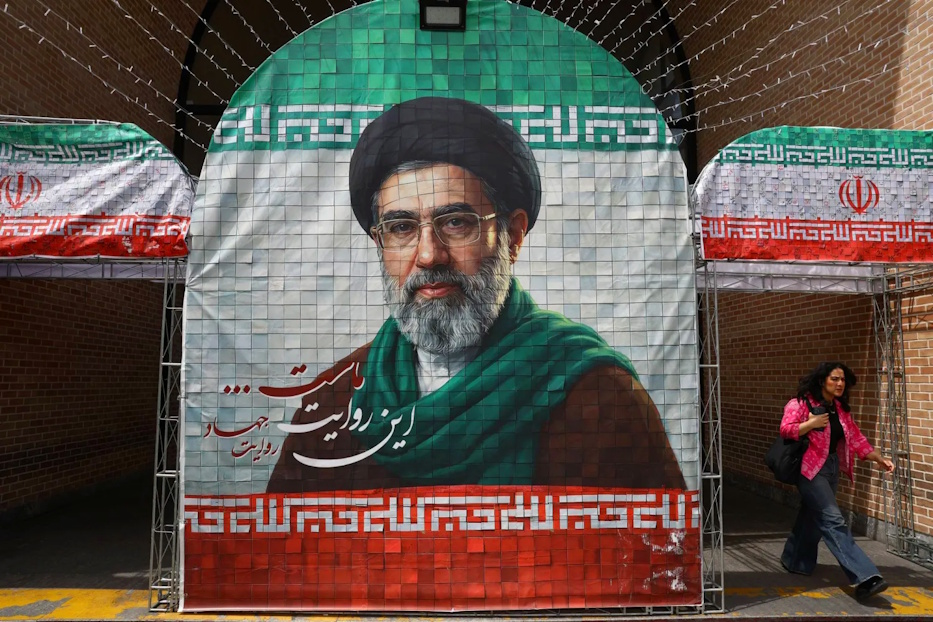
Iran’s Supreme Leader has reportedly issued a directive prohibiting the transfer of the country’s near-weapons-grade uranium stockpile abroad, according to two senior Iranian officials who spoke to Reuters on Thursday. The decision establishes a new “red line” for Tehran in ongoing negotiations with the United States and adds another major obstacle to efforts aimed at resolving tensions over Iran’s nuclear program.
The reported order underscores a widening divide between Tehran and Washington over one of the most contentious issues in the current talks: the future of Iran’s enriched uranium reserves.
The Reuters report emerged shortly after Iranian Foreign Ministry spokesman Esmail Baghaei publicly reaffirmed Tehran’s refusal to send any enriched uranium to another country.
“Why should Iran move its material to another country?” Baghaei asked during a press briefing, dismissing U.S. proposals on the matter. He added that while Washington has presented “several demands,” Iran’s nuclear activities “have been and remain 100 percent peaceful,” according to Iranian state media.
The directive, reportedly issued by Mojtaba Khamenei on behalf of the Supreme Leader’s office, is likely to frustrate U.S. President Donald Trump and further complicate negotiations intended to secure an end to the U.S.-Israeli military campaign against Iran.
According to Reuters, Israeli officials claim Trump has privately assured Israel that any future peace agreement would require the complete removal of Iran’s highly enriched uranium stockpile from its territory. They insist such a provision is essential to preventing Iran from rapidly developing a nuclear weapon.
For years, Israel, the United States, and several Western powers have accused Iran of seeking nuclear weapons capability, citing Tehran’s enrichment of uranium to 60 percent purity — far beyond levels required for civilian energy production and significantly closer to the 90 percent enrichment generally considered weapons-grade.
Iran has consistently denied pursuing nuclear weapons, maintaining that its nuclear activities are exclusively for civilian and scientific purposes.
Israeli Prime Minister Benjamin Netanyahu has repeatedly stated that the conflict cannot be considered resolved unless Iran’s enriched uranium is removed from the country, its ballistic missile capabilities are dismantled, and Tehran ends support for regional proxy militias.
“The Supreme Leader’s directive, and the consensus within the establishment, is that the stockpile of enriched uranium should not leave the country,” one Iranian source told Reuters on condition of anonymity because of the sensitivity of the matter.
Iranian officials reportedly fear that transferring enriched material abroad would leave the country strategically vulnerable to future attacks by either the United States or Israel. Under Iran’s political system, Supreme Leader Ayatollah Ali Khamenei holds ultimate authority over all major state decisions, including national security and nuclear policy.
Sources familiar with the negotiations said that while some technical disagreements have narrowed in recent weeks, deeper divisions remain unresolved. Chief among them are Tehran’s insistence on retaining its right to uranium enrichment and the dispute over what should happen to its existing stockpile.
Iranian officials have repeatedly emphasized that their immediate priority is securing a permanent cessation of hostilities and obtaining credible guarantees that neither the United States nor Israel will launch further military strikes.
Only after such assurances are secured, they say, would Tehran be prepared to enter detailed negotiations over limitations or restructuring of its nuclear program.
Israel, widely believed to possess its own undeclared nuclear arsenal, has never officially confirmed or denied having nuclear weapons. It has maintained a long-standing policy of strategic ambiguity on the issue for decades.
Before the latest escalation, Iranian officials had reportedly signaled a willingness to export roughly half of their stockpile of uranium enriched to 60 percent. However, that position changed after repeated threats by President Trump to launch direct military strikes against Iranian nuclear facilities.
Israeli officials told Reuters that uncertainty remains over whether Trump would authorize such an attack or grant Israel approval to resume independent military operations against Iran. Tehran has warned that any new assault would trigger what it described as a “crushing response.”
Despite the deadlock, one Iranian source suggested that technical compromises remain possible.
“There are feasible formulas to resolve this issue,” the source said. “One option would be diluting the stockpile under the supervision of the International Atomic Energy Agency.”
According to the International Atomic Energy Agency (IAEA), Iran possessed approximately 440.9 kilograms of uranium enriched to 60 percent when Israeli and U.S. strikes targeted Iranian nuclear facilities in June 2025.
IAEA Director General Rafael Grossi stated in March that most of the material was believed to be stored in a tunnel complex at Iran’s Isfahan Nuclear Facility, with slightly more than 200 kilograms believed to remain there. Additional quantities are thought to be stored at the larger Natanz Nuclear Facility, home to two major uranium enrichment plants.
Iran insists that some highly enriched uranium is necessary for peaceful applications, including medical isotope production and fueling a research reactor in Tehran, which operates on uranium enriched to approximately 20 percent.
As negotiations continue, the fate of Iran’s enriched uranium stockpile remains one of the central and most difficult questions standing between diplomacy and renewed regional conflict.
Our Pashto-Dari Website

Support Dawat Media Center
If there were ever a time to join us, it is now. Every contribution, however big or small, powers our journalism and sustains our future. Support the Dawat Media Center from as little as $/€10 – it only takes a minute. If you can, please consider supporting us with a regular amount each month. Thank you
DNB Bank AC # 0530 2294668
Account for international payments: NO15 0530 2294 668
Vipps: #557320

Comments are closed.