

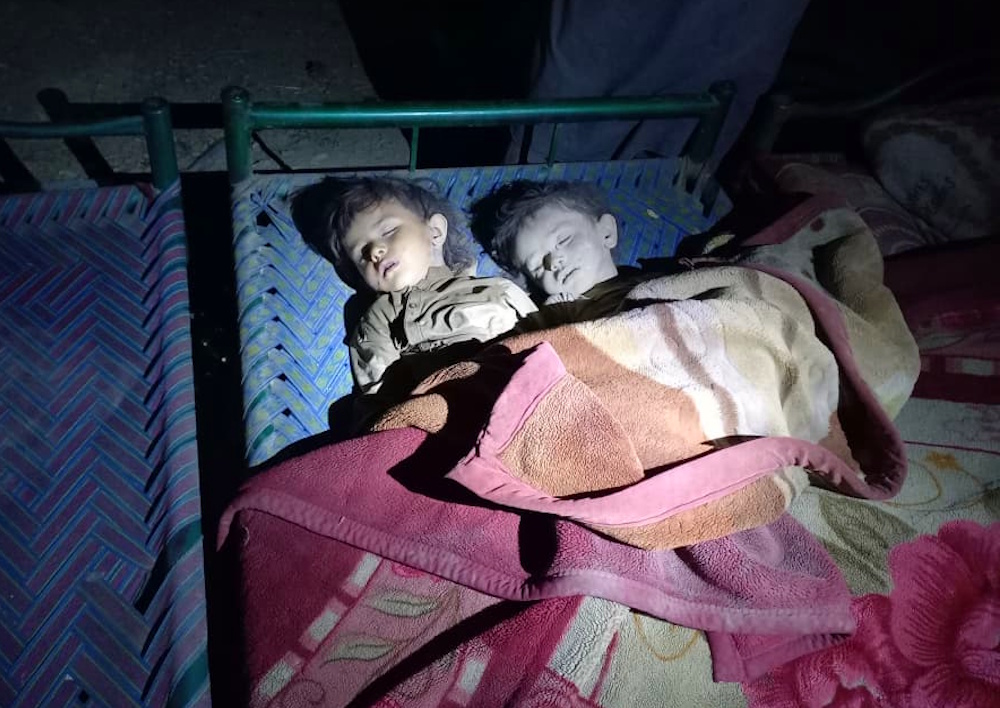
The Taliban-led government in Afghanistan has summoned Pakistan’s chargé d’affaires in Kabul after Pakistani airstrikes reportedly killed 13 civilians, including 11 children, in eastern Afghanistan, further escalating tensions between the neighboring countries.
In a statement issued on Wednesday, Afghanistan’s Ministry of Foreign Affairs said it had lodged a formal protest over what it described as repeated violations of the country’s airspace and attacks on civilian-populated areas. According to the ministry, Pakistani military aircraft struck locations in the eastern provinces of Khost, Paktika, and Kunar.
Afghan officials said the strikes killed 13 civilians, including 11 children, one woman, and one elderly man, while injuring at least 14 others. The Taliban administration condemned the attacks as a breach of Afghanistan’s sovereignty and international law, urging Islamabad to refrain from what it called provocative military actions and instead address its own internal security challenges.
Pakistan, however, confirmed carrying out cross-border air operations, stating that the strikes targeted hideouts and infrastructure belonging to the Tehrik-e-Taliban Pakistan (TTP), an armed militant group responsible for numerous attacks inside Pakistan. Pakistani authorities described the operation as intelligence-driven and precision-based, claiming that 26 militants were killed during the raids.
Islamabad has long accused the Taliban administration of failing to prevent TTP fighters from using Afghan territory as a safe haven to organize and launch attacks against Pakistani security forces and civilians. Kabul has consistently denied the allegations, insisting that Afghan territory is not being used to threaten neighboring countries and rejecting claims that it harbors or supports militant groups targeting Pakistan.
The incident marks another sharp deterioration in relations between the two countries, which have faced recurring disputes over border security, cross-border militancy, and the management of the porous frontier. Diplomatic efforts, including recent high-level discussions involving regional partners such as China, have so far failed to bridge the deep mistrust between Kabul and Islamabad.
Security analysts warn that continued military exchanges and retaliatory actions risk further destabilizing the already volatile border region, where militant activity and humanitarian concerns remain significant challenges. The latest episode also raises concerns about the potential impact on civilian populations living near the frontier, who often bear the brunt of escalating hostilities.
According to a recent report by United Nations Secretary-General Antonio Guterres, border-related violence and military incidents involving Afghanistan and Pakistan have resulted in hundreds of civilian casualties this year, highlighting the urgent need for de-escalation, dialogue, and stronger mechanisms to prevent further loss of life.
Our Pashto-Dari Website

Support Dawat Media Center
If there were ever a time to join us, it is now. Every contribution, however big or small, powers our journalism and sustains our future. Support the Dawat Media Center from as little as $/€10 – it only takes a minute. If you can, please consider supporting us with a regular amount each month. Thank you
DNB Bank AC # 0530 2294668
Account for international payments: NO15 0530 2294 668
Vipps: #557320

Comments are closed.