
Russia Warns of Worsening Humanitarian Crisis in Afghanistan as Polio Cases Surge and Infant Mortality Soars

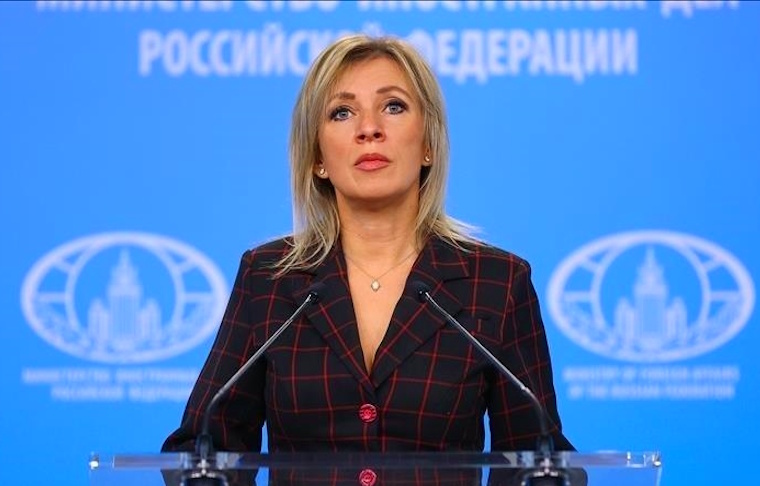
Russia has issued a stark warning over Afghanistan’s deteriorating humanitarian situation, highlighting a sharp rise in polio infections and persistently high infant mortality rates, while sharply criticizing Western nations for what it termed the “politicization” of aid and the economic strangulation of the country through frozen assets and sanctions.
Speaking at a press briefing in Moscow on Wednesday, Russian Foreign Ministry spokesperson Maria Zakharova described Afghanistan’s public health landscape as increasingly fragile, with preventable diseases and neonatal deaths reaching critical levels. She pointed to fresh data from the World Health Organization (WHO) showing that 21 cases of wild poliovirus had been recorded in border regions shared by Afghanistan and Pakistan during 2025–2026 a worrying resurgence in a disease that global health campaigns had once hoped to eliminate entirely.
“Many children under the age of ten in these border zones remain completely unvaccinated, with coverage estimates as low as 5 to 7 percent in some districts,” Zakharova said. “This is not merely a statistical failure it is a tragic indictment of a broken healthcare system and a humanitarian response that has been systematically undermined.”
She also drew attention to Afghanistan’s infant mortality rate, which she placed at 33.1 deaths per 1,000 live births nearly double the global average of 17 per 1,000. Zakharova attributed this grim figure to a combination of premature births, severe malnutrition, maternal health neglect, and a critical shortage of breast milk substitutes and infant formula, all exacerbated by the collapse of local health infrastructure and a deepening economic depression.
Her remarks followed a WHO announcement confirming four new polio cases in Afghanistan’s Nangarhar, Helmand, and Herat provinces. These latest infections bring the country’s total for 2026 to 11 confirmed cases, underscoring the continued fragility of eradication efforts. Afghanistan now stands alongside Pakistan as the only two nations where wild poliovirus remains endemic, despite decades of international vaccination campaigns.
The WHO and other UN agencies have repeatedly warned that insecurity, mass displacement, seasonal flooding and droughts, chronic underfunding, and repeated interruptions to immunization drives particularly in Taliban-controlled rural and remote areas continue to hamper any meaningful progress. Humanitarian organizations also note that access to healthcare for women and children has sharply declined since the Taliban’s return to power in 2021, with restrictions on female employment and movement severely disrupting the delivery of medical services, including vaccination teams that relied heavily on female health workers.
Beyond health indicators, the broader humanitarian crisis in Afghanistan has intensified due to a converging economic freefall, with the UN estimating that more than two-thirds of the population now require emergency assistance. Widespread poverty, climate-induced agricultural shocks, and a sharp reduction in foreign development aid have pushed millions to the brink of starvation.
In her address, Zakharova placed much of the blame for this compound crisis on Western policies, particularly the freezing of approximately $9 billion in Afghan central bank assets held abroad, following the Taliban takeover in 2021. She argued that these measures—originally intended to pressure the Taliban—have instead devastated ordinary Afghan civilians, crippling the banking sector, halting imports of essential goods, and paralyzing the government’s ability to finance even basic crisis response measures.
“International funding for humanitarian programs in Afghanistan is declining year on year, while the frozen assets remain untouched,” Zakharova stated. “This is not diplomacy it is collective punishment of an already traumatized population. We call on the United States and its allies to immediately unfreeze Afghanistan’s financial reserves and cease the artificial politicization of humanitarian aid, which should be neutral and lifesaving, not leveraged for geopolitical ends.”
She reaffirmed that Russia would continue to provide bilateral humanitarian assistance to the Afghan people, including through contributions to UN-coordinated relief efforts and direct aid deliveries via international organizations. Moscow has maintained working-level contacts with Taliban authorities on practical matters, while stopping short of formally recognizing their government.
“Russia remains committed to alleviating the suffering of the Afghan people, irrespective of political disagreements,” Zakharova concluded. “But the international community must act collectively and swiftly before this health emergency spirals into an even greater human catastrophe.”
Additional Context (Expansion):
-
Polio Eradication Challenges: The resurgence of polio in Afghanistan is largely driven by vaccine hesitancy, insecurity in rural areas, and the Taliban’s intermittent bans on house-to-house vaccination campaigns, particularly in provinces where militant groups operate. In 2025, the WHO reported that over 3 million children under five missed routine immunizations due to access restrictions.
-
Economic Collapse: Since August 2021, Afghanistan’s GDP has contracted by nearly 30%, unemployment has skyrocketed, and the currency has experienced severe volatility. The freezing of foreign reserves has triggered a liquidity crisis, making it impossible for the Taliban-run central bank to stabilize prices or import medicines, fuel, and food.
-
Gender-Based Barriers: The Taliban’s edicts barring women from working in NGOs and UN agencies have forced many international aid groups to scale back operations, directly affecting maternal and child health programs. Female healthcare workers have been banned from returning to many clinics, leading to a drop in prenatal care and skilled birth attendance.
-
Climate Vulnerability: Afghanistan is experiencing its worst drought in 30 years, destroying crops and livestock and displacing rural communities. This has compounded food insecurity, with WFP reporting that nearly 20 million Afghans are facing acute hunger.
-
Russia’s Role: While Moscow has not officially recognized the Taliban government, it has engaged with Kabul on security, trade, and counter-narcotics issues. Russia has also hosted intra-Afghan dialogues and has positioned itself as a pragmatic mediator, often contrasting its approach with what it portrays as Western punitive measures.
Our Pashto-Dari Website
Support Dawat Media Center
If there were ever a time to join us, it is now. Every contribution, however big or small, powers our journalism and sustains our future. Support the Dawat Media Center from as little as $/€10 – it only takes a minute. If you can, please consider supporting us with a regular amount each month. Thank you
DNB Bank AC # 0530 2294668
Account for international payments: NO15 0530 2294 668
Vipps: #557320

Comments are closed.