

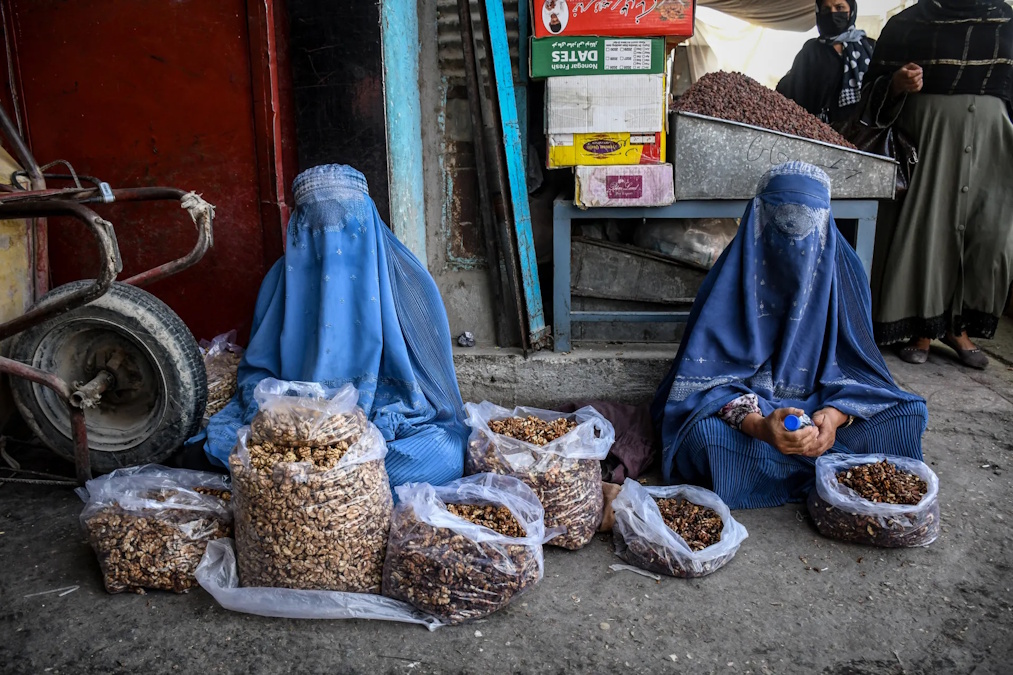
More than 100,000 people have been displaced in eastern Afghanistan following escalating military tensions along the disputed Afghanistan-Pakistan border, with women and girls bearing the heaviest toll, according to a new report by UN Women.
The agency attributed the mass displacement to a surge in cross-border violence, including airstrikes, shelling, drone attacks, and ground clashes in several volatile border provinces. Thousands of families have been forced to flee their homes, often with little notice, leaving behind livelihoods, livestock, and possessions.
According to the UN Women report, displaced women and girls face severe and compounding economic, social, and psychological challenges. Data from the Afghanistan Gender Coordination Group reveals that more than two-thirds of women in ten affected provinces have lost their primary sources of income. In a stark parallel, three-quarters of women reported increased difficulty accessing food, heightening risks of malnutrition and food insecurity for entire households.
Beyond material deprivation, the crisis is inflicting deep psychological wounds. UN Women noted that women are experiencing disproportionately high levels of psychological stress, as ongoing insecurity, loss of shelter, and disrupted daily routines erode coping mechanisms. Many report symptoms of anxiety, depression, and social withdrawal, exacerbated by the lack of privacy and safety in temporary displacement sites.
To address these urgent needs, UN Women with support from the Swiss Agency for Development and Cooperation (SDC) and a local partner has helped establish dedicated safe spaces for women within displacement camps. These centers offer critical services, including counseling, psychosocial support, legal referrals, and secure environments where women can access assistance and connect with other survivors. For many, these spaces represent the only respite from the trauma of displacement.
The latest surge in displacement underscores the persistently fragile and hostile relations between Afghanistan’s Taliban authorities and Pakistan. The two sides have repeatedly exchanged accusations over border security, cross-border militant activity, and alleged treaty violations. These tensions have periodically erupted into military confrontations, with the latest escalation forcing thousands more to flee.
Pakistan has long accused the Taliban administration of harboring and failing to curb militants operating from Afghan soil particularly members of the Tehrik-e-Taliban Pakistan (TTP), a group responsible for numerous attacks inside Pakistan. Taliban officials deny these allegations, insisting they do not allow Afghan territory to be used against any other country, including Pakistan. Cross-border shelling and skirmishes have repeatedly undermined fragile ceasefire understandings.
This border-driven humanitarian crisis is unfolding as Afghanistan grapples with broader economic collapse and severe aid funding shortages. International organizations have warned that dwindling donor support is forcing life-saving cuts to health, food, water, sanitation, and protection programs—at a time when millions of Afghans remain entirely dependent on humanitarian assistance just to survive.
Aid agencies further report that vulnerable communities are under growing pressure due to the large-scale forced or voluntary returns of Afghan migrants and refugees from both Pakistan and Iran. In recent months, hundreds of thousands of returnees have crossed back into Afghanistan, intensifying demands for already-scarce shelter, healthcare, clean water, and basic services across many provinces. Combined with the newly displaced from border fighting, Afghanistan’s humanitarian system already stretched to its breaking point faces an unprecedented strain.
Our Pashto-Dari Website
Support Dawat Media Center
If there were ever a time to join us, it is now. Every contribution, however big or small, powers our journalism and sustains our future. Support the Dawat Media Center from as little as $/€10 – it only takes a minute. If you can, please consider supporting us with a regular amount each month. Thank you
DNB Bank AC # 0530 2294668
Account for international payments: NO15 0530 2294 668
Vipps: #557320

Comments are closed.