
UNICEF Says 2.6 Million Afghan Girls Have Been Denied Secondary Education as Taliban Rule Enters Sixth Year

UNICEF Says 2.6 Million Afghan Girls Have Been Denied Secondary Education as Taliban Rule Enters Sixth Year
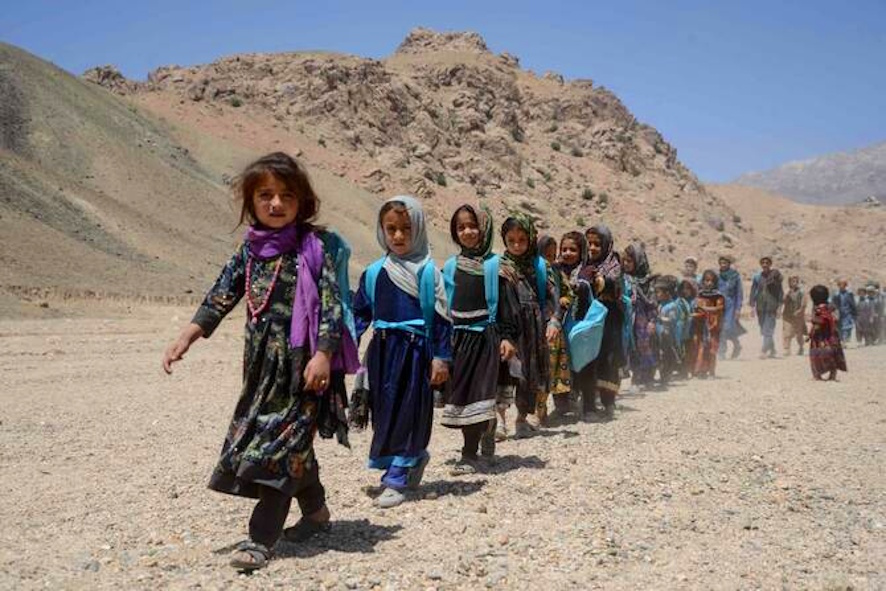
More than 2.6 million girls in Afghanistan have been denied access to secondary education in the five years since the Taliban returned to power, UNICEF said on Thursday, warning that the continuing ban is putting the country’s future at risk and condemning an entire generation to lost potential.
In a statement marking five years of Taliban rule, the United Nations Children’s Fund (UNICEF) said Afghanistan remains the only country in the world where girls and women are prohibited from attending secondary school and university. The agency urged the Taliban to immediately lift restrictions preventing girls from returning to classrooms, describing the ban as one of the most severe violations of educational rights anywhere in the world.
UNICEF said the exclusion of millions of girls from education is not only a violation of their fundamental rights but also a crisis with long-term consequences for Afghanistan’s economy, healthcare system, and social development. The agency noted that educated women are essential to rebuilding a country already devastated by decades of conflict, economic collapse, and humanitarian hardship.
“Every girl deserves the right to learn,” UNICEF said, calling on the Taliban to reopen schools and universities to all girls and women without delay. “Denying girls an education does not just harm individual students—it deprives Afghanistan of the doctors, teachers, engineers, and leaders it desperately needs.”
The agency warned that denying girls an education has devastating consequences for children, families, and communities across Afghanistan. According to UNICEF, the country has lost a generation of students whose education has been interrupted during years that are critical for their development and future employment opportunities. Many girls who were forced out of classrooms have since been married off, pushed into unpaid domestic labor, or denied any pathway to economic independence.
International organizations have repeatedly cautioned that the restrictions will deepen poverty, increase child marriage, worsen maternal and child health outcomes, and reduce Afghanistan’s long-term economic growth. Studies cited by aid agencies have found that limiting women’s education directly correlates with higher infant mortality rates, lower household incomes, and reduced national productivity.
The Taliban suspended education for girls above the sixth grade shortly after returning to power in August 2021. In late 2022, the group also banned women from attending universities, prompting widespread condemnation from the United Nations, human rights organizations, and governments around the world. The bans have also extended to many forms of employment, further restricting women’s participation in public life.
UNICEF has consistently described education as a basic human right and has repeatedly appealed to Taliban authorities to reverse the bans. The agency says restoring girls’ access to education is essential for Afghanistan’s recovery and for achieving sustainable peace and development. It has also warned that the continued exclusion of women from education and work risks pushing Afghanistan further into isolation and dependence on humanitarian aid.
Despite years of international pressure, the Taliban have continued to defend the restrictions, saying schools and universities for girls will reopen only under conditions they consider consistent with their interpretation of Islamic law. The policy has remained in place with no nationwide reopening of secondary schools for girls, and Taliban officials have offered no clear timeline for when the bans might be lifted.
The United Nations has repeatedly stated that meaningful engagement with Afghanistan’s de facto authorities remains closely linked to improvements in human rights, particularly the restoration of women’s and girls’ rights to education, employment, and public life. UN officials have said the Taliban’s treatment of women and girls remains the single biggest obstacle to international recognition and the full resumption of development assistance.
Human rights groups have described the education ban as a form of systematic gender discrimination that amounts to gender apartheid. They warn that the longer the restrictions remain in place, the harder it will be for Afghanistan to recover, and the more girls will permanently lose their chance to build independent, productive futures.
Our Pashto-Dari Website

Support Dawat Media Center
If there were ever a time to join us, it is now. Every contribution, however big or small, powers our journalism and sustains our future. Support the Dawat Media Center from as little as $/€10 – it only takes a minute. If you can, please consider supporting us with a regular amount each month. Thank you
DNB Bank AC # 0530 2294668
Account for international payments: NO15 0530 2294 668
Vipps: #557320

Comments are closed.