


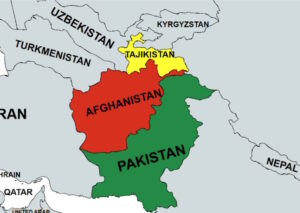
Pakistan’s conduct toward Afghanistan has crossed the line from manipulation into outright sabotage. This is no longer a matter of strategic ambiguity or competing narratives. It is a deliberate campaign to keep Afghanistan weak, distracted, and unstable at a time when Pakistan itself is struggling to hold together under the weight of its own crises.
Look at Pakistan today. Kashmir remains a festering conflict that Islamabad exploits rhetorically but cannot resolve in reality. Balochistan is in a state of chronic insurgency, where armed groups routinely strike at the state and its prized infrastructure. In Khyber Pakhtunkhwa, militant violence is resurging with intensity, exposing the complete failure of Pakistan’s long-standing policy of cultivating proxies. These are not peripheral issues. They are deep structural fractures that threaten the internal cohesion of the Pakistani state.
A country under this kind of pressure does not stabilize its neighborhood. It exports its instability.
Afghanistan has always been the easiest target. For decades, Pakistan has treated it not as a sovereign neighbor but as strategic depth, a space to control, manipulate, and if necessary, destabilize. What has changed now is that Afghanistan is beginning to see a path out of that trap. And that path runs through Wakhan.
The Wakhan Corridor is not just a remote strip of land. It is a geopolitical rupture. If developed, it connects Afghanistan directly to China and opens routes into Central Asia that completely bypass Pakistan. That single shift breaks one of Islamabad’s most powerful tools, its monopoly over Afghan trade and transit.
For years, Pakistan leveraged geography to keep Afghanistan dependent. Goods had to pass through Pakistani ports. Trade routes could be opened or closed at will. Economic pressure could be applied whenever Kabul stepped out of line. Wakhan threatens to end that entire model.
And it does something even more dangerous from Pakistan’s perspective. It weakens the centrality of the China Pakistan Economic Corridor.
CPEC was never just about roads and ports. It was about making Pakistan indispensable to China’s regional strategy. If Afghanistan develops a viable connection to China through Wakhan, that exclusivity begins to erode. Beijing gains options. Pakistan loses leverage. Its role shifts from essential partner to just one corridor among several.
That is a strategic nightmare for Islamabad.
The result is predictable. When Pakistan cannot control an outcome, it tries to disrupt it.
The recent wave of violence, assassinations, and instability in northern Afghanistan, especially in Badakhshan, cannot be separated from this context. These are not random acts. They occur in precisely the regions that matter for Wakhan’s viability. The objective is simple. Keep the area unstable, raise the security risks, and make any serious investment in connectivity too dangerous to pursue.
This is not new behavior. Pakistan has refined this approach over decades. It builds influence through proxies, denies involvement, and hides behind diplomatic language while shaping realities on the ground. The difference now is that the stakes are higher and the pattern is more visible.
At the same time, Pakistan attempts to maintain a contradictory public posture. Officials speak of trade, cooperation, and even interest in Wakhan connectivity. But these statements collapse under scrutiny. A corridor cannot function in an environment poisoned by insecurity. You cannot promote trade while enabling the very instability that makes trade impossible.
This duplicity is not accidental. It is policy.
The global implications are serious. A stable Afghanistan connected through Wakhan could transform regional trade, linking Central Asia, South Asia, and China in new ways. It could reduce dependency on single-route corridors and create redundancy in supply chains. It could also limit the space for transnational militant networks by replacing isolation with economic integration.
Pakistan’s actions move in the opposite direction. By fueling instability, it undermines regional connectivity, disrupts potential trade flows, and prolongs the conditions that allow extremism to survive. This is not just an Afghan problem. It is a regional and global risk.
There is also a deeper contradiction at play. Pakistan presents itself internationally as a partner in counterterrorism and regional stability. Yet its strategic behavior suggests that it still views controlled instability as a useful tool. That contradiction is becoming harder to ignore.
The reality is blunt. Pakistan fears a stable Afghanistan more than it fears an unstable one. A stable Afghanistan would not rely on Pakistani routes. It would not accept external interference. It would have options, partners, and autonomy.
Wakhan represents that possibility. That is why it is being targeted indirectly, quietly, and persistently.
This is not speculation. It is the logical outcome of incentives, geography, and decades of precedent. Pakistan is acting to protect its leverage, even if that means keeping Afghanistan locked in instability.
The question now is whether the region, and the wider international community, is willing to recognize this pattern for what it is and respond accordingly. Because as long as this strategy goes unchecked, Afghanistan will remain a battleground not because it cannot stabilize, but because someone is actively working to ensure that it does not.
Support Dawat Media Center
If there were ever a time to join us, it is now. Every contribution, however big or small, powers our journalism and sustains our future. Support the Dawat Media Center from as little as $/€10 – it only takes a minute. If you can, please consider supporting us with a regular amount each month. Thank you
DNB Bank AC # 0530 2294668
Account for international payments: NO15 0530 2294 668
Vipps: #557320

Comments are closed.