
Silence Is Complicity: The Voice of Truth Amid the Blood of Innocents
Prof. Dr. Ubaidullah Burhani

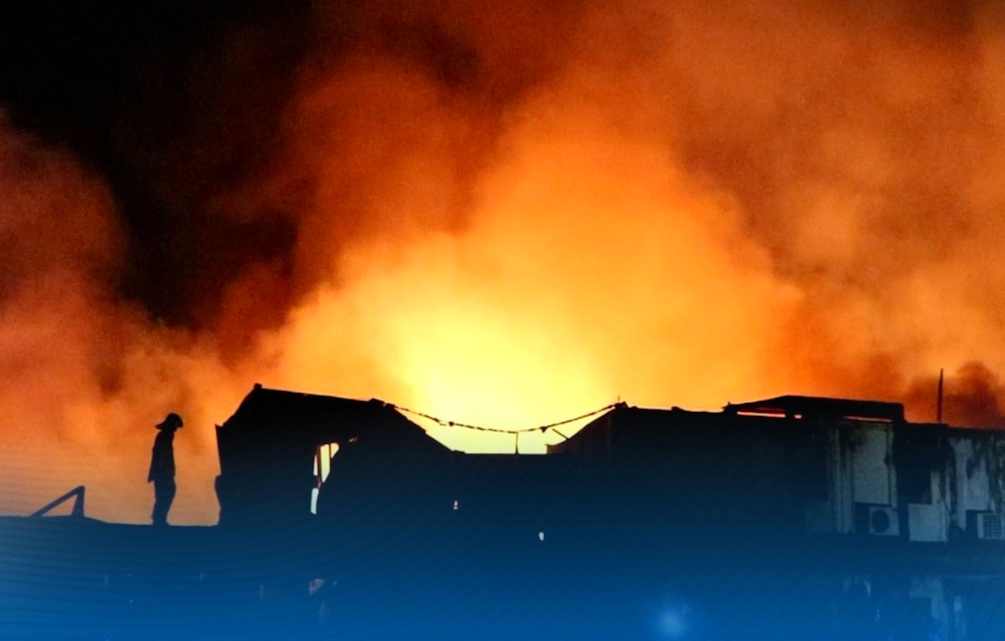
The recent airstrike on Kabul is not merely another incident in a regional conflict; it represents a profound moral rupture that demands an immediate and unequivocal response from the conscience of humanity. According to widely circulated reports, the strike killed more than 400 people and injured over 250 others after targeting a civilian facilitya drug rehabilitation hospitalresulting in the deaths of some of the most vulnerable members of society.
Eyewitnesses described scenes resembling doomsday: buildings reduced to rubble, patients burned in their beds, and families searching through the debris for their loved ones. Regardless of conflicting narratives regarding the intended target, the scale of human suffering and the destruction of a civilian site raise grave concerns under international humanitarian law, particularly regarding the principles of distinction and proportionality.
Yet what is even more painful than the devastation itself is the silence.
Islam does not permit silence in the face of injustice. The Prophet ﷺ said: “Whoever among you sees an evil, let him change it…” (Muslim). The Qur’an commands the الأمة to enjoin what is right and forbid what is wrong. And yet, in the face of one of the deadliest incidents in recent memory, many voices that should have stood firmly for truth have remained absent.
This silence is not neutralityit is complicity.
What we are witnessing today cannot be understood in isolation. It must be seen within a broader context of recurring crises, weak accountability, and contested narratives. This reality demands not merely condemnation, but moral clarityclear, principled, and public.
The responsibility falls heavily on scholars especially those within Pakistan whose voices carry both moral authority and social weight. Scholars are not mere observers of history; they are its moral authors. When they fall silent, injustice is given space to expand unchecked.
Unchecked violence does not remain contained. It grows. It escalates. And history shows that when force is left without accountability, it ultimately becomes a threat to all without distinction between ally and adversary. Preventing such a trajectory is not a political choice; it is a moral imperative.
In this context, it is also necessary to acknowledge a deeper structural dimension: the nature of military institutions in parts of the developing world. In many cases, these institutions were shaped within historical frameworks influenced by colonial legacies and unequal international alliances. As a result, their evolution has not always been rooted in fully independent national priorities, but has, at times, reflected external strategic considerations that extend beyond local interests.
In the case of Pakistan, history reveals a recurring and influential role of the military in political life, including periods of direct rule and repeated interventions. One of the most striking examples remains the events of Bangladesh in 1971, during which international reports and historical accounts documented widespread violations against civilians, including the targeting of intellectual and political elites leaving a lasting scar on regional memory. Other periods in Pakistan’s history have also witnessed internal unrest and politically motivated violence that claimed the lives of influential figures, raising ongoing concerns about accountability and civilian oversight.
Such historical precedents underscore the urgent need for caution when force is exercised without transparent legal and moral constraints especially when civilian lives are at stake. Unconditional reliance on institutions that lack sufficient accountability risks serious consequences, not only politically, but also ethically and religiously. Power, when left unrestrained by justice, can transform from an instrument of protection into a source of harm.
Amid all this, another crisis emerges: the crisis of narrative. Biased or distorted media representations can obscure truth or justify the unjustifiable. Yet the reality remains undeniable behind every number is a human being, behind every victim a story, and behind every tragedy a grieving family.
The Afghan people, long known for their resilience, dignity, and deeply rooted values, once again find themselves at the center of suffering not of their own making. Reducing their pain to competing political narratives is itself another injustice.
Targeting civilians especially the most vulnerable is not only a humanitarian tragedy; it may constitute a serious violation of international law. While international actors have expressed concern and called for investigation, concern alone is not enough. Words without action risk becoming yet another form of silence.
A Call to Scholars
This is a defining moment.
We call upon scholars, religious institutions, and voices of conscience particularly within Pakistan to break their silence, to speak with clarity and courage, and to take a principled stand that leaves no room for ambiguity.
Neutrality in moments of injustice is not wisdom it is abdication.
Your silence today will not be forgotten. It will be recorded not only in the pages of history, but in a moral ledger from which nothing escapes.
Conclusion
The cries of the innocent rise beyond borders, beyond politics, beyond denial. Not a single drop of blood will be lost before Allah.
History will not remember how powerful you were but where you stood when the innocent were bleeding.
Be the voice of truth…
Before silence becomes your testimony.
Our Pashto-Dari Website

Support Dawat Media Center
If there were ever a time to join us, it is now. Every contribution, however big or small, powers our journalism and sustains our future. Support the Dawat Media Center from as little as $/€10 – it only takes a minute. If you can, please consider supporting us with a regular amount each month. Thank you
DNB Bank AC # 0530 2294668
Account for international payments: NO15 0530 2294 668
Vipps: #557320

Comments are closed.